So you’ve got a detached garage, a workshop behind the main house, or maybe a barn out past the pool — and you want real power out there. Not a 50-foot extension cord snaked through the grass. Actual Detached Structure Electrical Service that’s permitted, inspected, and built to last. Here in Scottsdale, AZ, we see this project come up constantly, and almost every time a homeowner calls us, they’ve already gotten one bad quote from someone who skipped half the steps. Let’s walk through what this actually involves so you know exactly what you’re buying.
Why a Detached Structure Isn’t Just a Long Extension of Your Panel
A detached structure — even a modest workshop — is treated by the NEC as a separate building. That means it needs its own disconnect means at the structure, its own grounding electrode system, and in most cases its own subpanel. This isn’t bureaucratic red tape; it’s the reason the lights in your house stay on if something trips in the shop. The separation also protects you during a ground fault, which matters a lot in AZ where monsoon moisture can find its way into outbuildings that nobody waterproofed carefully.
If your panel is already loaded — and a lot of homes in Scottsdale, AZ are running 20-year-old 200-amp panels that are genuinely maxed out with EVs, new HVAC, and kitchen upgrades — you may need a panel upgrade before we even start pulling wire to the outbuilding. We check that first so there are no surprises mid-project.
Underground or Overhead? Choosing the Right Feed Method

The two methods for getting power from your main house to a detached structure are aerial (overhead) and underground (direct-burial or conduit). In Scottsdale, AZ and throughout Maricopa County, underground is almost always the better choice — aesthetically and practically. Here’s how they compare:
- Underground in conduit: Cleanest look, best protection, required by most municipalities for runs longer than a few feet. Minimum burial depth is 24 inches for rigid metal or Schedule 80 PVC under NEC 300.5. This is what we recommend the vast majority of the time.
- Direct-burial cable (UF-B): Lower material cost, but still requires 24 inches of cover in most cases and offers less protection from accidental dig-through. Acceptable for shorter, simpler runs.
- Overhead service: Permitted where clearance requirements can be met (typically 10–18 feet depending on what passes beneath). Rarely the right call in a finished yard, but occasionally practical for agricultural parcels in the East Valley or Fountain Hills.
The permit and inspection step isn’t optional — it’s what stands between a clean certificate of occupancy and a problem that surfaces at resale. Every detached structure electrical service we install in Scottsdale, AZ gets pulled with a proper permit.
Sizing the Service: Don’t Guess, Calculate
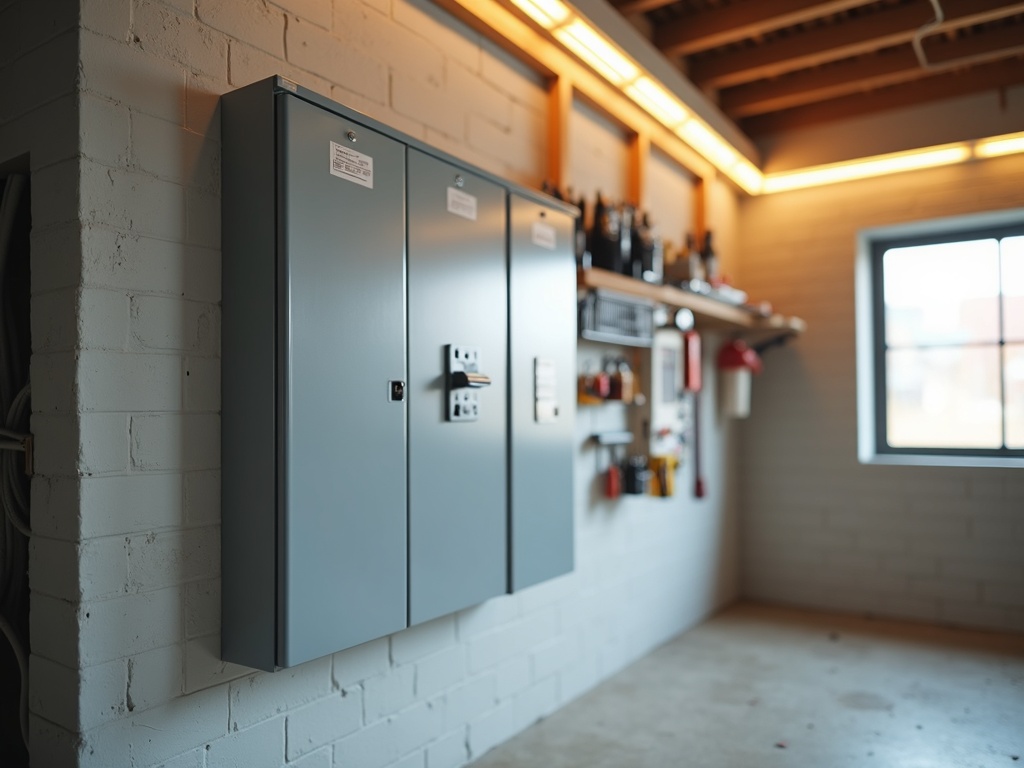
This is where most DIY plans fall apart. People think a 30-amp feed is fine until they plug in a table saw, a compressor, and a shop vac at the same time and pop a breaker 40 feet away from the panel. Size your detached structure electrical service for what you’ll actually run, not just what you run today. Common starting points:
- 60-amp subpanel: Light workshop use — power tools, lighting, a single mini-split. Good entry point for a basic shed electrical hookup.
- 100-amp subpanel: The sweet spot for most serious workshops and detached garages. Handles a welder, compressor, EV charger, and HVAC simultaneously without straining the feed.
- 200-amp subpanel: Barn conversions, accessory dwelling units, or any structure that functions like a second home. Also right for a detached garage that needs a Tesla charger installation plus heavy tools and climate control.
We size the wire gauge to match the breaker and the distance — voltage drop over long runs is real, and undersized wire to a 100-amp panel 150 feet from your house is a problem that shows up as heat, not as a tripped breaker. If you want to read the underlying NEC guidance, the NFPA 70 (National Electrical Code) is the governing document — it’s worth knowing exists even if you’re not reading it yourself.
What a Proper Workshop Electrical Service Looks Like Inside the Structure
Once the feed is in and the subpanel is mounted, the interior rough-in is where you future-proof the space. For most workshop and detached garage wiring projects in Scottsdale, AZ, we recommend:
- GFCI protection on all receptacles (required by NEC in garages and outbuildings)
- Dedicated circuits for any fixed equipment — compressors, welders, dust collectors
- At least one 240V circuit roughed in even if you don’t need it yet
- Exterior-rated weatherproof outlets on the outside walls
- LED shop lighting on its own circuit so a tool load doesn’t dim your workspace
If you’re thinking about running Cat6 for a camera system or Wi-Fi access point in the shop, our network cabling installation team can handle that in the same visit — one trench, one project.
Homeowners near McCormick Ranch or up in North Scottsdale with larger properties often ask about adding a whole-home generator connection at the same time. That’s a conversation worth having before we backfill the trench — retrofitting is always more expensive than planning ahead. Take a look at our whole-home generator backup power options if that’s on your radar.
The cost for a detached structure electrical service in the Scottsdale, AZ area typically runs $1,800–$6,500+ depending on distance from the main panel, service size, conduit type, and interior finish-out. That’s a real range, not a lowball to get you on the phone. Every project is scoped individually after we see the site.
If you want it done once and done right — permitted, inspected, and backed by a licensed Arizona contractor with over 20 years in the Phoenix metro — call FHR Electric at (602) 492-9999. We’ll come out, look at the site, and give you a straight number before any work starts.