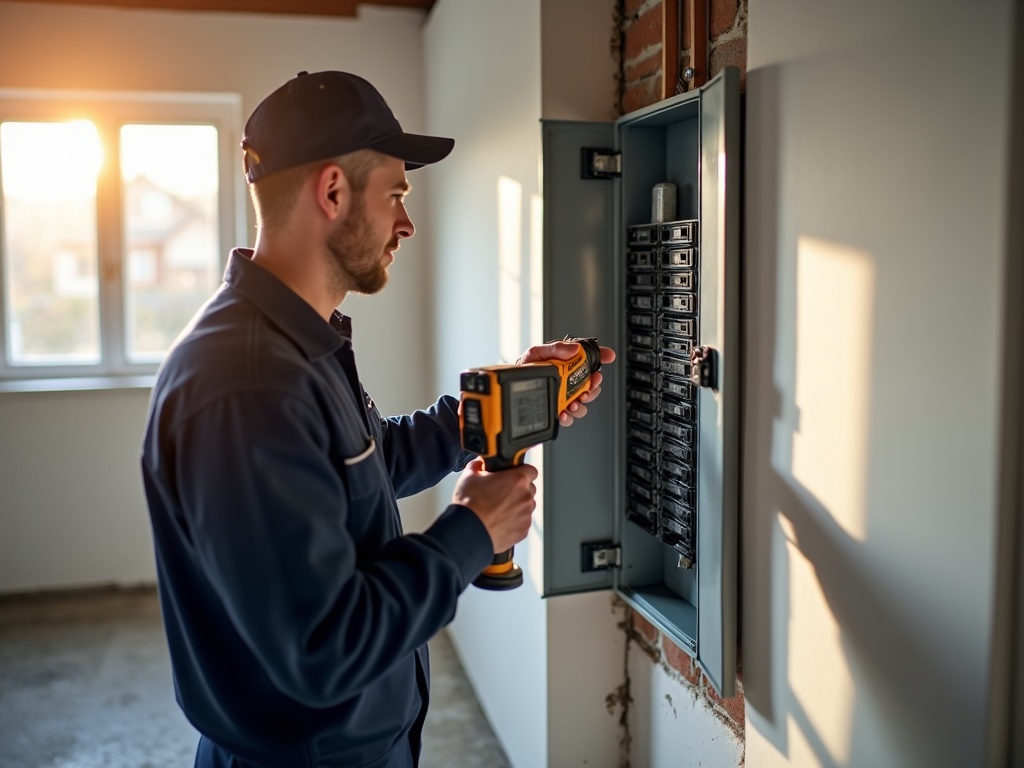
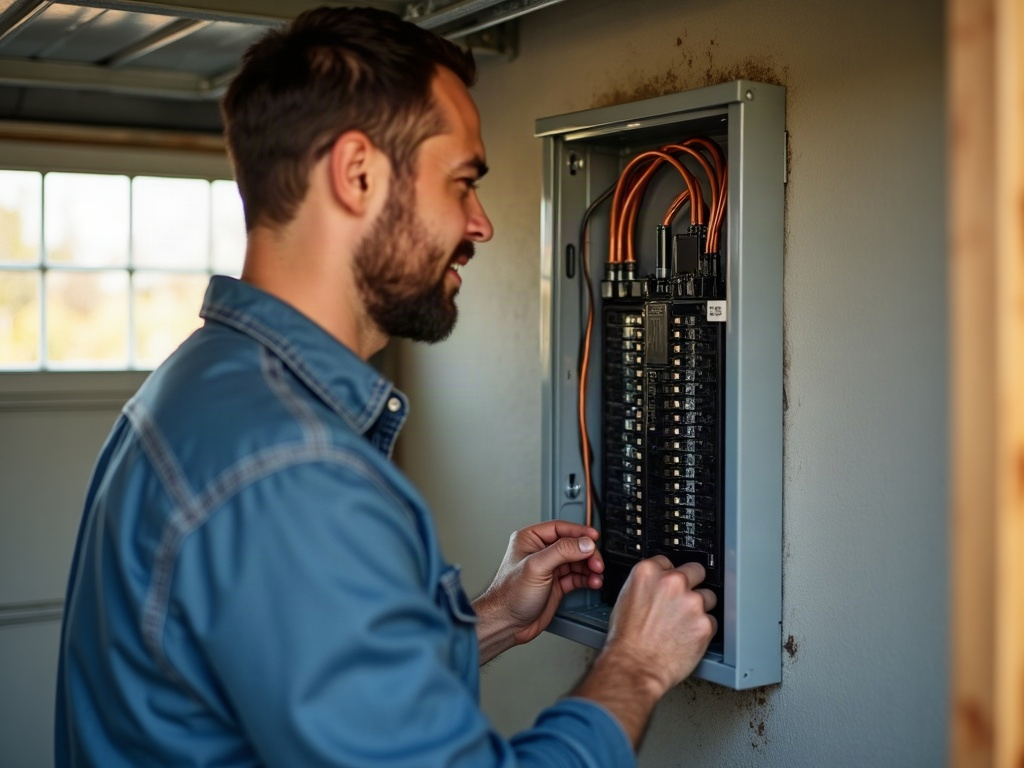
If you’ve ever had a home inspector flag a panel issue or pulled open your breaker box and noticed two wires sharing one breaker terminal, you already know the uneasy feeling that follows. What Is a Double Tapped Breaker is one of the most common electrical defects we find in Scottsdale, AZ homes — and one of the most misunderstood. It looks minor. It usually isn’t. Here’s what’s actually going on inside that panel, and why it matters more than you’d expect.
What a Double-Tapped Breaker Actually Means
A standard circuit breaker has a single terminal designed to hold exactly one wire. A double tapped circuit breaker has two conductors landed on that same terminal — meaning two separate circuits share one breaker. Someone, at some point, needed to add a circuit and ran out of open slots. Rather than address the panel properly, they squeezed in a second wire. It’s a shortcut that works right up until it doesn’t.
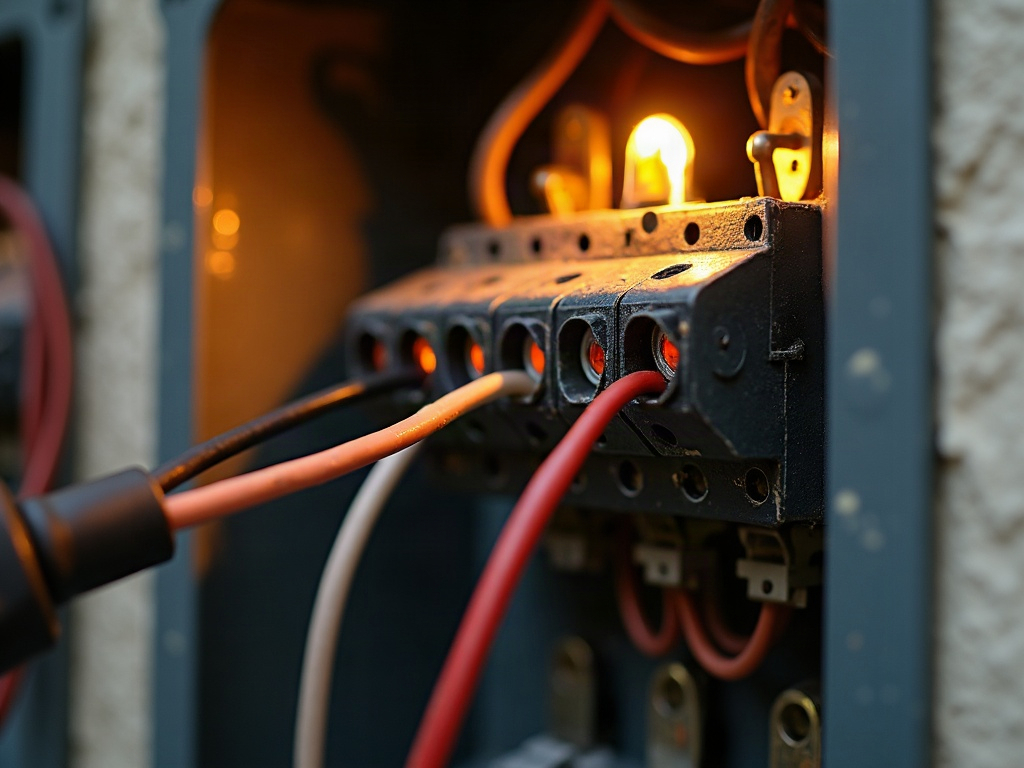
The core problem is mechanical. Most breakers are listed for one conductor only. Two wires create an inconsistent connection — one wire can work loose over time, arc against the terminal, or simply fail to trip the breaker when an overload happens on its circuit. That last part is the part that keeps electricians up at night.
A breaker that won’t trip when it should isn’t protection — it’s a liability wearing the uniform of protection.
Why What Is a Double Tapped Breaker Is a Real Fire and Code Risk
The National Electrical Code (NEC) is clear: conductors must be installed according to the breaker’s listing. If the manufacturer’s listing says one wire, one wire it is. A double-tapped breaker violates that listing, which means it’s a code violation — and in Scottsdale, AZ and across AZ, that violation will surface during any permitted remodel, real estate inspection, or insurance audit.
Beyond code, the practical risks stack up fast:
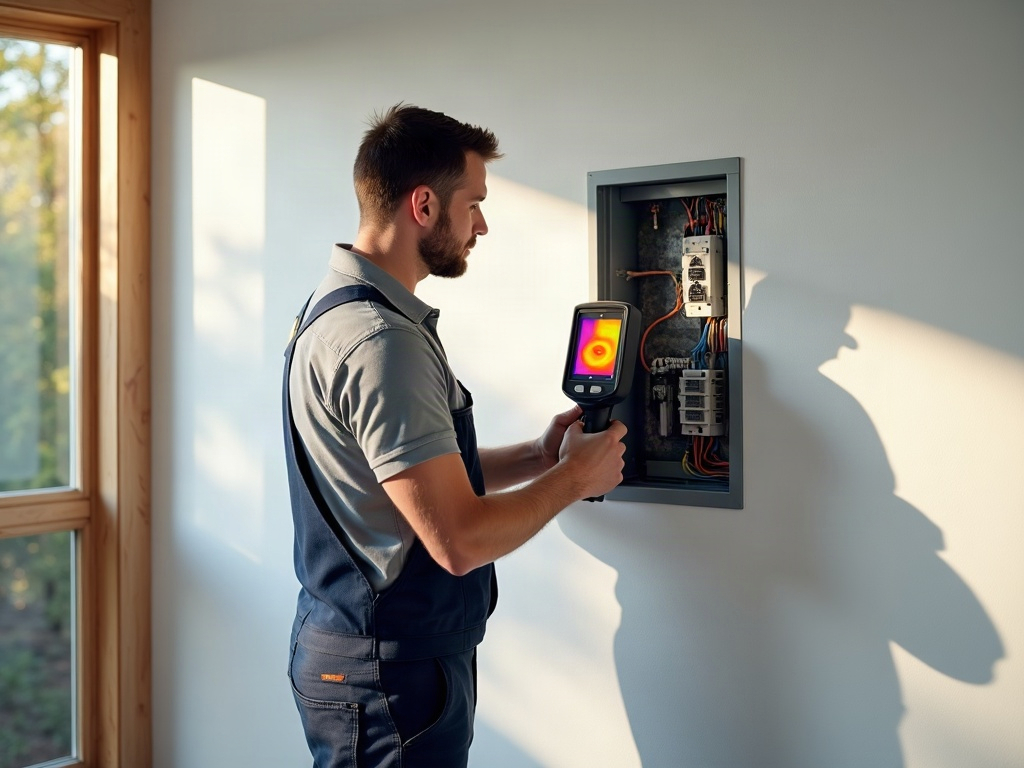
- Loose connections heat up. A terminal holding two wires under uneven pressure can develop resistance at the connection point. Resistance generates heat. Heat over time degrades insulation and can ignite surrounding materials — exactly the kind of hidden hazard our thermal imaging inspections are designed to catch inside your walls before it becomes a headline.
- Overload protection fails. Two circuits on one breaker means the combined load of both trips the breaker — or doesn’t, depending on how the loads time out. You lose the granular protection each circuit is supposed to have.
- Panel wiring problems compound. A double-tap is rarely the only issue. Panels with one shortcut usually have others. We routinely find mislabeled breakers, undersized conductors, and missing knockouts in the same box. If you want to understand the full picture, our panel health check guide walks through everything a proper evaluation covers.
The One Exception — and Why It Still Requires a Breaker Compatibility Check
There is a narrow exception worth knowing. Certain breakers — most commonly some Square D QO and Cutler-Hammer CH series — are specifically listed to accept two conductors on one terminal. The manufacturer’s documentation will say so explicitly. If your panel uses those breakers and the wiring gauge matches what’s listed, a double-tap on that specific breaker is technically compliant.
The key phrase is specifically listed. A breaker compatibility check isn’t a visual guess — it means pulling the breaker’s UL listing and verifying the exact conductor size and type. Most homeowners don’t have that documentation. Most handymen don’t check it either. A licensed electrician does.
If you’re in Scottsdale, AZ or anywhere in North Scottsdale near the 101 corridor, we see a lot of panels from the 1990s and early 2000s builds — many of them older Zinsco or mismatched panels where a quick breaker swap created exactly this problem. If your home was built or remodeled during that era, it’s worth a look. And if your panel is pushing 25 to 30 years old, you might also want to read up on how long an electrical panel actually lasts before the next hot AZ summer puts it under real strain.
How We Fix It — and What It Typically Costs
The fix depends on what’s driving the double-tap in the first place.
- Open slots exist but weren’t used: We re-land the second wire on its own breaker. Straightforward, usually quick.
- Panel is full: We install a tandem (twin) breaker where the panel’s listing allows it, freeing up a slot. Moderately more involved but still a same-day fix in most cases.
- Panel is genuinely at capacity: A subpanel or full panel upgrade is the right answer. This is the scenario we see most often in homes that have added an EV charger, a new HVAC system, or a major kitchen remodel without ever addressing the panel. If that sounds familiar, our breakdown of which appliances need their own dedicated circuit is a good place to start thinking about what your panel is actually being asked to handle.
Cost ranges in the Scottsdale, AZ market vary by scope. A simple wire re-land on an existing open breaker might run $150–$300. A tandem breaker swap can fall in the $200–$450 range depending on access and panel condition. A subpanel addition typically runs $1,200–$2,500 or more depending on size, placement, and any trenching involved. A full panel upgrade ranges more broadly — $2,500 to $5,000+ for most residential jobs. We give straight prices before work begins, no surprises.
If you’re a homeowner in Old Town Scottsdale or Chandler dealing with a 30-year-old panel, or a business owner in Mesa or Tempe worried about uptime, we understand that a panel issue isn’t abstract — it’s personal. You want to know your home is safe and your business stays running. That’s the only standard we work to.
Call FHR Electric at (602) 492-9999 to schedule a panel inspection. We’ll tell you exactly what’s there, what it means, and what it costs to fix — no guesswork, no pressure. Just a licensed Arizona electrician who’s been doing this across Scottsdale, AZ and greater Maricopa County for over 20 years.