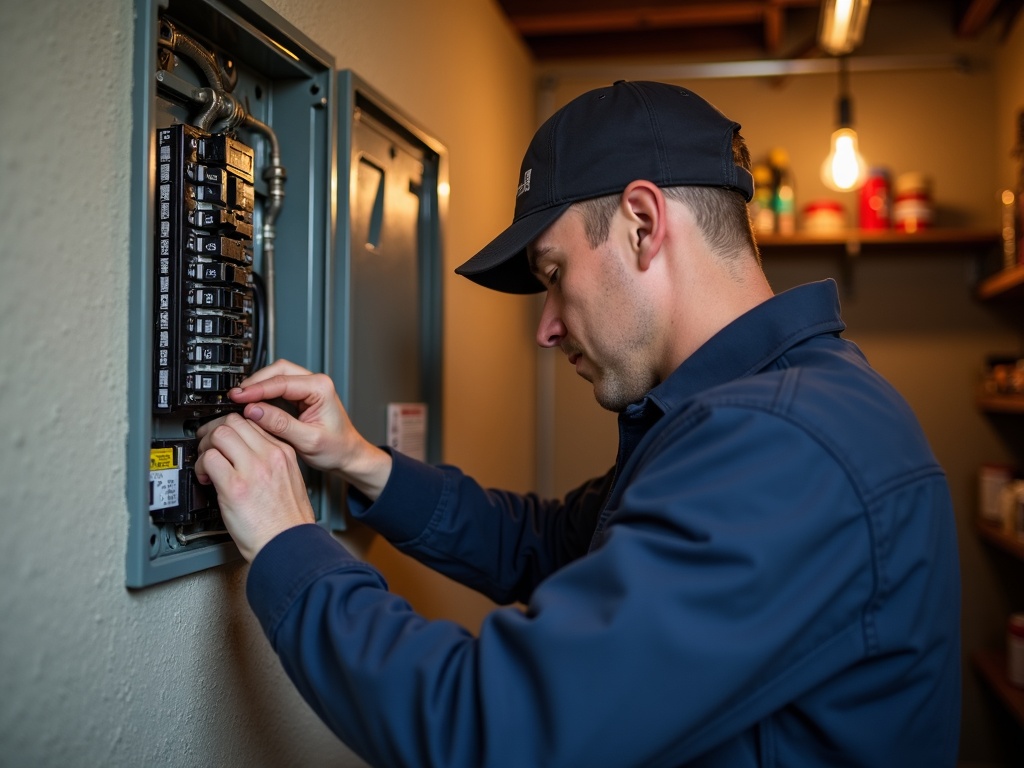
A breaker that trips once? Fine. A breaker that trips twice in a week and then refuses to reset? That’s your panel telling you something is genuinely wrong. And if you’re a homeowner near McCormick Ranch or up in Scottsdale, AZ with a 30-year-old panel trying to keep up with a new HVAC system, an EV charger, and a kitchen remodel — that message is worth taking seriously. Common Home Electrical Problems tend to start small and quiet before they become expensive or dangerous. A tripping breaker is rarely the problem itself; it’s the symptom.
Why Breakers Trip — The Three Real Reasons
Breakers exist to interrupt power before a wire overheats and starts a fire. When one trips, it’s doing its job. The question is why it needed to do its job in the first place.
- Overloaded circuit: Too many devices drawing power from one circuit. Classic example — a home office on the same circuit as a mini-split and a laser printer. The breaker trips every afternoon when everything runs at once.
- Short circuit: A hot wire and a neutral wire make unintended contact, usually inside an outlet, switch, or appliance. You’ll often see a burn mark, smell something acrid, or hear a pop. This one’s serious.
- Ground fault: Similar to a short, but the hot wire contacts a ground path instead — metal casing on an appliance, a wet floor, a person. Ground faults near water sources are exactly why kitchen and bathroom circuits require GFCI protection.
A breaker that won’t stay on after you reset it isn’t broken — it’s protecting you from something downstream that is broken. Don’t force it. Find out why.
What Common Home Electrical Problems Look Like Before They Escalate
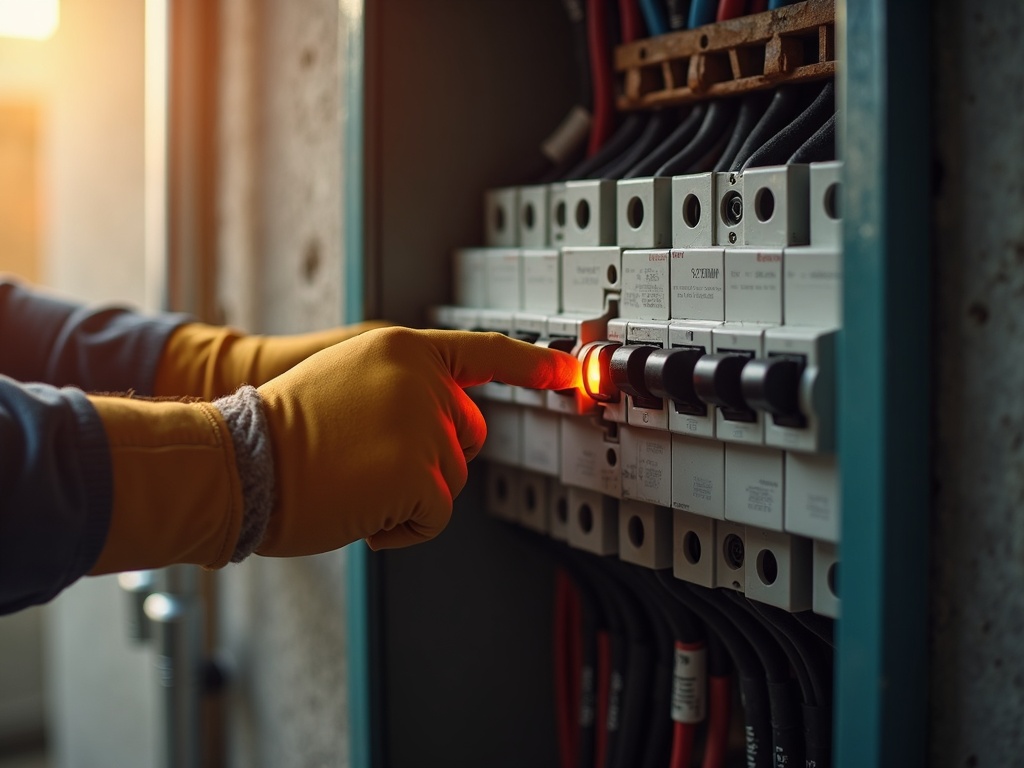
Most serious electrical issues broadcast warnings for weeks before anything dramatic happens. Homeowners in Chandler, Gilbert, and across Scottsdale, AZ tell us they noticed these signs and ignored them:
- Outlets that feel warm to the touch or show scorch marks around the face
- Lights that flicker when a large appliance kicks on
- A burning smell from the panel or any outlet — even faint and occasional
- Breakers that trip on the same circuit consistently, especially in summer when AC loads peak
- A panel that buzzes, hums, or has breakers that feel loose or sticky
Any one of these on its own is worth a licensed electrician’s eyes. Two or more together — that’s a call you make today, not next month. These are also common electrical issues found on home inspections in the Phoenix metro, often in homes built in the 1980s and 90s when Scottsdale was expanding rapidly through areas like Gainey Ranch and the 101 corridor.
Panels That Can’t Keep Up With Modern Loads

Here’s a scenario we see constantly: a homeowner buys a Tesla, schedules the delivery, then realizes their panel is a 100-amp Federal Pacific box from 1991. A Level 2 charger needs a dedicated 50-amp circuit minimum. Add a new 5-ton AC unit, an induction range from the kitchen remodel, and a home office drawing continuous power — and that old panel isn’t tripping because it’s faulty. It’s tripping because it’s doing math it was never designed to do.
The right answer isn’t resetting the breaker 14 times. It’s an electrical panel upgrade sized for your actual load, plus dedicated circuits for high-draw appliances. If you’re adding EV charging, our Tesla charger installation process starts with a full load calculation so nothing is undersized or overkill.
For homeowners with aluminum wiring — common in mid-century builds throughout Mesa, Tempe, and parts of Phoenix — a tripping breaker can signal something more hazardous at the connection points. Aluminum wiring replacement isn’t optional if you’re seeing heat or arcing at outlets; it’s a fire-risk issue the NEC takes seriously. You can read more about aluminum wiring safety from the U.S. Consumer Product Safety Commission.
What a Proper Tripping Breaker Diagnosis Actually Involves
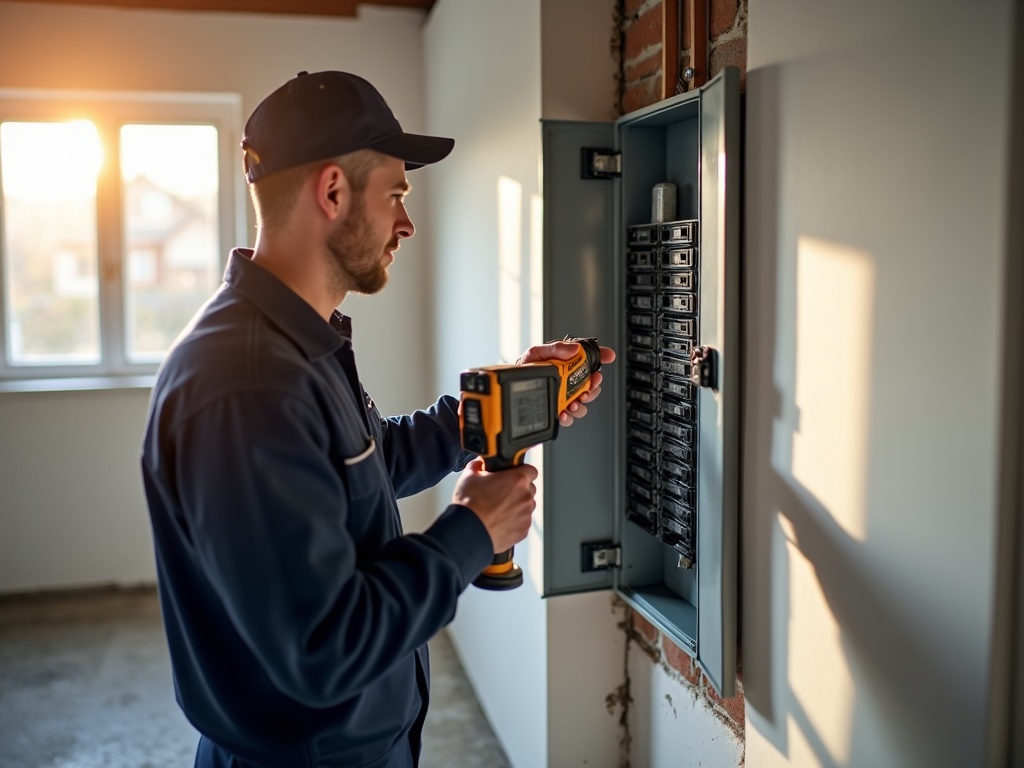
When we arrive for a breaker replacement and electrical repair call, we don’t just swap the breaker and leave. We start upstream. A thermal imaging scan of the panel shows us hot spots invisible to the naked eye — connections that are arcing at the lug, breakers running hotter than they should, or load imbalances across legs. Then we trace the affected circuit to find whether the issue lives in the wiring, the devices, or the panel itself.
For business owners in North Scottsdale or Old Town Scottsdale running medical or dental offices, we understand what’s at stake. A mid-procedure power loss isn’t just inconvenient — it’s a liability. Circuit additions and load balancing done right, with documentation, protect your operation and satisfy inspection requirements. If backup power is part of your concern, our standby generator installation work keeps the lights on when the grid can’t.
Cost-wise, a simple breaker replacement runs a few hundred dollars. A full panel upgrade in Scottsdale, AZ typically lands between $2,500 and $5,500 depending on amperage, permit requirements, and whether the meter base needs updating. We give straight prices before the work starts — no surprises mid-job.
If your breaker keeps tripping and you’re done guessing, call FHR Electric at (602) 492-9999. We’ve been serving Scottsdale, AZ and all of Maricopa County for over 20 years — licensed, insured, and built for exactly this kind of problem. We’ll tell you what’s actually going on, and we’ll fix it right the first time.