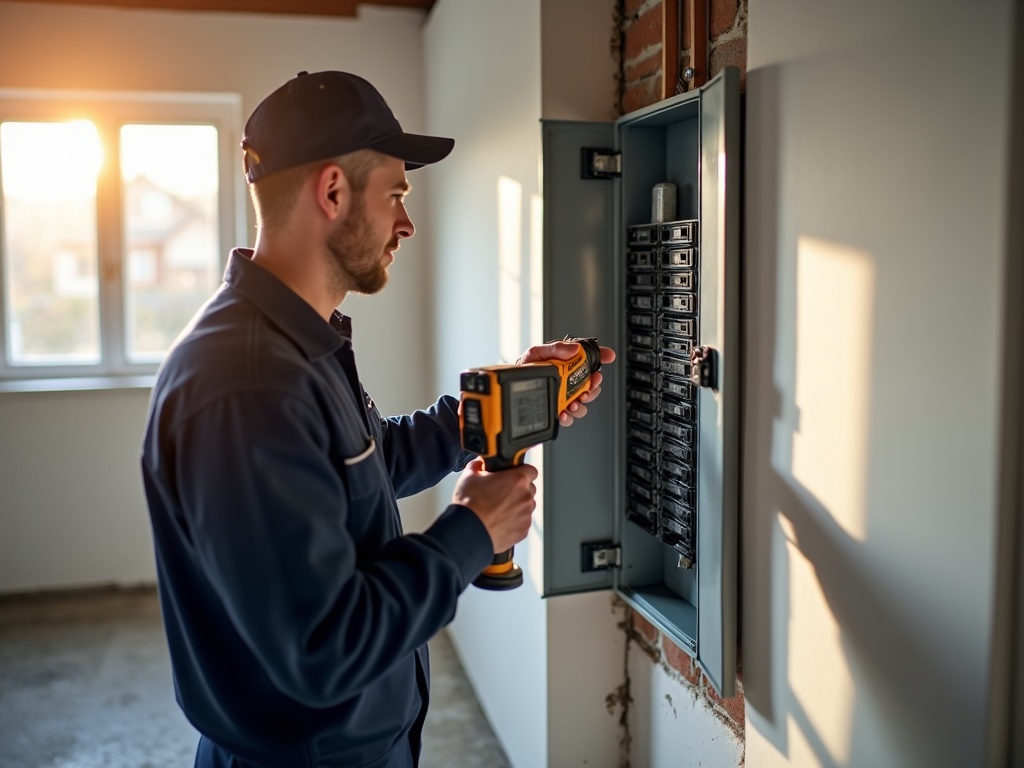
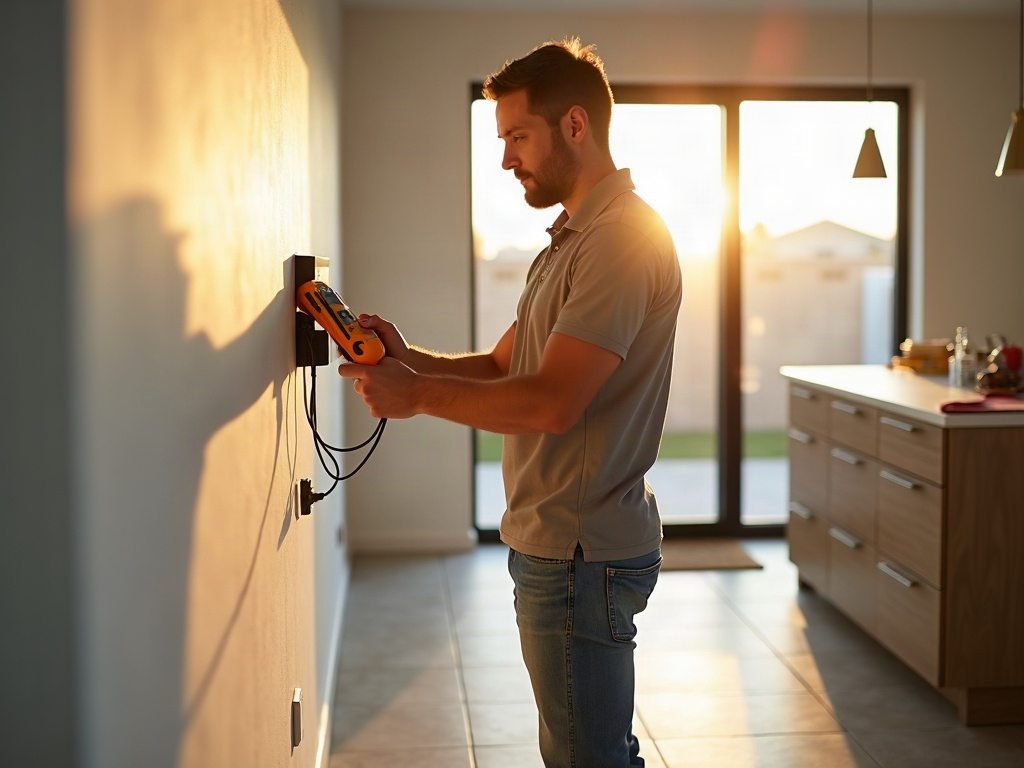
So an outlet just stopped working. Maybe it’s the one behind your desk, the one in the bathroom your partner uses every morning, or the one in the garage where the fridge is plugged in. Whatever it is, you’re standing there wondering if it’s a quick fix or something worth losing sleep over. Dead Outlet Troubleshooting isn’t as mysterious as it sounds — there’s a logical sequence every licensed electrician runs through, and once you understand it, you stop guessing and start knowing. Here’s exactly how we think through it at FHR Electric.
Step 1: Check the GFCI Outlet First
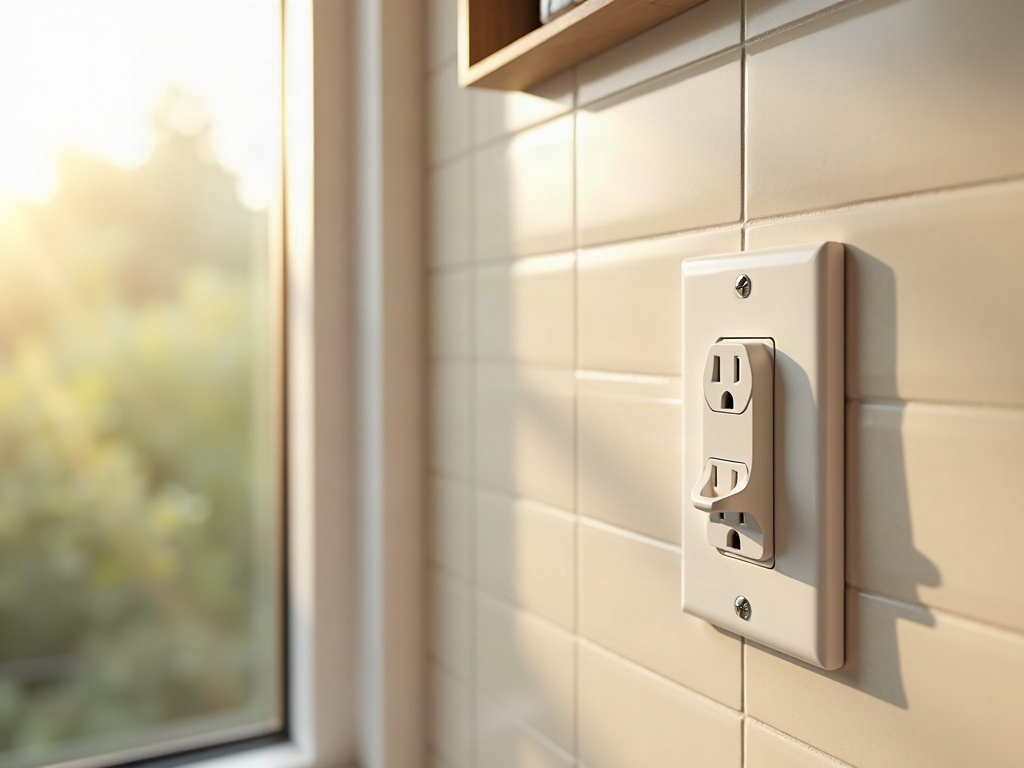
This is the first thing we check — every time — because it solves the problem more often than people expect. GFCI outlets (the ones with the small TEST and RESET buttons, common in bathrooms, kitchens, garages, and outdoor areas) protect entire circuits, not just the one outlet where they’re installed. If one trips, it can cut power to multiple outlets downstream that appear completely unrelated.
In Scottsdale, AZ homes — especially in older builds near Old Town Scottsdale or the mid-century neighborhoods around Hayden Road — we regularly find one GFCI in a bathroom controlling outlets in a hallway or even a bedroom. Homeowners have no idea until something stops working.
- Walk every bathroom, kitchen, garage, and laundry area in the house.
- Press the RESET button firmly on every GFCI you find — it should click and stay in.
- Test the dead outlet again before going further.
One tripped GFCI can silence outlets in three different rooms. Always start there — it takes two minutes and it’s free.
Step 2: Check the Breaker Panel
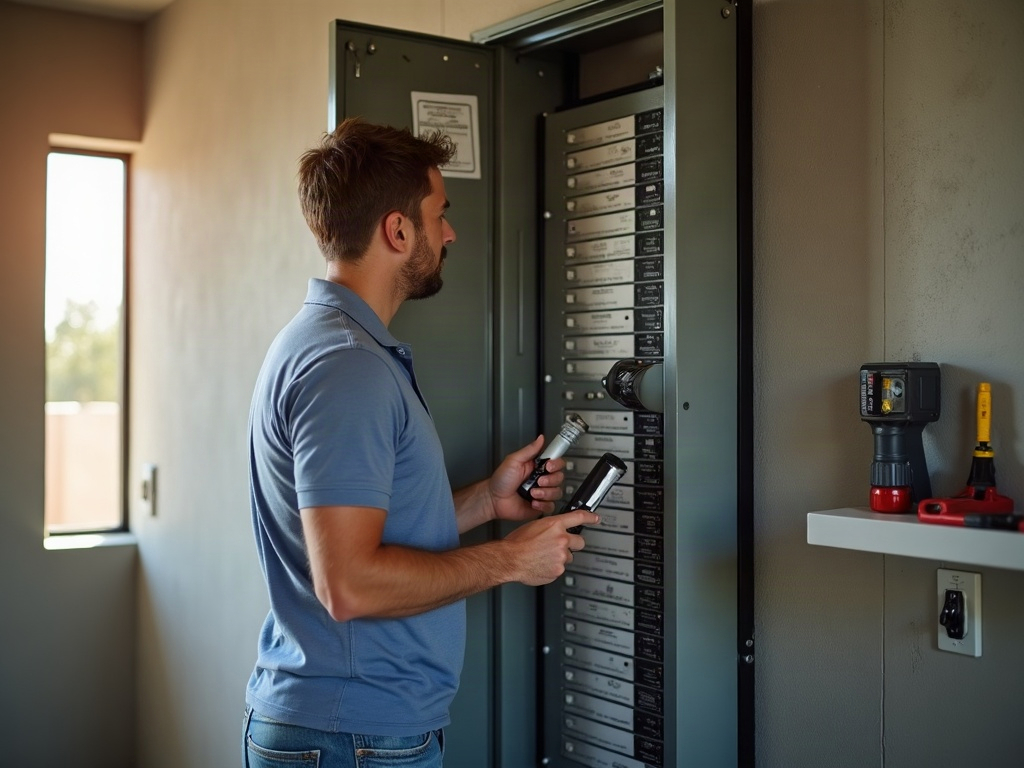
If every GFCI looks fine, head to the panel. A tripped breaker won’t always sit obviously in the OFF position — sometimes it lands in a middle “tripped” position that looks almost ON. Look closely. A tripped breaker needs to be pushed firmly to OFF first, then back to ON. If it trips again immediately, stop: that’s a sign of an overloaded or faulted circuit, and that’s not a reset situation — that’s a call.
If your panel is 20 or 30 years old and you’re seeing repeated trips, it may be struggling to handle modern loads — EV chargers, new HVAC systems, kitchen remodels. We wrote more about that in our post on how long an electrical panel actually lasts, and it’s worth a read if your home is aging.
Step 3: Test the Outlet Itself
Breaker is fine, GFCI is fine — but the outlet still doesn’t work? Now we look at the outlet itself. Outlets wear out. The internal contacts loosen over time, especially in high-use spots. Grab a simple plug-in circuit tester (under $15 at any hardware store) and check for power, polarity, and grounding all at once. If the outlet shows no power despite a live circuit, the device itself may have failed or there’s a loose wire connection behind the faceplate.
This is also where thermal imaging becomes genuinely useful — a loose or corroded backstab connection inside the wall box can show heat signatures a visual inspection will never catch. It’s one of the reasons we use it as a standard diagnostic tool, not an upsell.
When to Stop DIY and Call a Licensed Electrician
Some situations are genuinely not worth troubleshooting yourself. Call us — or any licensed electrician — if you hit any of these:
- The outlet is warm, discolored, or has a burning smell
- The breaker trips again as soon as you reset it
- Multiple outlets on different circuits fail at the same time
- You have aluminum wiring (common in Arizona homes built between 1965–1973 — read our post on aluminum wiring and what insurance companies think about it)
- You open the outlet box and see scorching, melted insulation, or backstab connections on multiple wires
That last one matters more than people realize. Backstab connections — where wires are pushed into small holes instead of secured under a screw terminal — are a known failure point and a fire risk. If your home was built before 1990 and has never been rewired, there’s a reasonable chance you have them.
If you’re in Scottsdale, AZ or anywhere across Scottsdale, AZ and AZ, this kind of wiring issue doesn’t fix itself. It gets worse — quietly, inside the wall — until something trips a breaker, damages an appliance, or in the worst cases starts a fire. That’s not fear-mongering; it’s just physics and heat.
We also see a fair number of outlet failures tied to circuits that were never designed to carry today’s loads. If you’re running a home office, a chest freezer, or a high-draw appliance off a shared circuit, the wiring may simply be undersized for the job. Our post on dedicated circuits for big appliances explains what should have its own breaker — and why sharing isn’t always safe.
And if you’re working through a home inspection or just bought a property in North Scottsdale, Fountain Hills, or Chandler and want to know what you actually have — a panel health check is one of the most practical things you can do. We explain exactly what a panel health check involves and why it matters here in Arizona.
FHR Electric has been working in Scottsdale, AZ and across Maricopa County for over 20 years. We’re licensed, insured, and we document our work — thermally and visually — so you know the job was done right, not just quickly. If a dead outlet led you here and something still feels off, call us at (602) 492-9999. We’ll tell you honestly what it is and what it costs, start to finish.