You did the research. You picked the cooktop. Maybe it’s a Wolf, a Miele, or a Bosch — something worth the investment. Now the delivery date is locked in and you’re realizing nobody told you about Induction Range Circuit Requirements until right now. That’s where things get real. Induction ranges draw serious amperage, and if your kitchen isn’t wired for it, the cooktop goes right back in the box. Here’s what actually needs to happen before it arrives — and why getting this right the first time matters more than you might think.
What an Induction Range Actually Demands from Your Electrical System
Induction cooking is efficient at the burner, but the panel doesn’t care about efficiency — it sees peak draw. Most 30-inch induction ranges require a 240-volt, 40–50 amp dedicated circuit. Higher-end or wider units (36-inch and above) can push that to 60 amps. That means a double-pole breaker of the correct rating, wire sized to match, and a dedicated run back to your panel — nothing shared with the dishwasher, refrigerator, or anything else.
Wire gauge is non-negotiable here. A 40-amp circuit requires 8-gauge copper minimum. A 50-amp circuit needs 6-gauge. Running undersized wire is exactly the kind of hidden hazard that keeps people up at night — and it’s exactly the kind of thing a licensed electrician catches before it becomes a problem. If you’ve ever wondered why a breaker keeps tripping, undersized wiring or an overloaded circuit is almost always in the conversation.
The Dedicated Circuit Requirement — And What It Really Means

A kitchen dedicated circuit isn’t just a code checkbox. It means that one breaker, one wire run, and one receptacle or hardwired connection exist for that appliance and nothing else. Induction ranges generate high, sustained loads — especially if you’re running multiple burners and the oven simultaneously. Shared circuits invite nuisance trips at best and overheating at worst.
- Breaker size: 40–50 amp double-pole for most 30-inch ranges; confirm your model’s spec sheet
- Wire gauge: 8 AWG copper for 40A, 6 AWG copper for 50A or 60A
- Circuit type: Fully dedicated — no shared loads
- Termination: NEMA 14-50 receptacle or hardwired, depending on the appliance and manufacturer spec
- Panel capacity: Your existing panel must have the available slots and amperage headroom to support the new circuit
An induction range doesn’t care how pretty your kitchen remodel is. It cares about wire gauge, breaker rating, and whether your panel has room. Get those three right and everything else is just cooking.
What Happens When the Panel Is Already Maxed Out

This is the conversation nobody wants to have mid-remodel. In Scottsdale, AZ — and across older neighborhoods from Old Town Scottsdale to the mid-century streets near Hayden Road — it’s genuinely common to find 100-amp panels that were sized for a 1970s kitchen load. Add an induction range, an EV charger, a new HVAC system, and a home office, and that panel is already at its limit before you factor in the cooktop.
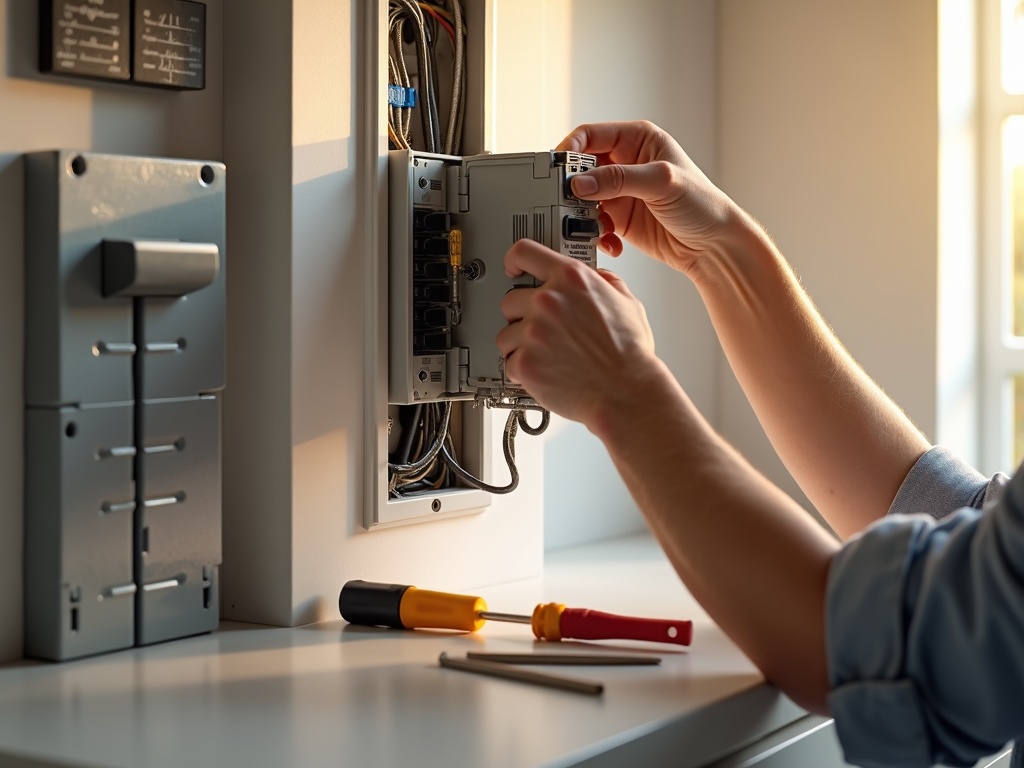
If there aren’t two open slots for a double-pole breaker, or the service amperage won’t support the added load, you’re looking at a panel upgrade before the range goes in. That’s not a surprise if you plan for it — it becomes a problem only when someone skips the load calculation. Our team runs a full load analysis before any kitchen electrical remodel so that number is on the table before work starts, not after.
For what a panel upgrade typically involves, the National Electrical Code (NFPA 70) is the standard our licensed electricians follow — and what city inspectors in Maricopa County check against. If your panel is 30 years old, now is the right time to talk about an electrical panel upgrade rather than discovering the gap during a failed inspection.
Double Oven or Built-In Appliance? The Circuit Math Changes
If you’re pairing that induction cooktop with a built-in wall oven — or going with a slide-in range that includes a lower oven — the load calculation shifts again. A double oven circuit installation typically means a separate dedicated circuit for each appliance, not one shared run. That’s two double-pole breakers, two wire runs, and two receptacles or hardwired connections. Some combination appliances are designed to share a single large-capacity circuit; the manufacturer spec sheet is the authority, and we always verify before pulling wire.
Planning this alongside other circuit additions and load balancing work — like upgrading the refrigerator circuit or adding under-cabinet lighting — is the smartest way to sequence a kitchen remodel. One permit, one inspection, one clean rough-in.
Homeowners working through a high-end remodel in North Scottsdale — near DC Ranch, Silverleaf, or along Pima Road — often discover that a full kitchen electrical scope, including the induction range circuit, a wine cooler circuit, and a built-in appliance hookup, is cleaner and more cost-effective to pull as a single permitted job rather than piecemealing it over two years. Budget-wise, a new 240V dedicated circuit for a range typically runs in the $300–$800 range depending on panel distance and accessibility; a full panel upgrade, if needed, runs higher and varies with service size.
If you’re already planning equipment and appliance hookup as part of a broader remodel, we can scope the entire kitchen electrical in one visit — no repeat calls, no surprise add-ons.
Getting Induction Range Circuit Requirements handled correctly before your cooktop lands on the truck is the difference between a smooth installation and a frustrating delay. We’ve been doing this in Scottsdale, AZ and across AZ for over 20 years, and we know what inspectors in Maricopa County expect. Call FHR Electric at (602) 492-9999 to schedule a load evaluation and get a straight-price quote before your delivery date arrives.