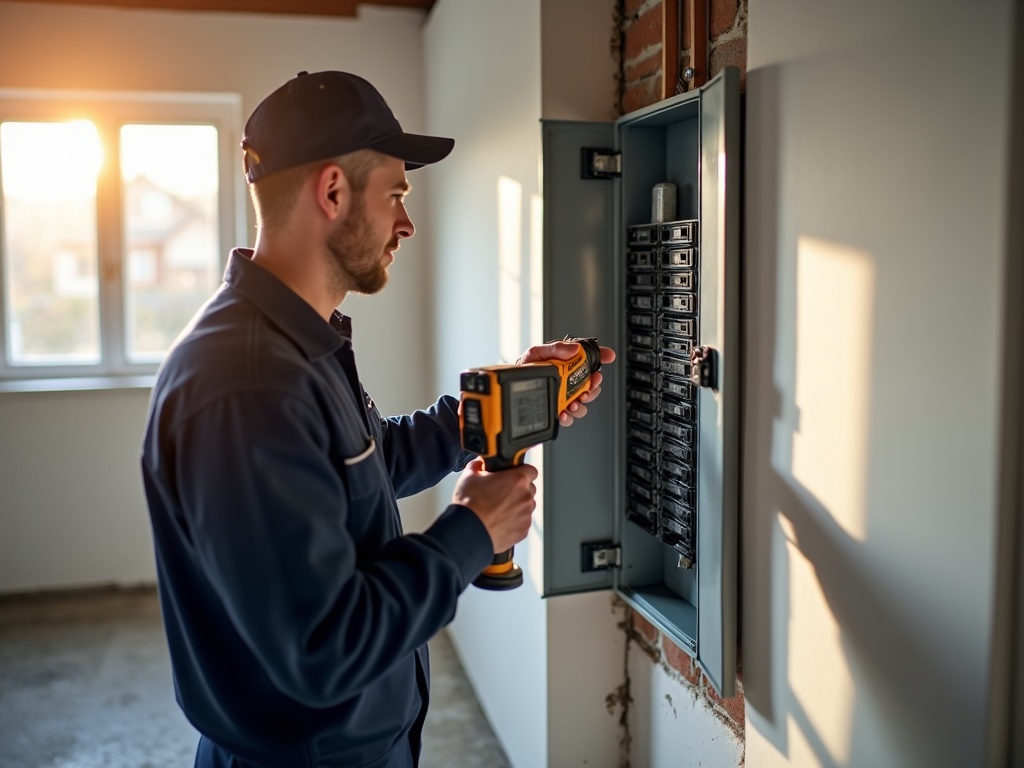
You push the breaker back to ON. It snaps off before your hand even leaves it. That’s not a glitch — that’s your panel doing exactly what it’s designed to do. When a Breaker Trips Immediately, the circuit protection is working, but what it’s protecting you from is the real question. Here in Scottsdale, AZ and across greater Scottsdale, AZ, we see this situation regularly, and the answer is almost never “just reset it and move on.”
Why a Breaker That Trips Immediately Is Different
There’s a meaningful difference between a breaker that trips under heavy load and one that won’t stay on for even a second. The first is usually an overloaded circuit — too many appliances drawing more current than the breaker is rated for. The second is a hard fault: a dead short or a ground fault that drives current so far above the rating that the breaker responds instantly.
A dead short happens when a hot wire makes direct contact with a neutral or ground — inside an outlet box, at a damaged cord, inside a fixture, or behind your walls. A ground fault is similar but involves current finding an unintended path to ground, often through moisture or deteriorated insulation. Either way, the breaker is seeing a spike it can’t ignore, and it’s cutting power before something gets hot enough to cause a fire.
A breaker that won’t reset isn’t broken — it’s doing its job. The problem it’s protecting you from is still live and waiting.
The Most Common Causes When a Breaker Trips Immediately
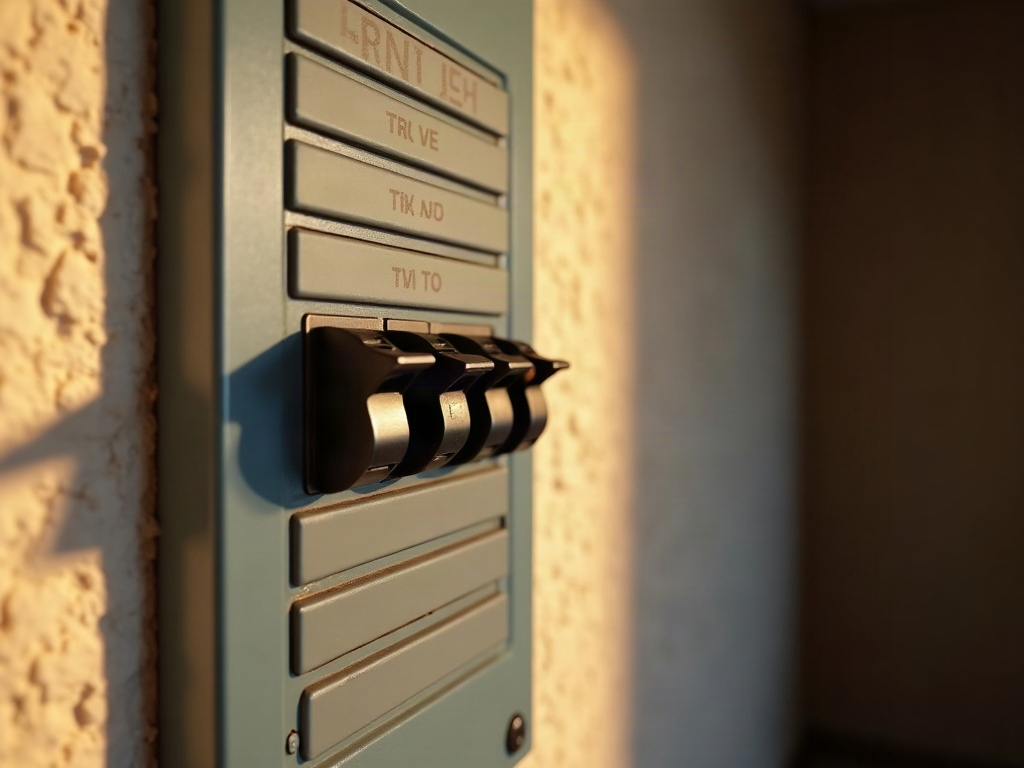
- Damaged wiring inside a wall or junction box — insulation that’s cracked, chewed by pests, or nicked during a previous renovation. If your home has older wiring, read up on how pest damage to wiring can escalate faster than you’d expect.
- A failed appliance or fixture — a shorted motor in an HVAC unit, a water heater element, or even a holiday light string with a broken wire. Unplug everything on the circuit before resetting; if it holds, you’ve found your culprit.
- A faulty outlet or switch — internal contacts can arc and fail, creating a persistent short even when nothing is plugged in.
- Moisture intrusion — in Scottsdale, AZ‘s monsoon season, water can get into outdoor boxes, pool equipment conduits, or garage sub-panels and cause ground faults that reset only after everything dries out — or doesn’t reset at all.
- A failing breaker itself — breakers are mechanical devices. After years of trips and resets, the internal mechanism can weaken. But here’s the thing: a bad breaker that trips immediately is still less dangerous than one that stops tripping when it should.
What Not to Do
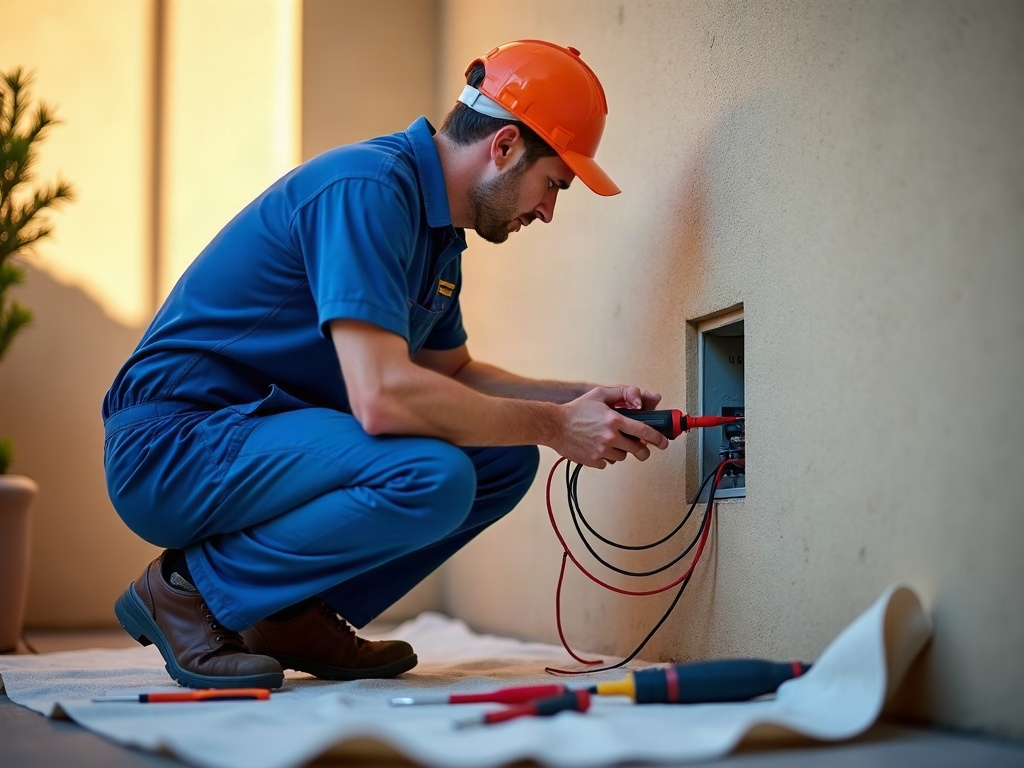
Forcing the breaker, taping it in the ON position, or swapping it for a higher-rated breaker to “get through the weekend” — these are the moves that turn a manageable fault into a structure fire. We’ve seen it. The circuit is rated the way it is for a reason, and the wiring behind your walls is sized to match. Bypassing the protection doesn’t fix the fault; it just removes the safety net.
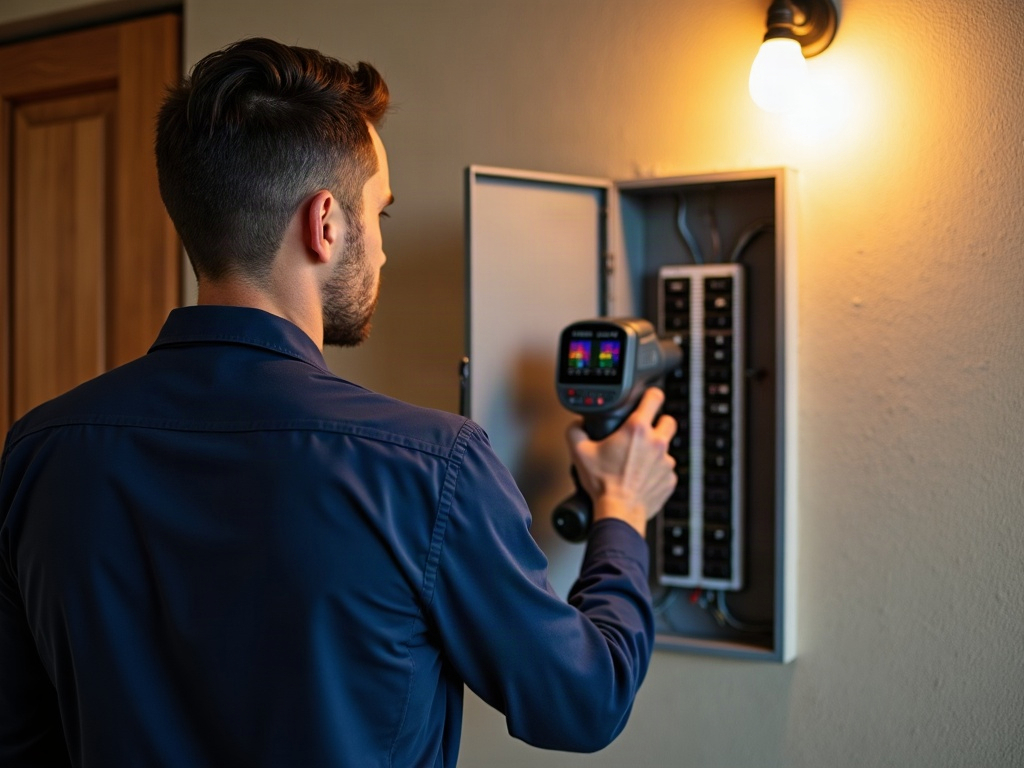
If you’re in North Scottsdale near DC Ranch or McCormick Ranch, or closer to Old Town Scottsdale where a lot of the housing stock carries decades of layered renovations, the wiring story behind your walls can be complicated. A visual peek at the panel tells you very little. That’s exactly why we use thermal imaging diagnostics — because thermal imaging finds heat signatures inside walls that no visual inspection can catch, and a hard fault that repeatedly trips a breaker almost always leaves a thermal trace.
When It’s Time to Replace the Breaker — or the Panel
Sometimes the fault is in the breaker itself, and replacing a single breaker in Scottsdale, AZ is a straightforward job for a licensed electrician — usually a modest cost and done in an hour. But that conversation needs to start with confirming the fault is actually in the breaker, not the circuit. Swapping a breaker into a shorted circuit accomplishes nothing and wastes your money.
If your panel is 25–30 years old, if you’re seeing multiple issues at once, or if you’re looking at a known problem brand, the breaker replacement conversation quickly becomes a panel conversation. Some older panels — Zinsco and Federal Pacific in particular — have breakers that fail to trip under fault conditions, which is the opposite problem and far more dangerous. Worth knowing where you stand before spending money on individual breakers in a compromised enclosure. Our piece on Zinsco, Pushmatic, and Challenger panels lays out exactly why those brands are red flags.
And if your panel is genuinely aging, it’s worth a quick read on how long an electrical panel actually lasts — the answer might surprise you.
If you’re a restaurant owner in Tempe or a dental office manager in Gilbert, a hard fault that kills a circuit mid-service is a worst-case scenario you can plan around — but only if you call a licensed electrician before it escalates, not after. We’ve worked extensively with commercial clients across Maricopa County and understand that downtime has a real dollar cost attached to it.
The bottom line: a breaker that trips the instant you flip it is telling you something specific and important. It deserves a real diagnosis, not a reset-and-hope approach. Call FHR Electric at (602) 492-9999 and let’s figure out exactly what’s on that circuit, where the fault is, and what it actually takes to fix it — once, correctly, with a straight price before we start.