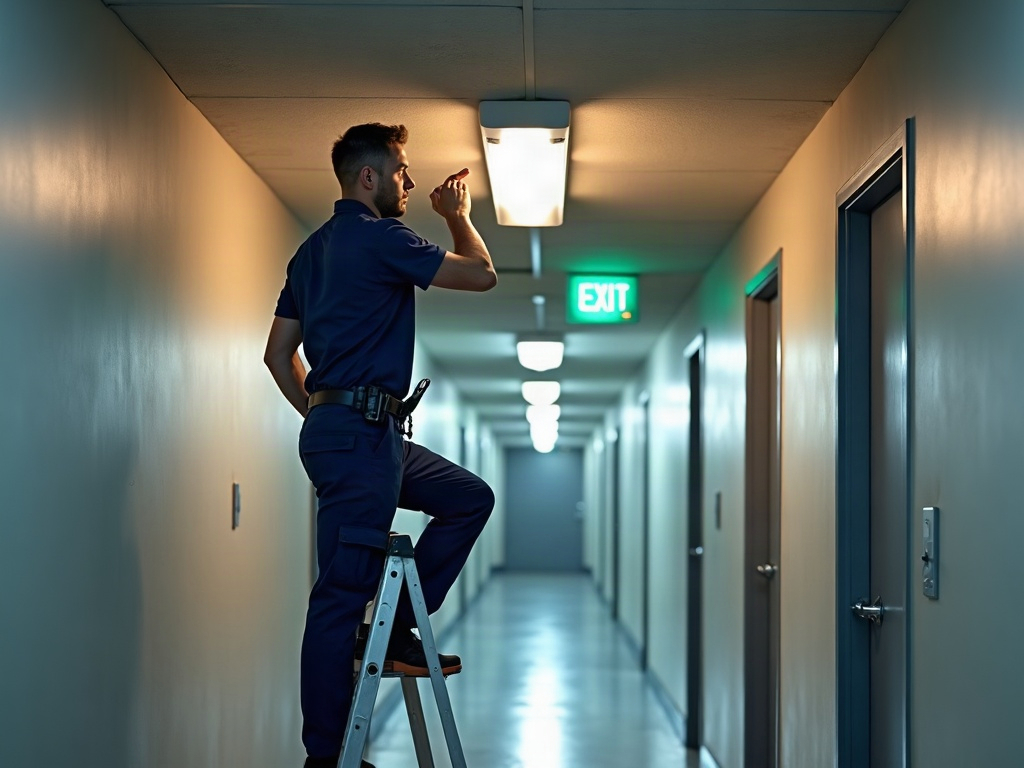
If you manage a restaurant in Old Town Scottsdale, run a medical or dental office near the 101, or own a commercial space anywhere in Scottsdale, AZ or greater Maricopa County, Emergency Lighting Installation is one of those line items that can quietly derail a certificate of occupancy or a fire-marshal visit. The short answer: Arizona adopts the International Building Code (IBC) and NFPA 101 Life Safety Code, both of which set very specific requirements for how bright your egress paths must be, how long backup power must last, and exactly where fixtures must land. Know those rules going in and you pass. Go in blind and you reschedule the inspection, delay your opening, and write a second check to fix it.
What Arizona Code Actually Requires
Arizona’s statewide building code is administered through the Office of the State Fire Marshal and adopted locally by cities including Scottsdale, Phoenix, Chandler, Gilbert, Mesa, and Tempe. For commercial and multi-family occupancies, the rules trace back to IBC Chapter 10 and NFPA 101 Section 7.9. Here’s what those sections actually specify:
- Minimum illuminance: 1 foot-candle average along the path of egress at floor level, with a maximum-to-minimum ratio no greater than 40:1 — meaning no dark pockets.
- Battery backup duration: Emergency lighting must sustain full illuminance for a minimum of 90 minutes after normal power fails. Tested. Not estimated.
- Coverage points: Exit doors, stairways, corridors, ramps, escalator areas, and any change in elevation along an egress path must all be covered.
- Exit sign illumination: Internally illuminated exit signs must maintain 5 foot-candles on the face and also run on the same 90-minute backup circuit.
- Testing documentation: Monthly 30-second functional tests and an annual 90-minute full-duration test are required — and inspectors in Scottsdale, AZ will ask for the written log.
That last point trips up more owners than any fixture placement issue. A working system with no maintenance log is still a violation. Keep a dated binder or a digital record tied to your property address.
The Three Things Inspectors Fail Most Often
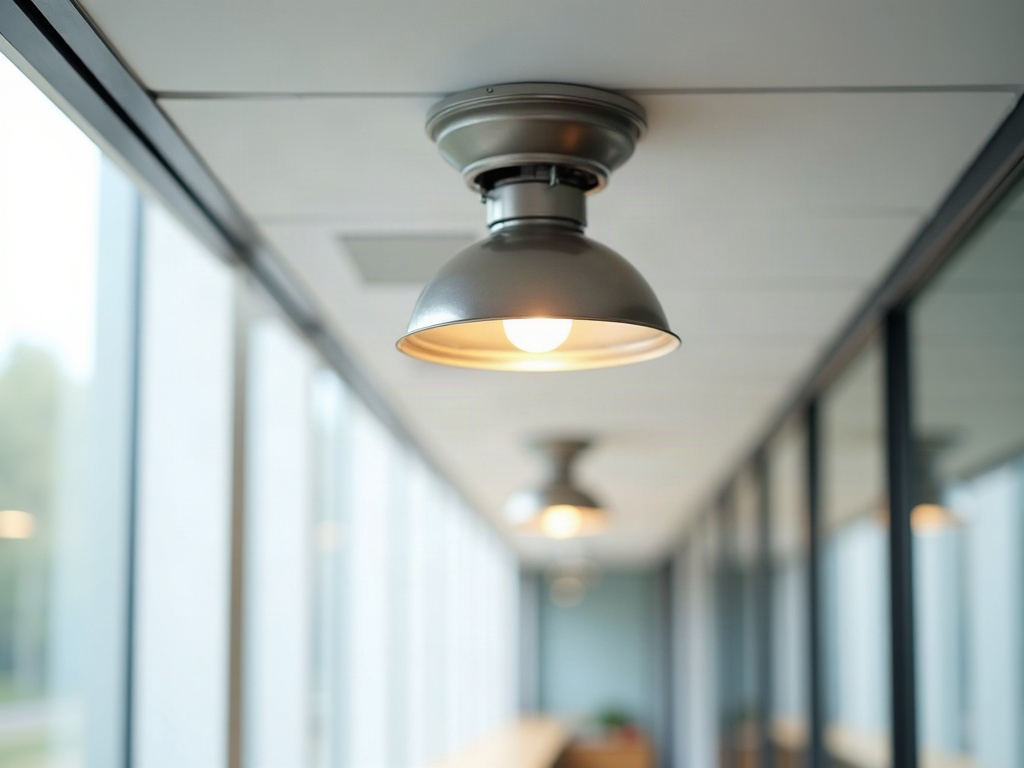
We’ve pulled permits and worked through inspections across Maricopa County for over 20 years. The same issues come up repeatedly — and none of them are mysterious once you know what to look for.
- Fixture placement gaps: Owners add a wall or partition during a remodel and never update the emergency lighting layout. The new corridor now has a dark stretch that fails the 40:1 uniformity ratio. Any time you change your floor plan, the egress lighting plan needs a second look.
- Dead or degraded batteries: Sealed lead-acid batteries in emergency fixtures typically last 3–5 years in Arizona’s heat. A unit that passes a 30-second test can still die at the 45-minute mark during the annual full-duration test. Replace batteries on a schedule, not on a failure.
- Unlicensed original installation: This one stings. A previous tenant or a low-bid contractor wired fixtures to a standard circuit instead of a dedicated emergency branch circuit or central inverter system. The fixtures look fine until a real outage — or until an inspector checks the panel. If you’ve inherited a space and you’re not certain of the wiring history, understand what unlicensed electrical work actually costs you down the road before signing a lease or a purchase agreement.
The fastest way to fail an emergency lighting inspection isn’t a bad fixture — it’s a missing test log. Document every test the day you run it.
How to Set Up a System That Passes — and Stays Passing

Getting to a clean inspection isn’t complicated when the work is done right from the start. Here’s the practical sequence:
- Start with an egress path drawing. Map every door, corridor, stair, and exit before specifying a single fixture. The NFPA 101 Life Safety Code requires that coverage be continuous — gaps in the plan become gaps in coverage.
- Choose the right backup architecture. Individual self-contained units (each with its own battery) work well for smaller spaces. Central battery inverter systems are more reliable for larger commercial builds because a single battery bank serves all fixtures and a single monitoring point tells you the whole system’s health. We help clients across Gilbert, Chandler, and North Phoenix evaluate which approach fits their load and layout.
- Specify the right fixture for Arizona heat. The Valley’s summer temperatures accelerate battery degradation. Specify fixtures rated for high-ambient environments and factor in a battery replacement cycle of 3–4 years rather than the national average of 5.
- Pull the permit. Emergency lighting work in a commercial space requires a permit in every Maricopa County jurisdiction. A permitted installation means the city inspector signs off — which means you have documented proof the system meets code on the day it was installed. That documentation matters at renewal time and if you ever sell the property. Understanding why a contractor with a full construction background matters is especially relevant here: we coordinate electrical permits alongside the broader build schedule so nothing falls through the cracks.
- Build the test log immediately. Run the first 30-second test the day the system goes live, date it, and file it. Hand the log template to whoever manages the building. The 90-minute annual test should go on the calendar before you leave the job site.
If your space is in Scottsdale, AZ or anywhere in Scottsdale, AZ and you’re facing an upcoming inspection, a new tenant build-out, or you’ve simply never been sure whether the system you inherited actually meets code — we can assess it, document what’s there, and fix what isn’t. We use thermal imaging to verify connections that a visual check alone would miss; see what thermal imaging finds inside your walls for a sense of how that works. And if the broader electrical system in your space needs attention alongside the egress lighting, our team handles it all under one licensed, insured contractor — no handoffs, no gaps in accountability.