

Here’s something I think about every time a homeowner tells me a previous electrician “seemed legit” — seeming legit and being licensed are two completely different things. If you’re in Scottsdale, AZ or anywhere across Maricopa County, understanding the Arizona Registrar of Contractors Electrical licensing system is one of the fastest, most concrete ways to protect yourself before anyone touches your wiring. It takes about 60 seconds. Let me walk you through it.
What the ROC License Actually Means for Electrical Work
The Arizona Registrar of Contractors — the ROC — is the state agency that licenses, regulates, and disciplines contractors across AZ. For electrical specifically, a licensed contractor must pass trade exams, carry liability insurance, maintain a surety bond, and keep a clean disciplinary record. The license isn’t just a piece of paper; it’s an ongoing accountability structure.
What it covers in practice:
- Residential electrical (CR-11): Single-family homes, multi-family up to certain thresholds — panel upgrades, EV charger installs, rewires, and circuit additions all fall here.
- Commercial electrical (CC-11): Covers offices, restaurants, medical suites, retail — anywhere you need code-compliant work that can survive an inspection and won’t shut your business down.
- Low voltage (CR-40 / CC-40): Data, structured cabling, access control, and similar systems — a separate classification that unlicensed handymen routinely skip.
The classification matters because a contractor licensed only for residential work cannot legally perform commercial electrical. Ask specifically which license class applies to your job.
How to Verify an Electrician’s License in AZ — Right Now
The Arizona Registrar of Contractors public license lookup is free and requires no account. Here’s the exact sequence:
- Go to roc.az.gov and click “License Search.”
- Enter the contractor’s name, business name, or ROC license number.
- Check the license status (Active vs. Suspended vs. Expired), the license class (residential vs. commercial), and the complaint history.
- Confirm the expiration date — an expired license means zero coverage, even if the work looks fine on day one.
An expired ROC license isn’t a technicality — it means the contractor’s bond and insurance attestations have lapsed too. If something goes wrong, you’re on your own.
You can also check whether any formal complaints were filed and how they were resolved. One unresolved complaint isn’t necessarily a dealbreaker; a pattern of them absolutely is.
Why This Matters More in Scottsdale, AZ Than You Might Think
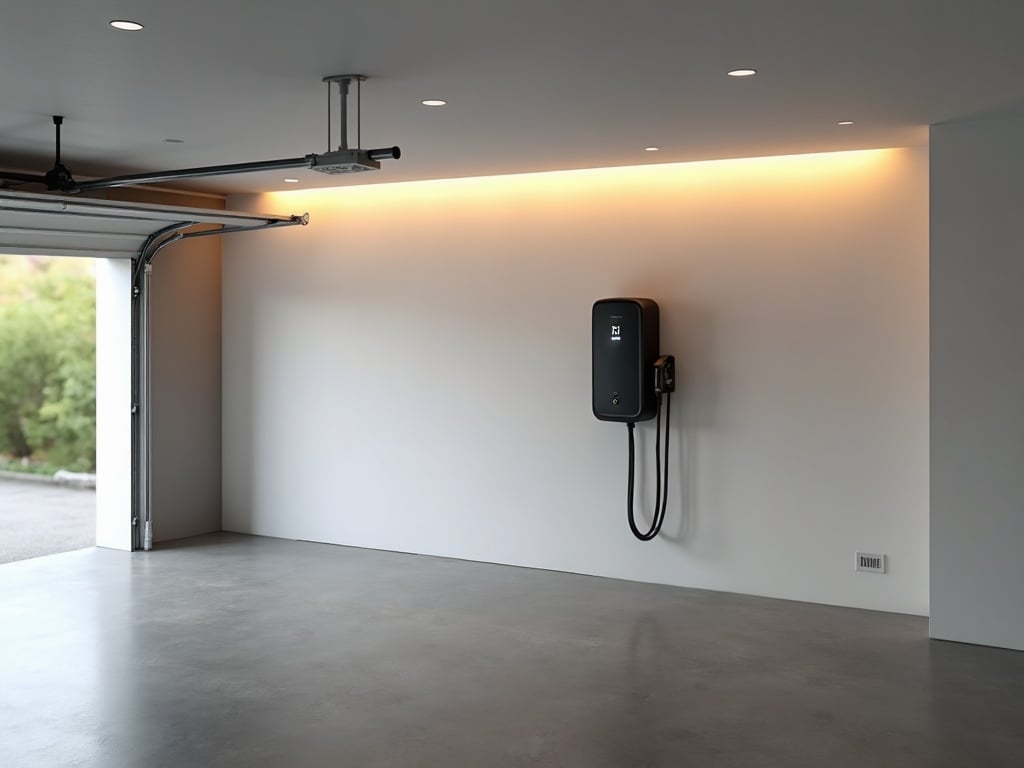
The Scottsdale, AZ market — and the broader corridor from Old Town Scottsdale up through North Scottsdale toward Fountain Hills — attracts a lot of “handyman electricians” who bank on homeowners not checking. High-end remodels, new EV charger installs in luxury garages off Pima Road, kitchen upgrades in McCormick Ranch — these are exactly the jobs where unlicensed work gets buried in walls and doesn’t surface until a failed inspection or, worse, a fire.
If your panel is 30 years old and you’re adding an EV charger on top of new HVAC and a kitchen remodel, you genuinely need someone who understands load calculations — not just someone who can pull wire. Start with our guide on what a home electrical load assessment actually involves before upgrading to understand what your system can actually handle before a single breaker gets touched.
And if you’ve just taken delivery of a Tesla or another EV, don’t let urgency push you toward whoever shows up cheapest. Read through the real difference between a hardwired EV charger versus a plug-in adapter — because the wrong choice isn’t just inconvenient, it’s a potential fire hazard on a 240-volt circuit.
What a Legitimate Arizona Registrar of Contractors Electrical Contractor Looks Like
Beyond the ROC lookup, here’s what separates a qualified electrical contractor from someone who printed business cards last month:
- They pull permits. Every time. A permit isn’t overhead — it’s the city’s independent check on the work.
- They give you a written scope before starting, not a verbal “around $X” that balloons mid-job.
- They carry both general liability and workers’ comp — two different things, both necessary.
- They can show you their ROC number without hesitation. If they dodge that question, end the call.
For restaurant and medical office owners in the Chandler, Gilbert, and Mesa corridors, the stakes are even higher. A failed inspection or a mid-service outage doesn’t just cost money — it costs customers and, in a medical setting, can create genuine liability. That’s not a risk worth managing with the lowest bid on Craigslist.
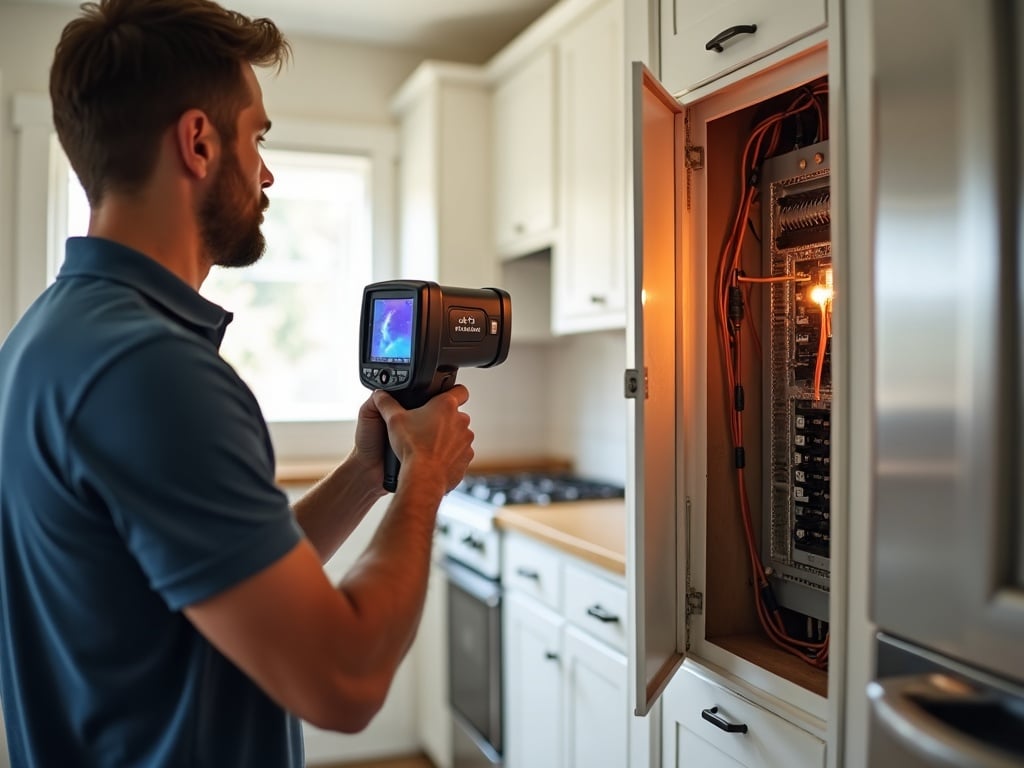
We’ve spent over 20 years working across the Phoenix metro as part of FHR Construction — licensed, insured, and accountable in ways a one-truck operator simply can’t be. We use thermal imaging on every significant job so you have documented proof the work was done right, not just a verbal assurance. If a breaker keeps tripping or you’re smelling something near your panel, don’t wait — read what a tripping breaker is actually telling you, then call us.
Verify us on the ROC first. We’ll be there when you search. Then call FHR Electric at (602) 492-9999 and let’s talk about what your home or business actually needs — no pressure, no surprise invoices, just someone who’s been doing this right in Scottsdale, AZ for two decades.