
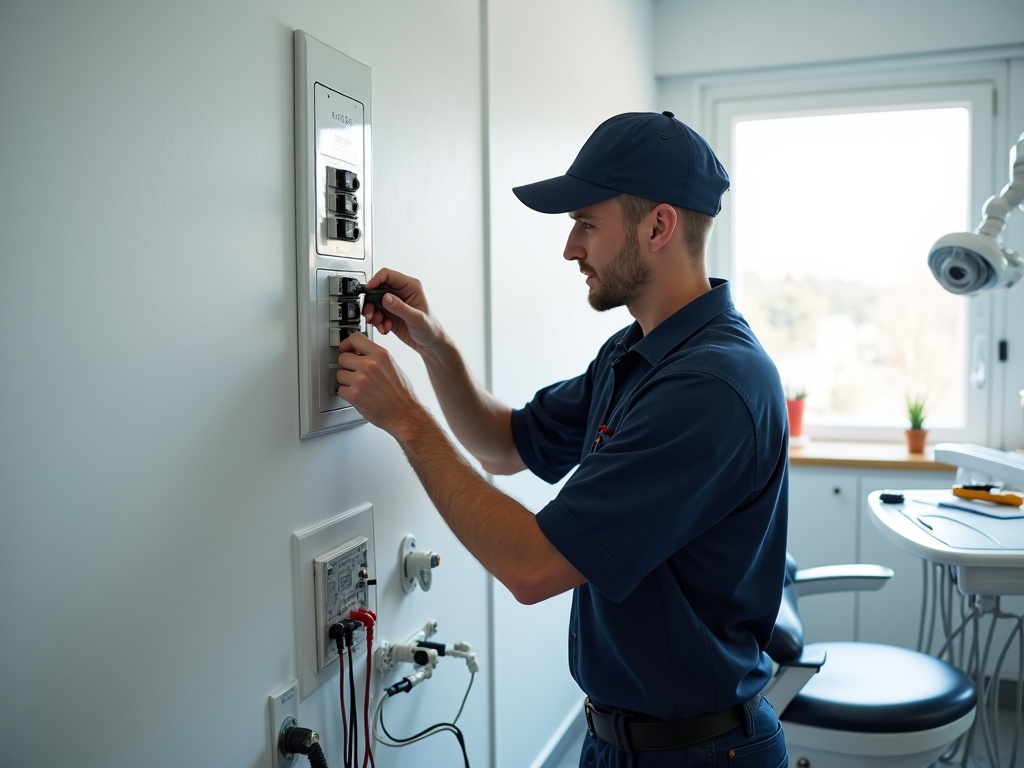
Picture this: you’re mid-procedure, your autoclave is running, the vacuum system is humming, and your digital X-ray unit is cycling — and then a breaker trips. The room goes quiet in all the wrong ways. If you run a dental or medical practice anywhere from Old Town Scottsdale to North Phoenix, that scenario isn’t hypothetical. It’s what happens when Clean Power for Medical Devices gets treated as an afterthought instead of a design requirement. We’ve walked into enough exam suites and treatment rooms across Scottsdale, AZ to know exactly what separates a properly wired medical office from one that’s quietly waiting to fail.
Why Medical-Grade Circuits Are a Different Animal
Standard commercial wiring works fine for a retail shop or a general office. Healthcare is different. Diagnostic equipment, sterilization units, and patient-connected devices are sensitive to voltage fluctuations, harmonic distortion, and shared-circuit noise. A poorly isolated ground doesn’t just cause equipment errors — it can void a manufacturer’s warranty and, in some cases, create a patient safety issue.
Here’s what we mean in practical terms. Imagine the electrical system as a highway. Shared circuits are like merging lanes where everyone’s traffic jams together. Isolated, dedicated circuits are express lanes — smooth, predictable, nothing sharing the ride. That’s what sensitive imaging equipment and surgical lighting actually need.
- Dedicated circuits for each high-load device — autoclaves, compressors, and vacuum systems draw serious amperage. Sharing a circuit is a recipe for nuisance tripping and premature equipment wear.
- Isolated ground circuits — critical for any device connected to a patient or processing digital imaging data. These run a separate ground conductor back to the panel rather than sharing the equipment ground.
- Proper wire sizing and breaker ratings — undersized wiring creates heat. In a wall you can’t see, that heat is a slow-motion fire risk.
- GFCI protection in wet locations — sterilization areas, sinks near workstations, and any wet-work zones require ground fault protection by code.
The Dental Vacuum System and Compressor: Two Circuits You Can’t Skip

If there’s a single point where we see dental office electrical get under-engineered, it’s the vacuum system and air compressor. Both are motor-driven loads with high startup surge currents. Both run constantly during patient hours. Putting them on a shared circuit — or worse, daisy-chaining them off a panel that’s already near capacity — is the kind of decision that costs double to fix later.
Notice how much quieter and more consistent your equipment runs when each motor load has its own home-run circuit back to the panel. The compressor doesn’t compete with the autoclave. The vacuum doesn’t spike voltage across the X-ray unit. That’s not a luxury — it’s basic electrical engineering applied to the dental office environment. We size the wire, spec the breaker, and confirm the panel has the headroom before a single conduit gets pulled. For practices in Scottsdale, AZ that are expanding into new suites or building out from shell space, getting the pre-construction electrical planning right before framing saves thousands downstream.
“We can’t afford downtime in the office” — we hear that phrase constantly. The answer isn’t hoping the wiring holds. It’s building a system where failure isn’t the likely outcome.
Panel Capacity, EV Chargers, and the Modern Medical Office
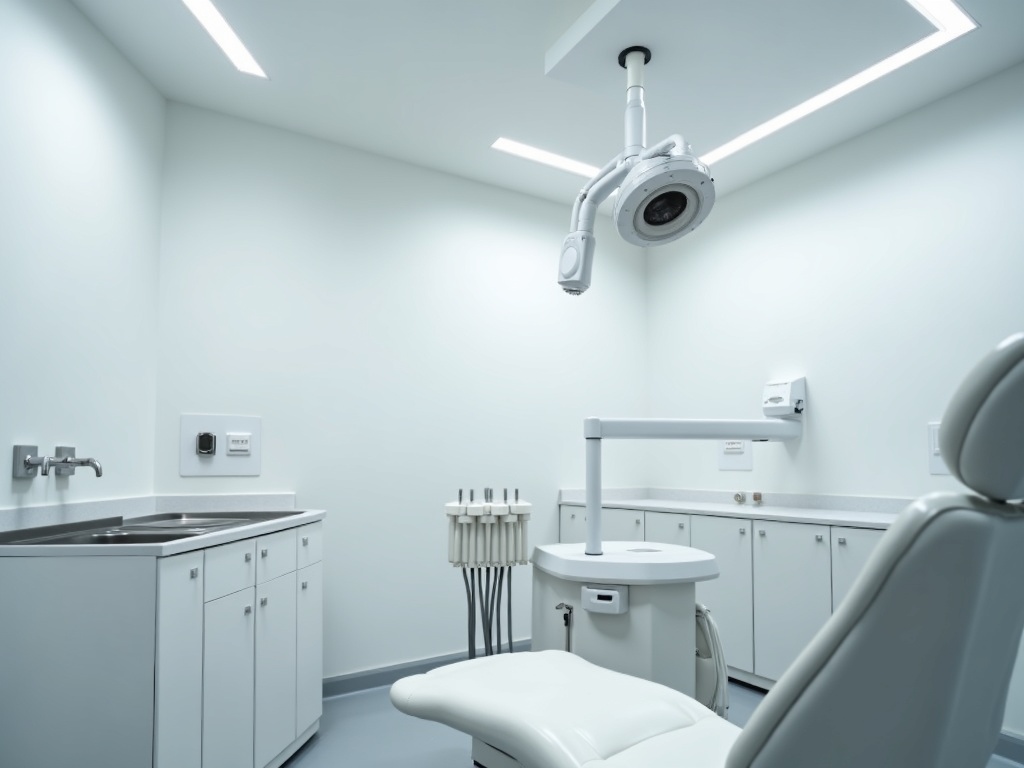
More dental and medical practices across Chandler, Gilbert, and North Scottsdale are adding EV chargers to their parking areas — both as a patient amenity and for staff. That’s a real additional load, and it has to be accounted for in your panel capacity before installation day. A service that was adequate five years ago may not handle a new HVAC upgrade, added treatment rooms, and two Level 2 chargers without a panel upgrade or a service entrance evaluation.
We do a full load assessment before recommending anything. That means measuring actual running loads, calculating demand factors, and checking whether the existing panel — and meter base — can support what you’re asking of them. If an upgrade is needed, we scope it honestly, start to finish, no surprise line items after the fact.
Emergency and exit lighting is another area that healthcare occupancies handle differently than a standard office. Properly installed emergency and exit lighting isn’t just a code checkbox — in a healthcare setting it’s a life-safety system, and it needs to be wired, tested, and documented accordingly.
What Clean Power for Medical Devices Actually Looks Like in a Finished Office
Walk into a well-wired treatment room and you might not notice anything remarkable — and that’s the point. The imaging system boots clean. The lighting doesn’t flicker when the compressor kicks on. The autoclave runs its full cycle without tripping anything. The outlets near the sink are GFCI-protected and properly labeled. Every circuit traces back to a panel that’s accurately mapped and has room to grow.
That calm, consistent environment doesn’t happen by accident. It’s the result of someone doing the engineering work upfront instead of patching problems after opening day. We’ve been doing this kind of commercial electrical work across Maricopa County for over 20 years — and unlike a one-truck operator who’s here today and unreachable next month, FHR Electric is a licensed, insured Arizona contractor with a full construction division behind it. You can verify our Arizona ROC license in about sixty seconds, and we’d encourage you to.
If you’re building out a new practice, expanding an existing one, or simply inheriting a space and wondering whether the wiring is actually up to the demands you’re placing on it — give us a call. We serve Scottsdale, AZ and the broader Scottsdale, AZ area, from Fountain Hills to Tempe to Glendale. Call FHR Electric at (602) 492-9999 and let’s talk through what your office actually needs before the next breaker trips at the worst possible moment.