
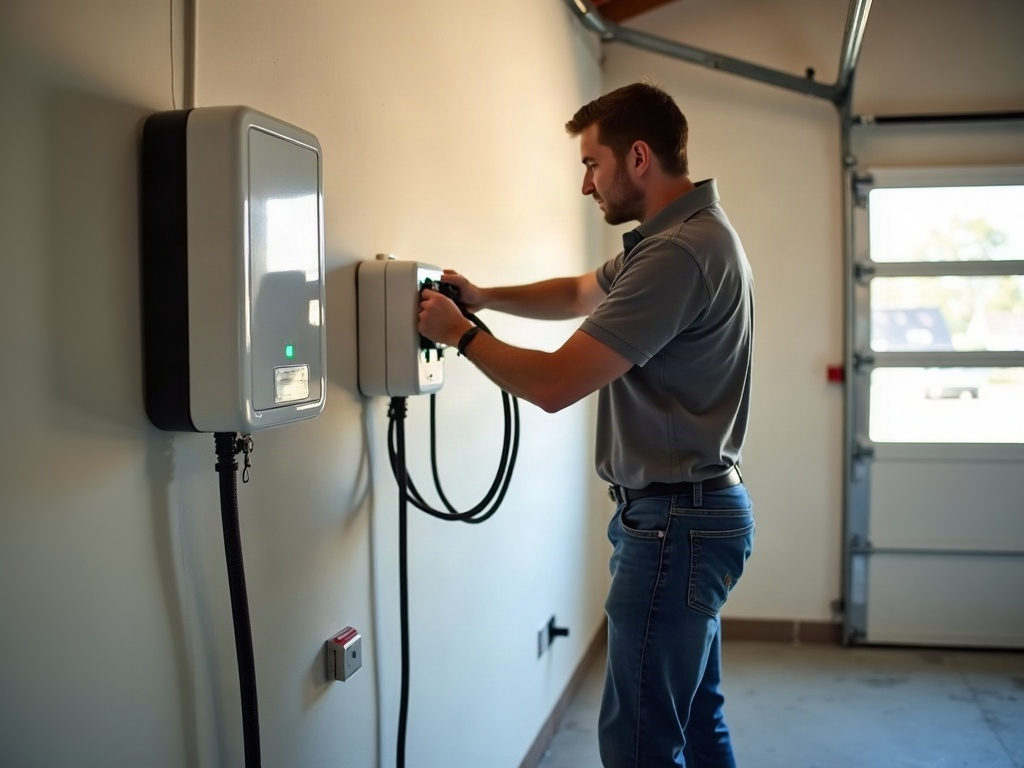
You just picked up a Tesla — maybe from the delivery center off Scottsdale Road — and now you’re staring at your garage wall wondering how hard this charger thing can really be. The short answer: harder than plugging something in, easier than people make it sound, and entirely worth doing right. Wifi EV Charger Installation is one of the most common calls we field from homeowners in Scottsdale, AZ and across Scottsdale, AZ, and there’s a consistent list of things people don’t realize are involved until we walk the job. Let’s clear that up now.
It Starts at the Panel, Not the Garage Wall
A Wi-Fi-enabled Level 2 charger typically runs on a 240-volt, 50-amp dedicated circuit — that’s a 40-amp continuous load under code. Before a single foot of wire goes in, we check whether your existing panel has the capacity to support it. A lot of homes in North Scottsdale and the Scottsdale Ranch area were built with 200-amp service that made sense in 1998. Add a new HVAC, a tankless water heater, and now a Level 2 charger, and that panel is working overtime. If your breakers are already crowded, you’ll want to think hard about whether 200-amp service is still enough for your home before committing to an install.
In some cases the panel is fine but full — every slot is taken. That’s when we look at tandem breakers, subpanels, or whether a full upgrade makes more sense long-term. If your panel is getting up there in age, our guide on repairing versus replacing your electrical panel walks through the honest calculus. We don’t upsell work that isn’t needed — but we also won’t skip this step just to give you a low quote that causes problems later.
Smart EV Charger Wiring: What the Run Actually Looks Like
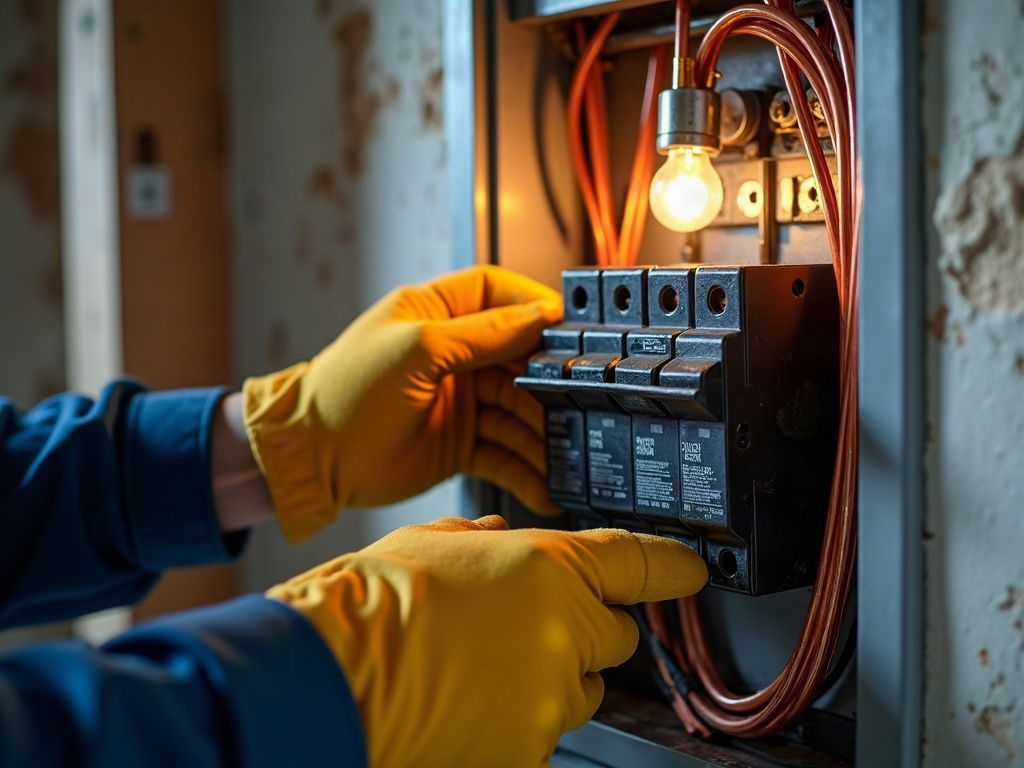
Once the panel situation is settled, the wiring run begins. In most Scottsdale, AZ homes this means routing 6-gauge copper wire from your main panel — often located in a utility room, laundry area, or dedicated electrical closet — through the attic or along finished walls, down into the garage. Scottsdale homes with longer garage setups, like the deeper three-car garages common in McCormick Ranch and DC Ranch, can mean longer runs that affect material cost and labor time.
Here’s what smart EV charger wiring involves beyond the cable itself:
- A dedicated 50-amp double-pole breaker installed cleanly in your panel with proper labeling — mislabeled panels are a real and underappreciated hazard
- Conduit protection wherever the wire runs through the garage, per Arizona electrical code
- A properly rated outlet or hardwired connection at the charger location, at the correct height and reach for your vehicle’s charging port
- A torque-spec’d termination at both ends — loose connections under load are where problems begin
- Load calculation documentation, especially if a permit is required (it usually is)
A dedicated circuit isn’t optional for a Level 2 charger — it’s code. Any electrician suggesting you share an existing circuit is telling you more about their standards than their price.
The Wi-Fi Side: Network Setup and What Can Go Wrong
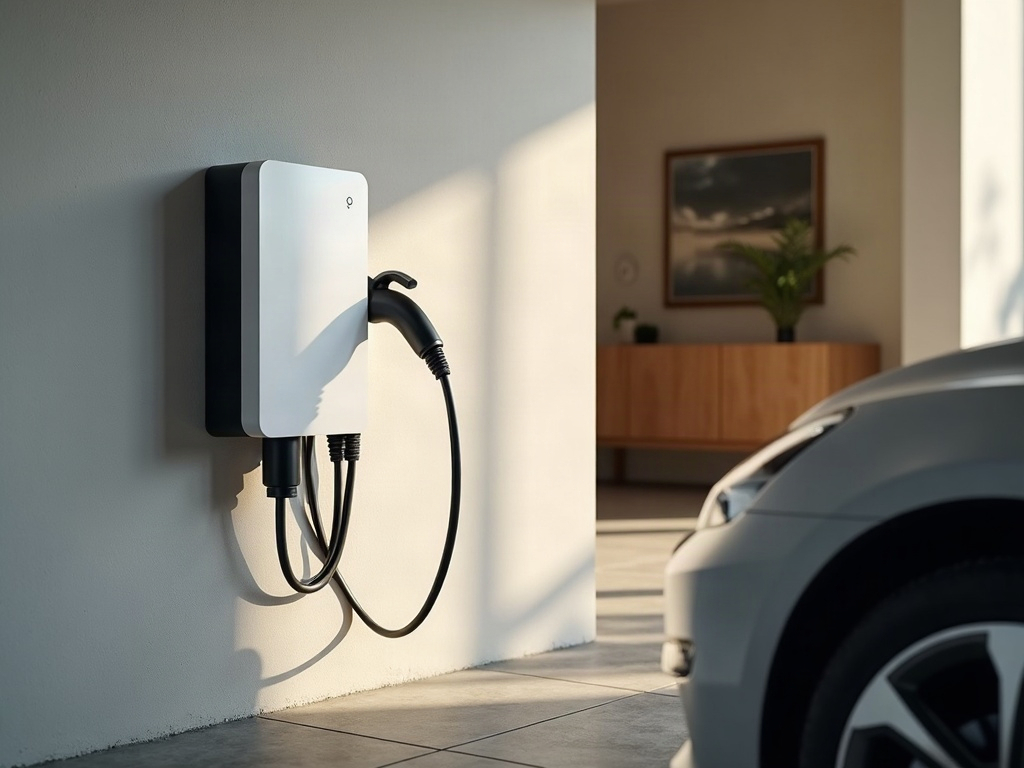
The connected EV charger install doesn’t end with the electrical rough-in. Wi-Fi chargers from brands like ChargePoint, Enel X JuiceBox, or the Tesla Wall Connector need a stable 2.4 GHz signal at the garage wall. In homes where the router sits on the opposite side of the house — common in estate-style properties near Gainey Ranch or along the 101 corridor — the signal can be weak enough to cause the charger to drop its connection and lose scheduling or energy-tracking features entirely.
We flag this during the walkthrough. You may need a Wi-Fi extender or a mesh node near the garage before the charger even goes on the wall. It’s a small thing that saves a frustrating callback. The U.S. Department of Energy’s home EV charging guide is a solid reference for understanding charger types and what features actually matter for daily driving habits.
Permits, Inspections, and Why They Protect You
In Scottsdale, AZ and across AZ, a Level 2 EV charger installation typically requires a permit from the city or county — and that’s genuinely good news for you. The permit triggers an inspection, which means a third set of eyes confirms the work meets code. If you ever sell your home near Old Town Scottsdale or anywhere in Maricopa County, an unpermitted charger install can surface during the buyer’s inspection and become your problem at the worst possible moment. Permitted work protects your resale value. Our post on whether electrical upgrades increase your home’s resale value gets into this in more detail.
We handle the permit paperwork as part of every job. You shouldn’t have to chase city portals or figure out which jurisdiction applies — that’s on us.
What This Typically Costs in the Scottsdale Area
Honest ranges matter here. A straightforward connected EV charger install — panel has capacity, short wiring run, permit included — typically falls in the $500–$900 range for labor and materials in Scottsdale, AZ. Add a panel upgrade or a long conduit run through a finished wall, and you’re looking at $1,200–$2,500+. We give you a straight, itemized quote before any work starts. No surprise line items after the fact.
If you’ve had a bad experience with someone who gave you a low number and then found reasons to add more, we hear that often. It’s one of the reasons we built our process around transparency from the first conversation.
Ready to get your charger installed correctly, permitted, and working the way it should? Call FHR Electric at (602) 492-9999 — we serve Scottsdale, AZ, North Scottsdale, Chandler, Gilbert, Mesa, Tempe, and the rest of Maricopa County with fast response and licensed crews who treat your home like it matters.

