

Planning a Control4 install — or any serious whole-home automation — means the technology is only half the conversation. The other half is the electrical infrastructure underneath it, and that’s where most installs quietly go wrong. As a Control4 Electrician who’s pulled wire across Scottsdale, AZ and into North Scottsdale, Chandler, and beyond, we can tell you: automation wiring is a discipline of its own. Skip steps here and a $40,000 system starts behaving like a $400 one.
Why Control4 Electrician Work Is Different From Standard Electrical
Standard residential wiring follows a simple path: power in, breaker, circuit, device. Automation wiring layers low-voltage signal runs, structured media cabling, and dedicated power circuits on top — and they all have to coexist without interference. Miss a step and you get phantom triggers, audio noise, or processors that randomly reboot.
A few things a qualified smart-home electrician locks in before pulling a single cable:
- Separation of power and signal runs. Line-voltage and low-voltage cabling need at least six inches of physical separation to avoid induced interference on lighting control or data lines.
- Dedicated circuits for control processors and AV equipment. Control4 processors and network switches need their own circuits — sharing with HVAC or kitchen loads introduces voltage fluctuations that corrupt communication.
- Structured home runs, not daisy chains. Every keypad, sensor, thermostat, and speaker drop should home-run back to a central distribution panel. Daisy chains are fine for Christmas lights, not for a $50k automation system.
- Conduit for attic runs. In AZ, heat degrades cable insulation over time. Conduit lets you pull new wire without opening walls during a future upgrade.
The Panel Reality Nobody Talks About
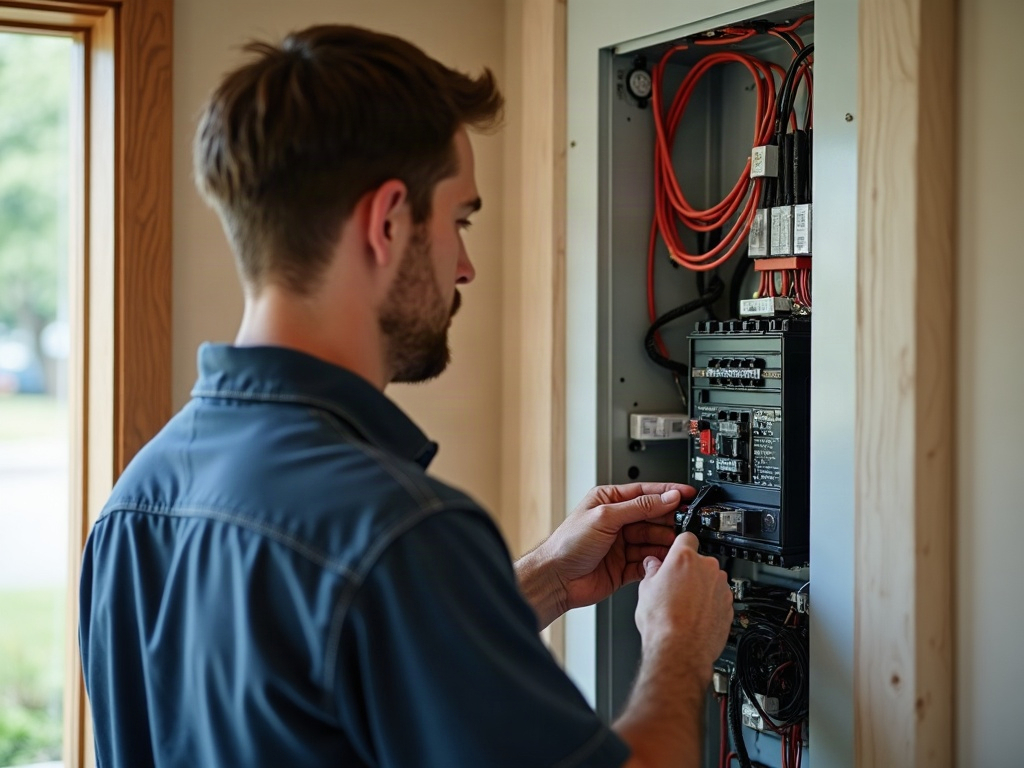
Here’s a scenario we see constantly in Scottsdale, AZ: a homeowner mid-remodel has a beautiful Control4 spec from their AV integrator, but nobody looked at the electrical panel first. We arrive and find a 25-year-old 150-amp panel with no room for the dedicated circuits the system needs. The integrator can’t proceed. The GC is waiting. The countertops go in next week.
Before any automation rough-in begins, confirm your panel has capacity for:
- Dedicated 20-amp circuits for each equipment rack or processor location
- Lighting control dimmer circuits that may require neutral wires older homes lack
- Motorized shade, gate, or AV lift circuits if applicable
- Any EV charger or new HVAC zone sharing the same remodel scope
If your panel is aging or crowded, read our honest breakdown on whether to repair or replace your electrical panel before committing to an automation rough-in schedule. If a subpanel makes more sense, we cover that math in our guide to installing a subpanel and what it costs.
What a Properly Wired Automation Project Looks Like
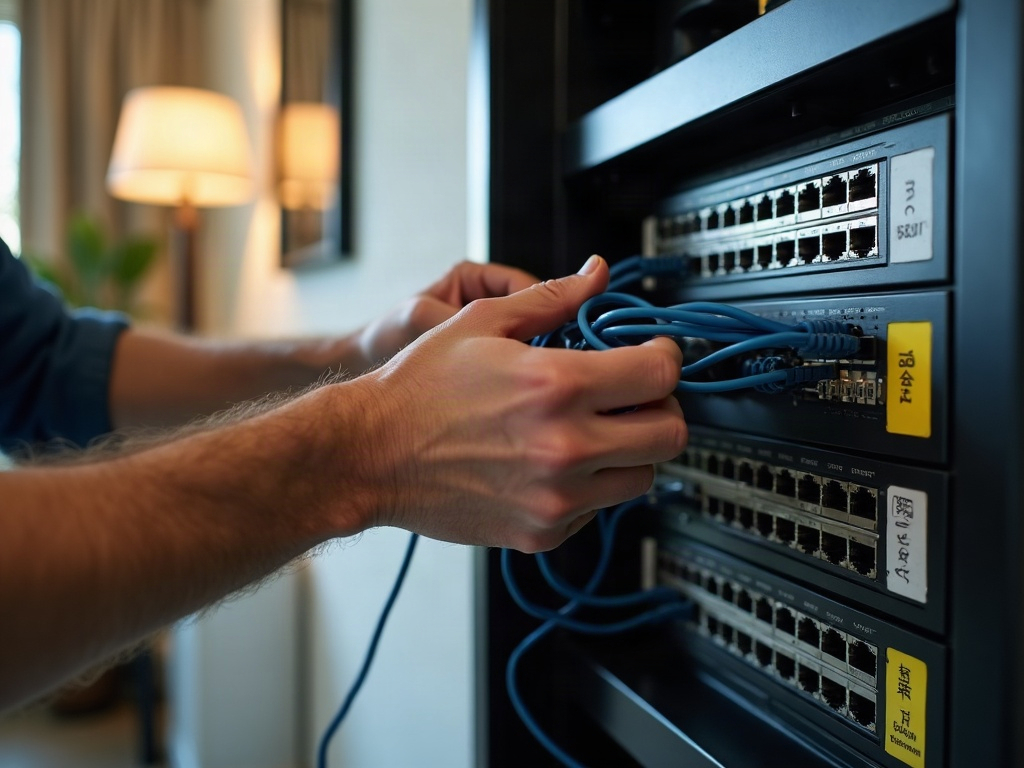
The wiring is the system. The touchscreen is just the face of it. If the infrastructure isn’t right, no amount of programming fixes it.
- Pre-wire coordination meeting with the GC, AV integrator, and electrician before walls close.
- Low-voltage rough-in: Cat6 home runs to every room, speaker wire, shading wire, security sensor loops — all landed at the structured media center.
- High-voltage rough-in: Dedicated circuits for rack equipment, in-ceiling amp locations, motorized motors, and all lighting control home runs.
- Thermal imaging before drywall to confirm clean connections and catch hotspots. You can see what that process catches in our post on what thermal imaging finds that a visual inspection misses.
- Trim-out and labeling: Every cable labeled at both ends, every circuit documented, so the integrator has zero guesswork at programming day.
What This Typically Costs in Scottsdale, AZ
Electrical scope for a whole-home automation project varies with square footage and system complexity. Rough ranges for the Scottsdale, AZ market:
- Pre-wire only (new construction or open-wall remodel): $3,500–$10,000+ depending on room count, system zones, and whether conduit is required.
- Panel upgrades or subpanel additions to support added circuits: $1,500–$5,000+, depending on existing service capacity.
- Full coordination through trim-out: Priced per project — but having one licensed contractor own the rough-in and trim coordination saves real money compared to managing two subs who blame each other when something’s off.
These are ranges, not quotes. Every home is different. What matters is locking in a clear number before walls close — not a surprise invoice when the drywall crew is already scheduled. For Control4 system requirements and installation standards, their official documentation is a solid reference for understanding what the system actually demands electrically.
Whether you’re a homeowner near Old Town Scottsdale planning an automation upgrade, or a GC coordinating a luxury new build north toward Pinnacle Peak, FHR Electric has the licensed depth to handle the full electrical scope. Call us at (602) 492-9999 for a fast response and a straight-price estimate before your project moves into rough-in.

