If you’re opening or renovating a café in Scottsdale, AZ — whether you’re near the boutiques along Old Town Scottsdale’s 5th Avenue or setting up shop in a North Scottsdale mixed-use strip — Coffee Shop Electrical Wiring is one of those things that looks invisible until it fails spectacularly. A tripped breaker at 7 a.m. on a Saturday isn’t a minor inconvenience. It’s a line of customers walking out and a POS system rebooting while the espresso machine cools down. We’ve seen it, and the fix is always the same: the right circuits, sized and installed correctly, before day one.
Why Shared Circuits Wreck Coffee Shop Operations
A commercial espresso machine isn’t your countertop pod brewer. A dual-boiler machine draws anywhere from 15 to 20 amps continuously — sometimes more on startup. A high-volume grinder adds another load. Stack those onto a shared circuit with your refrigerator, ambient lighting, and a POS terminal, and you have a recipe for constant nuisance trips or, worse, heat buildup inside the panel that nobody notices until there’s a smell.
POS systems have their own sensitivity issue. Point-of-sale hardware — touchscreens, receipt printers, card readers, routers — doesn’t pull huge wattage, but it reacts badly to voltage fluctuations caused by high-draw appliances cycling on and off nearby. A momentary sag when the espresso machine’s heating element kicks in can corrupt a transaction or freeze a terminal. That’s a customer service nightmare and a potential liability if a payment doesn’t process correctly.
The espresso machine and the POS system both need clean, stable power — but for completely different reasons. One demands current; the other demands consistency. Putting them on separate dedicated circuits solves both problems at once.
What a Commercial Espresso Machine Circuit Actually Requires
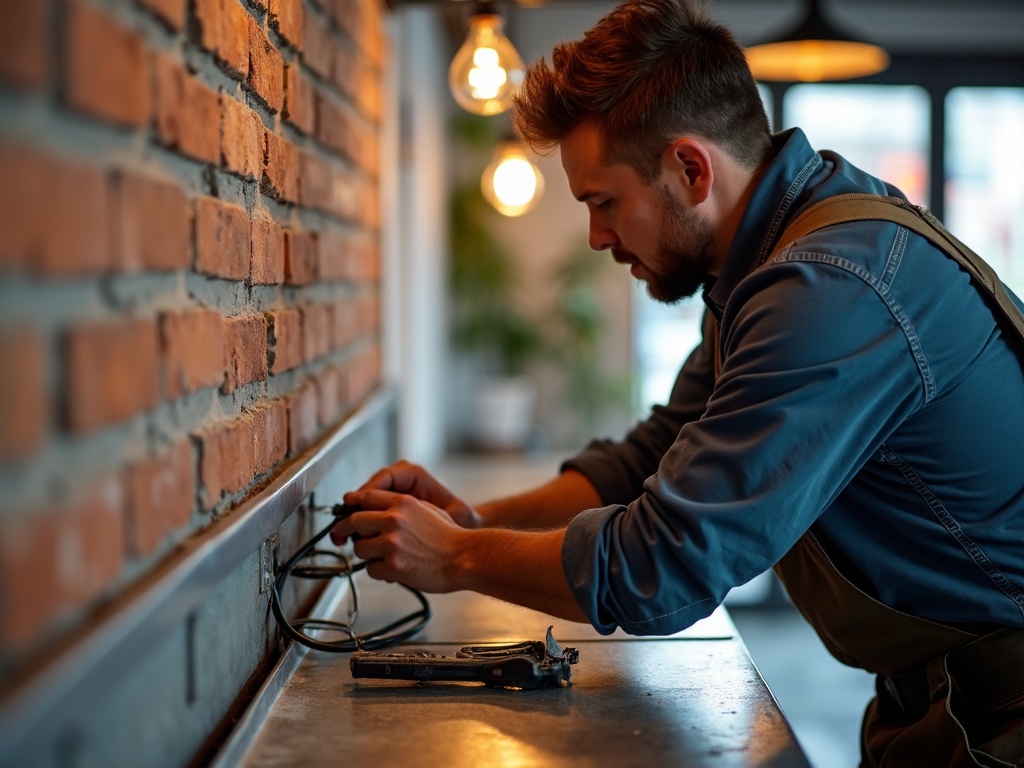
A proper commercial espresso machine circuit starts with knowing your equipment’s nameplate rating — not guessing. Most commercial single-group machines spec at 20 amps, 240 volts. Multi-group machines used in high-volume cafés can push into 30-amp or 50-amp territory. That means a dedicated 240V circuit with the correct wire gauge (typically 10 AWG for 30A, 6 AWG for 50A), a breaker sized to the load, and an outlet or direct wire connection that matches the machine’s plug or terminal configuration.
The same logic applies to other heat-generating equipment. If you’ve ever read our post on induction range circuit requirements, you already know that high-draw cooking appliances are always a dedicated-circuit conversation — cafés are no different. And if your panel is aging, adding two or three new circuits may require a full electrical panel upgrade before we pull a single wire.
What We Scope When We Walk a Café Space
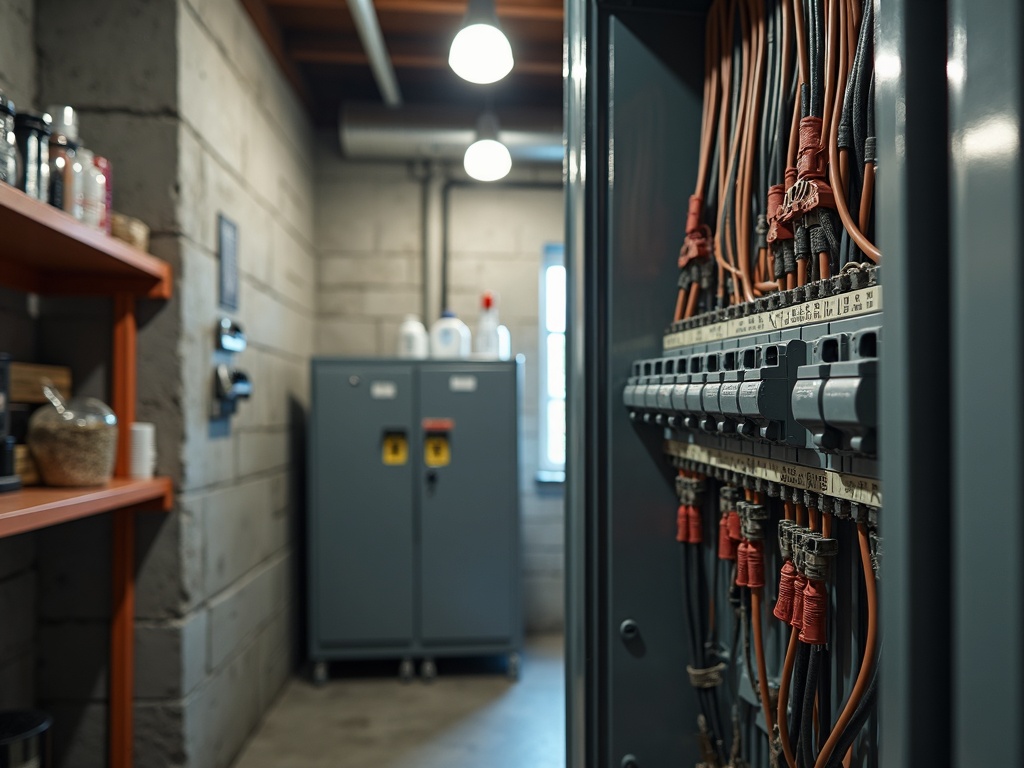
Every café is a little different — a converted Old Town Scottsdale bungalow has different bones than a new Chandler or Gilbert strip-mall build-out. Here’s what a commercial electrical scope for a coffee shop typically covers:
- Espresso machine circuit — dedicated 20A, 30A, or 50A 240V run depending on equipment specs
- Grinder and auxiliary equipment circuits — separate 20A 120V dedicated circuits for each high-draw countertop appliance
- POS and data zone — a clean 20A 120V dedicated circuit for all point-of-sale hardware, plus structured Cat6 or Cat7 network cabling to eliminate Wi-Fi reliability issues at the register
- Refrigeration — dedicated circuits for reach-in coolers and under-counter refrigerators (same principle as a residential refrigerator dedicated circuit, scaled up)
- Lighting and general receptacles — commercial lighting on separate circuits from equipment loads
- Panel capacity check — load calculation to confirm the existing service can handle total demand; upgrade recommended if it can’t
We also run thermal imaging after installation. That’s not standard with every electrical contractor, but it’s how we verify there’s no hidden resistance or connection issue that would only show up under full load — exactly the kind of thing that causes a breaker to keep tripping weeks after opening. If you’ve dealt with a breaker that won’t stop tripping, you know how disruptive that cycle is.
The Permit and Inspection Reality in Maricopa County
Commercial electrical work in Scottsdale, AZ and across Maricopa County requires permits. Full stop. A café build-out that skips the permit process is an insurance risk, a lease violation in most commercial spaces, and a liability exposure if there’s ever a fire or injury. The National Electrical Code (NEC) sets the baseline, and city inspectors enforce local amendments on top of that.
We handle permitting as part of every commercial job. If you’re in Tempe, Mesa, Phoenix, or Fountain Hills, the AHJ (authority having jurisdiction) and inspection timeline varies — we know each one. That’s part of what 20+ years in this market looks like in practice.
If your build-out is also adding commercial lighting or you need emergency and exit lighting to meet code, we scope that into the same job so you’re not coordinating three different subs.
Opening a café is a serious investment. The electrical infrastructure underneath it shouldn’t be the thing that sends you back to square one after a failed inspection or a fire marshal walkthrough. Call FHR Electric at (602) 492-9999 and let’s talk through your space before the equipment gets delivered. We’ll scope it straight, price it straight, and get it done right the first time.