

Here’s something worth understanding before you buy a cart of LED bulbs at Costco off the 101 in Scottsdale: LED Lighting Energy Savings are genuine — we’re talking 75–80% less energy consumption than incandescent — but you will not see that number on your APS bill unless the wiring and dimmers behind your walls are actually matched to the LED load. Get that part wrong and you end up with flickering lights, buzzing dimmers, shortened bulb life, and in some cases a wiring situation that a licensed electrician needs to sort out. Let’s walk through exactly what matters.
Why LEDs Behave Differently on Older Wiring
A traditional incandescent bulb is essentially a resistor — it draws current predictably and plays nicely with almost any circuit. An LED driver is a different animal. It draws very low wattage, has a minimum load requirement, and communicates with the dimmer in a way incandescents never did. Older homes in Scottsdale, AZ — especially those built in the 1980s and 1990s around Old Town Scottsdale and the neighborhoods north of Shea Boulevard — often have wiring that predates modern LED driver specs entirely.
Two things commonly go wrong. First, the wire gauge or circuit configuration may create a neutral wire issue — many older three-way dimmer setups were wired without a neutral, which newer smart dimmers require. Second, thermal management matters more with LEDs in recessed cans. Arizona attic temperatures routinely exceed 150°F in summer. Recessed fixtures that were fine for incandescents can trap heat around LED drivers and cut their rated lifespan dramatically. If you are doing a lighting upgrade anywhere in Scottsdale, AZ or across AZ, that thermal reality is not optional to consider.
The LED Lighting Energy Savings Dimmer Compatibility Problem
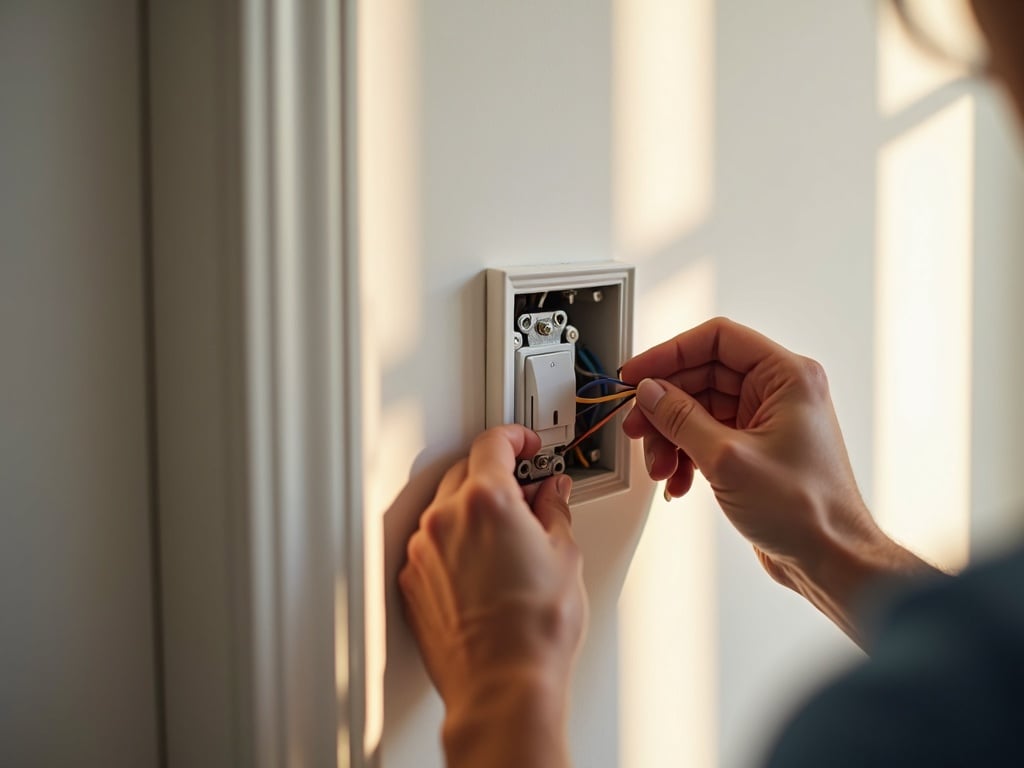
This is where most DIY LED retrofits quietly fail. Standard legacy dimmers — the kind installed in millions of Maricopa County homes — were designed to handle 600W or more of incandescent load. Swap in eight LED bulbs that together draw 40W and that same dimmer is operating way below its minimum load threshold. The result is a ghost load: the dimmer bleeds a small current trying to figure out what’s attached, and your LEDs flicker at the low end of the range or hum at mid-range. Neither is acceptable in a well-finished home.
An LED-compatible dimmer from Lutron or Leviton costs $30–$60 installed. A flickering, buzzing fixture in a room you actually use every day costs you something no dollar amount covers — and it tells you the job wasn’t done right.
The fix is straightforward when you know what you’re doing: replace the dimmer with one explicitly rated for LED minimum loads (often as low as 10W), confirm the neutral wire is present at the switch box, and verify the bulb or fixture manufacturer has tested and listed that specific dimmer as compatible. Lutron publishes a comprehensive compatibility list — it’s worth bookmarking. We also recommend checking the U.S. Department of Energy’s LED resource page for manufacturer-neutral guidance on what to look for in a retrofit.
If you’re considering going further with smart switching — Zigbee, Z-Wave, or Wi-Fi protocols — there’s an entire layer of wiring and load decisions involved. We covered that in detail in our guide on which smart switch protocol your electrician should wire for, and it’s worth reading before you spec anything out.
What a Proper LED Retrofit Actually Involves
- Circuit load audit: We confirm the existing circuit can handle the new configuration, which often reveals opportunities for load balancing.
- Dimmer replacement: Every dimmer controlling LEDs gets swapped for an LED-rated model — no exceptions.
- Neutral wire verification: Required for smart dimmers; we identify switch boxes that lack one before the dimmer arrives on site.
- Fixture and driver assessment: Recessed cans get checked for IC (insulation contact) ratings and airflow around the driver in Arizona’s attic heat.
- Thermal imaging: On larger retrofits we run a thermal scan to confirm there are no hot spots at connections or junction boxes after load.
That last point matters. Thermal imaging is something most one-truck operators skip because they don’t own the equipment. We do it because it’s the only way to prove the work is clean, and it’s part of why homeowners from Fountain Hills to Chandler and Gilbert trust us with their panels and circuits — not just their lighting. If you’re curious how aging panels factor into all of this, our guide to a panel health check explains exactly what we look at and why every Arizona home should have one before adding significant new loads.
What This Costs — and What You Get Back
A full LED dimmer upgrade for a single room typically runs $150–$350 depending on the number of switches and whether a neutral wire retrofit is needed. A whole-home lighting upgrade — new fixtures, LED-rated dimmers throughout, thermal imaging — generally lands in the $1,200–$3,500 range for a mid-size Scottsdale home, though larger custom homes near DC Ranch or Troon North can go higher based on fixture count and panel proximity. The energy offset is real: a home that was running 2,000W of incandescent lighting can drop to under 400W with a proper LED retrofit. At APS rates, that math pays back the investment in one to three years and keeps paying after that.
If you’re mid-remodel and the walls are still open, this is exactly the right moment — electrical rough-in decisions made before drywall determine what’s possible later, and getting lighting circuits right at that stage costs a fraction of what it costs to fix afterward. And if you’re pairing a lighting upgrade with new fixture replacement and installation, we handle both under one scope so nothing gets missed at the handoff.
The bottom line is simple: LEDs deliver on their energy-saving promise when the system around them — dimmers, wiring, fixtures, circuit load — is spec’d correctly. Anything less and you’re just buying frustration. Call FHR Electric at (602) 492-9999 and we’ll walk through your home’s lighting situation, give you a straight-price quote, and make sure the retrofit is done once and done right.