

You just bought a new EV — maybe a Tesla, maybe a Rivian — and the Wallbox Pulsar Plus is sitting in a box in your garage. Smart choice on the charger. Now comes the part that actually matters: the Wallbox EV Charger Installation. Done right, it’s a clean, permanent upgrade your home will have for the next decade. Done wrong, it’s a fire risk hiding behind drywall. We’ve done this installation across Scottsdale, AZ and the wider Scottsdale, AZ metro more times than we can count, and we want you to know exactly what you’re getting into before anyone touches your panel.
Step One: Panel Assessment Before Anything Gets Pulled
The first thing we do is open your panel and actually look at it — not glance at it. We’re checking available capacity, breaker condition, and whether the bus can handle a dedicated 40- or 50-amp circuit for the charger. The Wallbox Pulsar Plus draws up to 48 amps, so it needs a 60-amp breaker on a properly rated circuit. A lot of homes in Scottsdale, AZ — especially those built in the 1990s near Gainey Ranch or McCormick Ranch — are running 150-amp or 200-amp panels that are already loaded with an updated HVAC, a kitchen remodel, and a pool pump. Capacity isn’t always obvious from the outside.
If your panel is older or already crowded, we’ll tell you straight. A panel health check before the charger install can surface problems you didn’t know existed — overloaded neutrals, double-tapped breakers, heat damage from years of Arizona summers. We use thermal imaging to confirm what the eye can’t see. That’s not an upsell; it’s just how a responsible install works.
What a Wallbox Charger Install Actually Involves
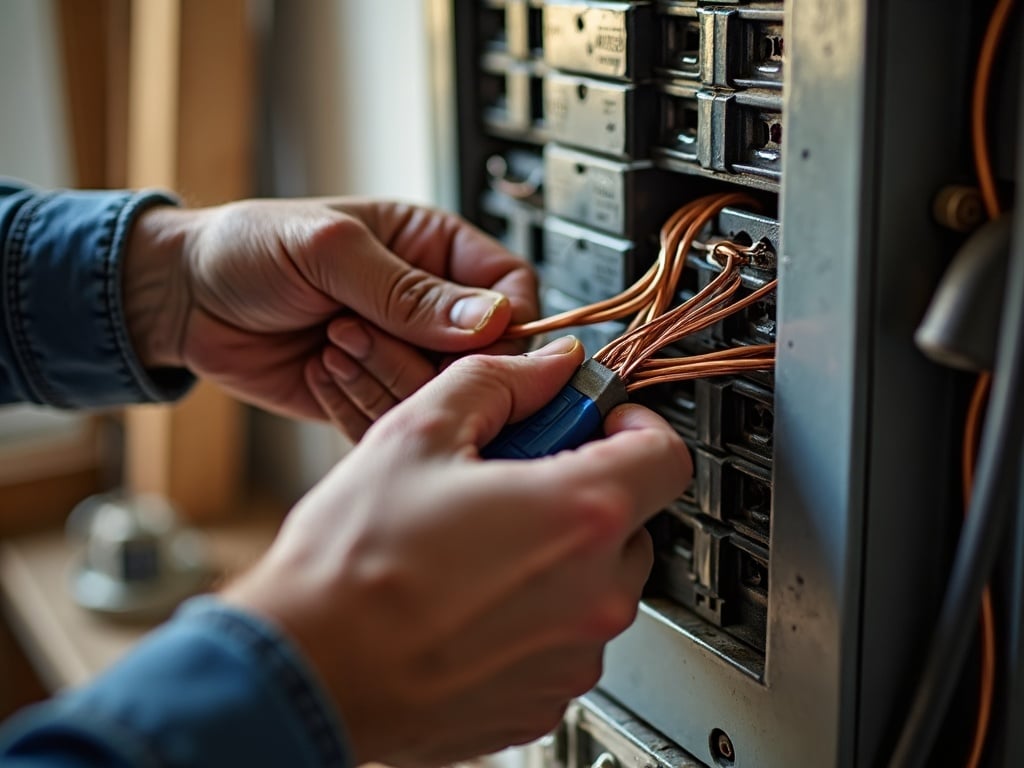
Once we’ve confirmed capacity, here’s the sequence on install day:
- Dedicated circuit pulled — We run 6-gauge copper wire (minimum for a 50-amp circuit) from your panel to the charger location. Depending on your garage layout, that could be 20 feet or 80 feet. Longer runs cost more; we’ll quote it before we start.
- Breaker installed — A 60-amp double-pole breaker goes in. We verify it’s compatible with your panel brand and that the bus isn’t showing thermal stress.
- Conduit run — In most Scottsdale, AZ garages, we run wire through EMT conduit on the wall surface or through the attic, depending on what gives you the cleanest finish. Both are code-compliant; the choice depends on your garage structure.
- Wallbox mounted and wired — The unit gets hardwired directly (no outlet adapter needed for the Pulsar Plus). We mount it at a height that clears a standard garage floor drain and keeps the cable from dragging.
- Load test and app pairing — We power it up, verify the charge session works, and confirm the Wallbox app connects. You shouldn’t be troubleshooting this yourself on a Tuesday night.
The difference between a Wallbox install that lasts fifteen years and one that trips a breaker every time you charge isn’t the charger — it’s the circuit behind it.
For homeowners weighing their options, our breakdown of hardwired EV charger vs. plug-in adapter is worth a read before you decide. The short answer: hardwired is better for daily high-mileage drivers. The Pulsar Plus is designed for it.
What It Typically Costs — and What Changes the Number
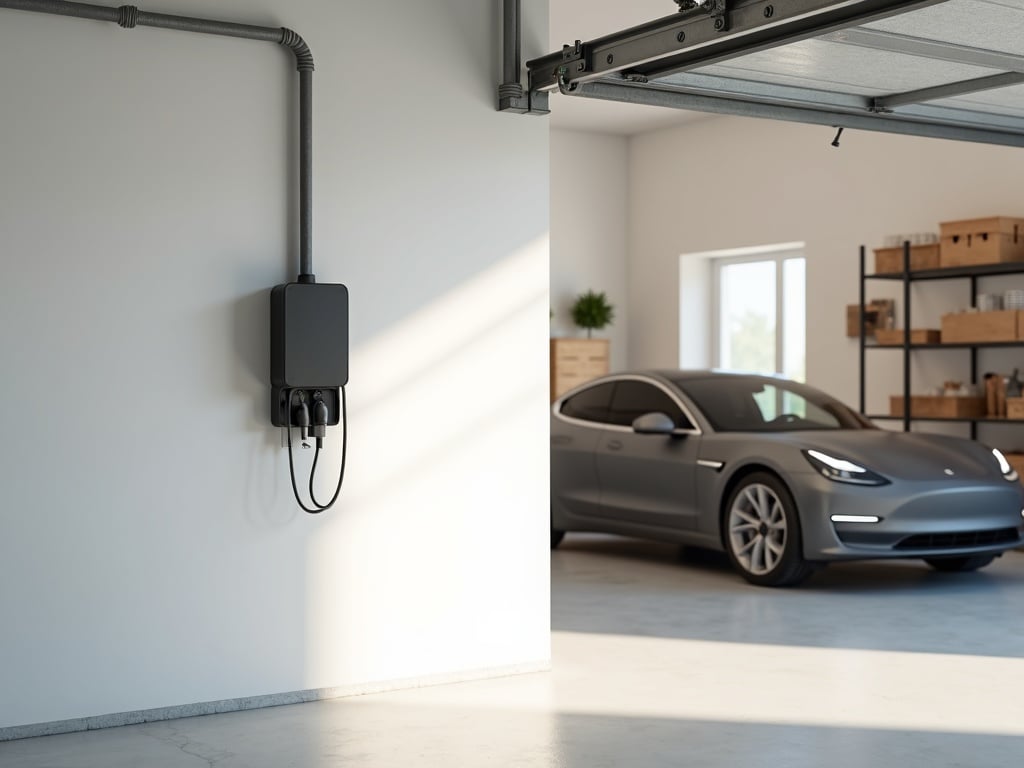
A straightforward Wallbox charger install — panel has capacity, garage is attached, run is under 40 feet — typically lands in the $350–$650 labor range in the Scottsdale, AZ market. That’s for the electrical work; the Wallbox unit itself runs $300–$450 depending on model and where you buy it.
What pushes the number up:
- Panel is at capacity and needs a dedicated circuit added to an already-loaded sub-panel
- Long conduit runs through finished walls or a detached garage
- Panel upgrade required (adds $1,800–$4,500+ depending on amperage)
- Permit fees — yes, we pull permits; no, you don’t want an electrician who skips this step
If you’re also thinking about a second EV in the near future, check out our guide on dual EV charger installation — wiring for two cars at once while managing panel load is a different conversation, and it’s worth planning for now rather than re-opening walls later.
Why Licensed Credentials Matter Here Specifically
EV charger installs are permitted electrical work in AZ. That means they require a licensed contractor, a permit pulled with the city or county, and an inspection. Anyone offering to skip the permit is offering to skip the inspection — and that means no one verified the wire gauge, the breaker size, or the connection quality. When something goes wrong (and with undersized wiring, something will go wrong), your homeowner’s insurance will ask for the permit. If there isn’t one, you own the problem entirely.
We’re a licensed Arizona contractor with over 20 years in the Phoenix metro. We pull permits. We pass inspections. We’ve been doing this in Scottsdale, AZ long enough that the inspectors know our work. If you want to verify what that license actually covers, here’s how to check any contractor’s ROC license in 60 seconds — and we encourage you to look us up.
The U.S. Department of Energy’s Alternative Fuels Data Center recommends Level 2 home charging for daily EV drivers — and the Wallbox Pulsar Plus is one of the top-rated units in that category for residential use. Getting the hardware right matters; getting the wiring right matters more.
If your EV delivery date is coming up fast — or you just want this done before the summer heat makes garage work miserable — call FHR Electric at (602) 492-9999. We’ll assess your panel, quote the full job transparently, and get your charger installed to code. One call, one crew, done right.

