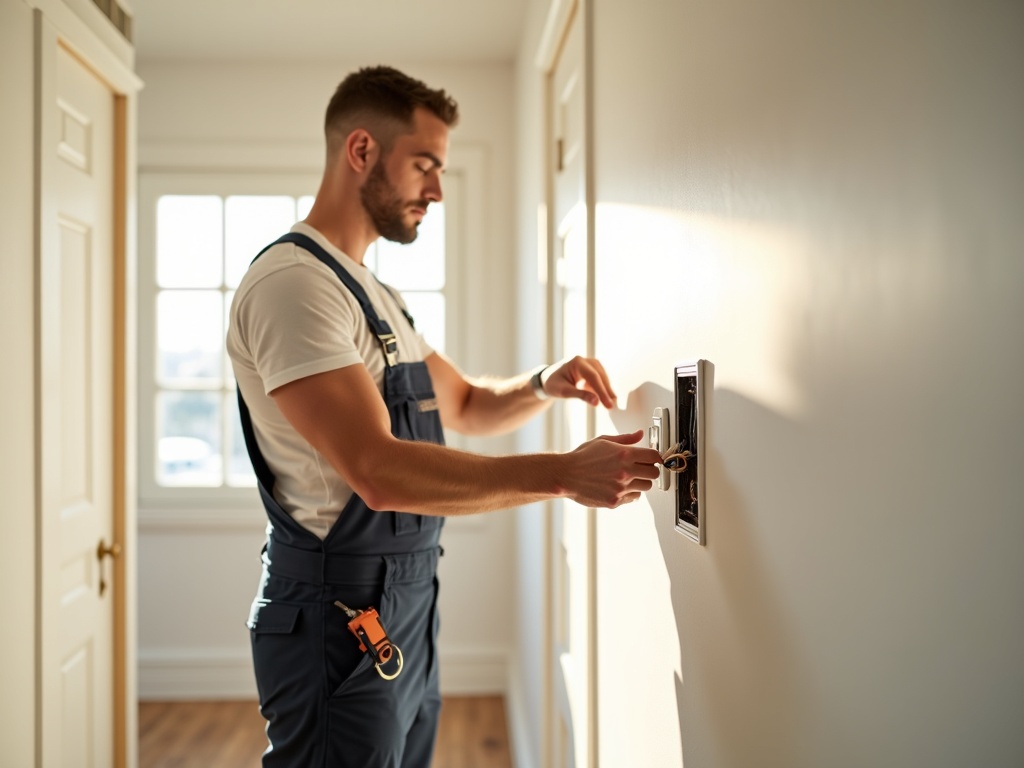

So you picked up a Ring, a Nest, or some other sleek video doorbell and figured the install would be a Saturday-morning project. Maybe it is. But before you crack open that junction box, it’s worth understanding what a proper Video Doorbell Electrical Hookup actually involves — because the difference between a clean hardwired setup and a half-finished one can mean a dead doorbell in the middle of summer heat, a tripped breaker, or a transformer that quietly fries itself over six months. We see it constantly in Scottsdale, AZ.
Battery vs. Hardwired: Why It’s Worth the Extra Step
Battery-powered doorbells are convenient right up until they’re not — the battery dies mid-trip, motion alerts go dark, and your “smart” doorbell becomes a decorative button. Hardwired units draw continuous power from your home’s low-voltage wiring, keeping video live, notifications instant, and two-way audio crisp. For homeowners in Scottsdale, AZ who’ve invested in a quality home, a hardwired setup is simply the right call.
What a Proper Video Doorbell Electrical Hookup Actually Requires

Most modern video doorbells need between 16–24 volts AC and anywhere from 30 to 40 volt-amps to run reliably. A lot of Scottsdale, AZ-area homes — especially those built in the 80s and 90s near McCormick Ranch or the older parts of North Scottsdale — are still running a original 10VA doorbell transformer that simply can’t carry the load. Here’s what a complete hardwired installation actually involves:
- Transformer assessment and likely upgrade — your existing transformer probably outputs 10–16V at a low VA rating. Most video doorbells need 16–24V at 30VA minimum. That transformer needs to go.
- Wiring inspection — older low-voltage doorbell wire can be undersized, corroded, or damaged inside the wall. We check continuity and condition before committing to a final run.
- New wire run (if needed) — if there’s no existing doorbell wiring, or if it’s not salvageable, we pull a new low-voltage run from the transformer location to the door.
- Junction box verification — some doorbell mounting locations lack a proper backing box. Without one, mounting is sloppy and long-term reliability suffers.
- Chime compatibility — mechanical chimes often need a bypass module included with the doorbell. Digital chimes may need full replacement. We sort this before buttoning everything up.
“The transformer is the part everyone ignores — and the reason most hardwired doorbells underperform or fail within a year.”
If your home is part of a larger smart home buildout, this work connects naturally to smart home wiring and automation and data and low-voltage wiring — both of which we handle as part of a cohesive system, not as an afterthought.
When There’s No Existing Doorbell Wiring
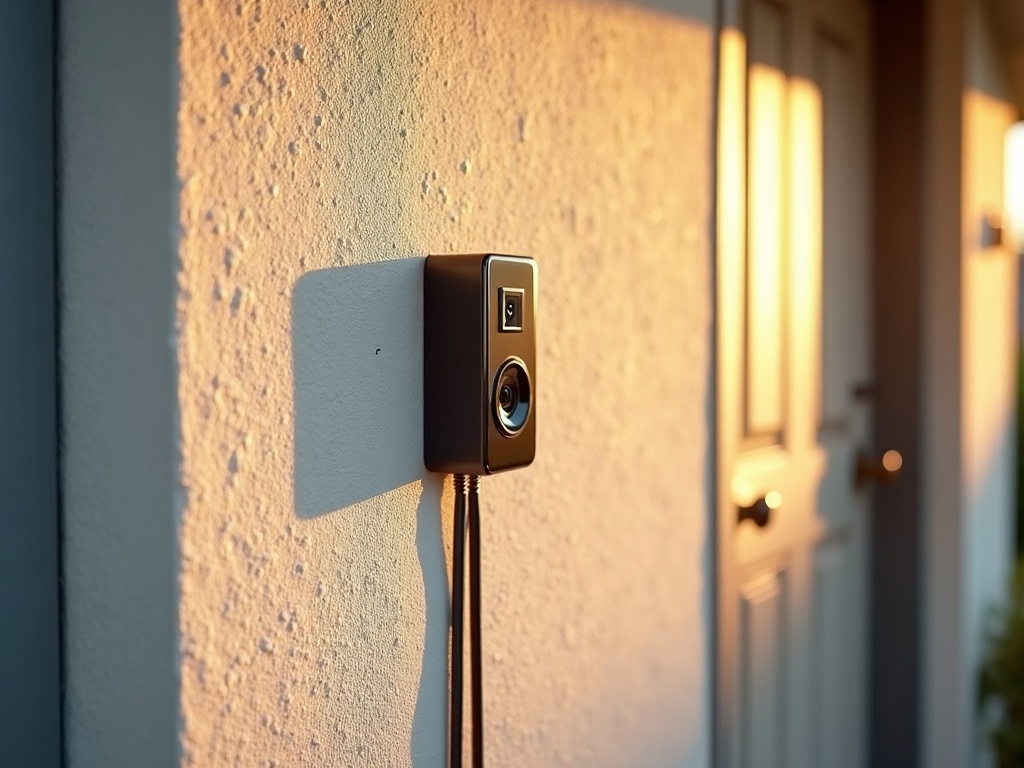
New construction in areas like Fountain Hills or newer sections near the 101 in North Phoenix often skipped traditional doorbell wiring entirely. Same with some custom builds in Old Town Scottsdale that went fully wireless in the early smart-home era. In those cases, you have two real options:
- Run new low-voltage wiring — clean, permanent, and the right long-term answer. We pull wire from a 16–24V transformer, usually tapped off a nearby 120V circuit in the panel, directly to the door location.
- Plug-in transformer adapter — if fishing wire is genuinely impractical (finished walls, tile, etc.), some installs use a plug-in transformer inside the nearest outlet. It works, but it’s a visible compromise.
Either way, if that nearby circuit is already loaded — say it’s sharing load with exterior lighting or a garage setup — we look at adding a dedicated circuit to keep everything clean and code-compliant. Speaking of which, the exterior lighting installation work we do often gets paired with doorbell wiring on the same visit, which saves time and keeps your exterior wiring organized.
What It Typically Costs — and What to Watch For
A straightforward transformer swap and doorbell hookup on an existing low-voltage run generally runs in the $150–$350 range. If new wire needs to be pulled through finished walls, or a dedicated circuit is involved, budget $400–$700 or more depending on the run length and access. Those are honest ranges — not bait-and-switch numbers. What drives cost up is always the unknown: knob-and-tube wiring, inaccessible wall cavities, or a panel that’s already at capacity.
If your panel is aging — and plenty of homes near Shea Boulevard or in the McCormick Ranch area have panels pushing 30–40 years old — it’s worth having us look at an electrical panel upgrade while we’re on site. Adding smart devices to an overloaded panel isn’t just inconvenient, it’s a real safety issue.
For reference, Ring’s own installation guidance (available at Ring Support) makes clear that transformer compatibility is the number-one reason hardwired doorbells underperform. We’ve seen it firsthand — a homeowner in Gilbert spent two frustrating months troubleshooting a Ring Pro that was simply starved for power from a 20-year-old transformer. One transformer swap fixed it permanently.
If you’re in Scottsdale, AZ or anywhere across Scottsdale, AZ, AZ and you want your video doorbell done right the first time, call FHR Electric at (602) 492-9999. We’re licensed, insured, and we’ve been working in this community for over 20 years — no surprises, no disappearing acts, just clean electrical work backed by a firm with real accountability.