
Summer monsoon knocks out the grid near Fountain Hills. Your AC stops. The refrigerator starts warming. If you have a home office, a Tesla on the charger, or medical equipment running, that outage stops being an inconvenience and starts being a genuine crisis. The real question — What Size Generator Do I Need for My House — has a real, calculable answer, and we’re going to walk through it with actual watt numbers so you stop guessing and start planning. Chris here, and we’ve sized enough generators across Scottsdale, AZ, Chandler, Mesa, and North Scottsdale to know that most homeowners are either dramatically undersized or paying for capacity they’ll never use.
Why What Size Generator Do I Need for My House Matters More in Arizona
Scottsdale, AZ heat is not ambient background noise — a 115°F afternoon turns your home into a liability within two hours of power loss. That changes the math. In cooler climates, you can sometimes limp through an outage with a small portable unit. Here in AZ, your central AC is non-negotiable, and that single appliance can swing your generator requirement by 10,000 watts or more depending on tonnage. Before you start shopping, you need a realistic load list — not a vague estimate.
Real Load Numbers for a Typical Scottsdale, AZ Home
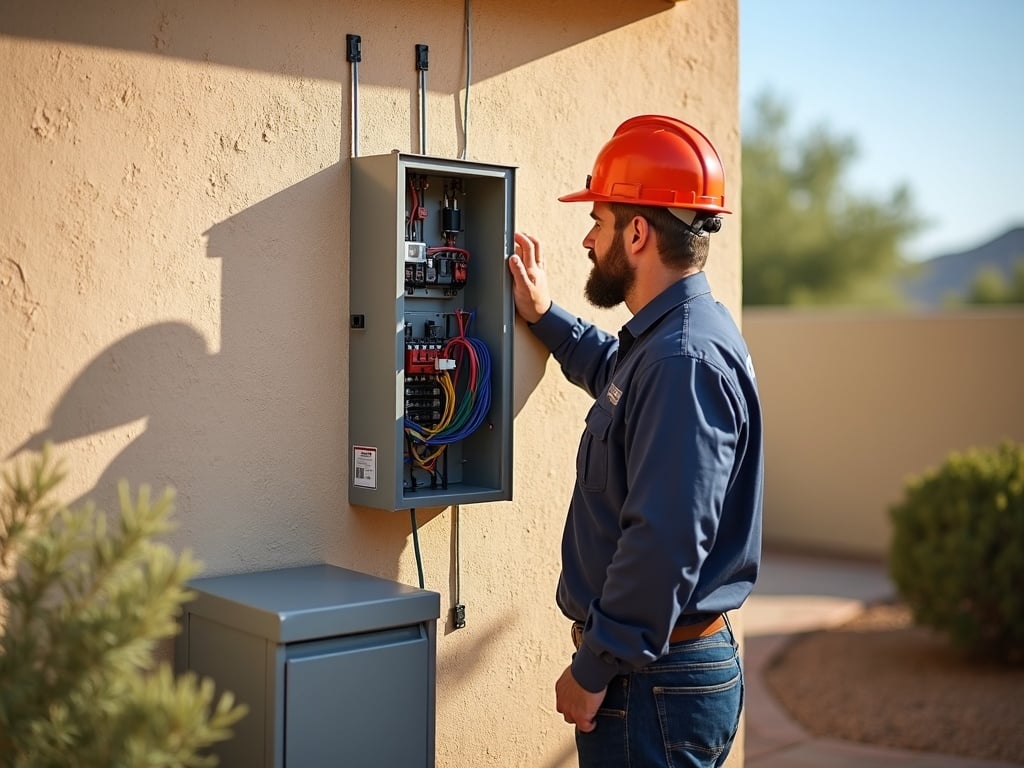
Here’s how the numbers actually stack up. These are running watt figures — starting (surge) watts run 1.5–2× higher for motors, so keep that in mind for anything with a compressor:
- Central AC (3-ton): ~3,500–4,500 running watts; surge up to 9,000 W
- Central AC (5-ton, common in larger Scottsdale homes): ~5,500–7,000 running watts
- Refrigerator: ~150–400 running watts; surge up to 1,200 W
- Sump pump or pool pump: ~750–1,500 running watts
- Lighting (LED throughout): ~500–1,000 W total
- Home office (two monitors, router, NAS): ~300–600 W
- Level 2 EV charger (if you want it on backup): ~7,200 W at full draw
- Electric range / oven: ~2,000–5,000 W
- Medical equipment (CPAP, O2 concentrator): ~150–600 W
A modest 2,200 sq ft home in Gilbert running a 3-ton AC, a refrigerator, lights, and a home office lands right around 6,000–7,500 running watts. A larger home near Old Town Scottsdale with a 5-ton system, pool pump, and home office pushes past 12,000 running watts easily. Add an EV charger and you’re looking at 18,000–20,000 W.
The number one generator sizing mistake we see in Scottsdale, AZ: people size for average load, then wonder why the unit shuts down the moment the AC compressor kicks on. Always size for surge, not just running watts.
Whole House Generator Size: Practical Tiers
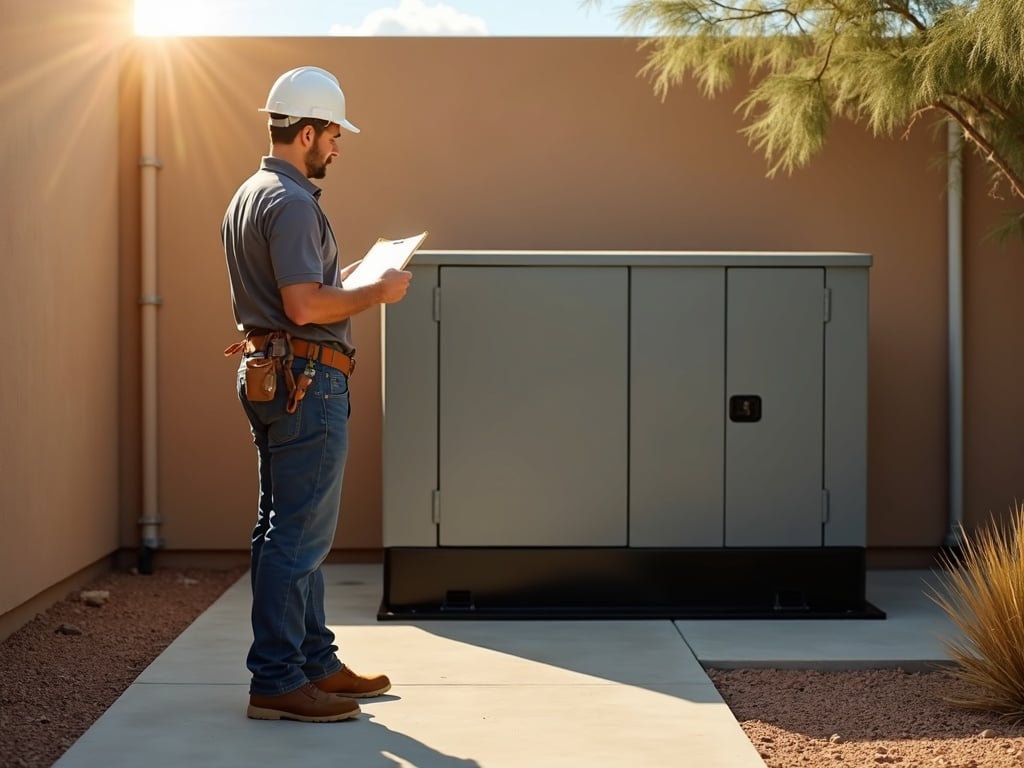
Using a whole-home generator backup approach means your automatic transfer switch handles the switch-over — no extension cords, no manual startup at 2 a.m. Here’s how the standard generator size tiers map to real AZ homes:
- 10–14 kW: Covers essential circuits only — AC (smaller unit), fridge, lights, outlets. Good for a 1,200–1,800 sq ft home with no EV charger. Budget range: roughly $4,000–$7,000 installed.
- 16–20 kW: The sweet spot for most mid-size Scottsdale, AZ homes. Handles a 3–4 ton AC, full lighting, kitchen essentials, and a home office. Budget range: roughly $6,500–$10,000 installed.
- 22–26 kW: Larger homes, 5-ton systems, pool pumps. This is where most North Scottsdale and Fountain Hills builds land. Budget range: roughly $9,000–$14,000 installed.
- 30–36 kW+: If you want EV charging on backup, a large home with multiple HVAC zones, or a home-based dental or medical office — this tier keeps everything running without load-shedding. Budget range: $13,000–$20,000+ installed.
These are real-world installed ranges for AZ, including transfer switch, gas line extension, and permits. They will vary with panel condition, natural gas pressure at the meter, and site-specific factors — which is exactly why a proper load assessment matters before you commit to a unit. Our home electrical load assessment process gives you hard numbers before a dollar is spent on equipment.
If your panel is aging — say, 20–30 years old, common in Gilbert and Tempe builds from the late 1990s — a generator installation is a natural time to evaluate it. We’ve written about panel health checks every Arizona home should have, and it’s worth reading before you finalize a backup power budget.
EV Owners and Generator Sizing: The Detail Most People Miss
If you’ve got a Tesla or another EV in the garage — and in Scottsdale, AZ, a large number of our clients do — be honest with yourself about whether you want charging capability during an outage. A Level 2 charger pulls 30–50 amps at 240V. That’s a meaningful chunk of generator capacity. You have two options: include it in the sizing calculation and go to a 30 kW+ unit, or add a load-management device that deprioritizes the charger when other loads spike. We do both, and we can walk you through Tesla charger installation that integrates cleanly with a standby system.
For business owners — a restaurant on Scottsdale Road, a dental office near the 101 — the stakes are even clearer. A mid-service power loss isn’t just inconvenient, it’s a liability. Our standby generator installation and maintenance service is built around that kind of zero-downtime requirement.
We’re FHR Electric, and we’ve been doing this across Maricopa County for over 20 years — licensed, insured, and ready to give you a straight number before a single piece of equipment moves. Call (602) 492-9999 and let’s figure out exactly what your home needs.