Here’s something worth sitting with for a second: most homeowners in Scottsdale, AZ have never once looked inside their electrical panel — and that’s completely normal. It’s not exactly on the Sunday to-do list. But if your home is more than 15 years old, you’ve added an EV charger, run a new HVAC system, or just wrapped up a kitchen remodel, your panel has a story to tell. A Panel Health Check is how you actually hear it — before a tripped breaker, a burning smell, or a failed city inspection forces the conversation.
So What Actually Happens During a Panel Health Check?
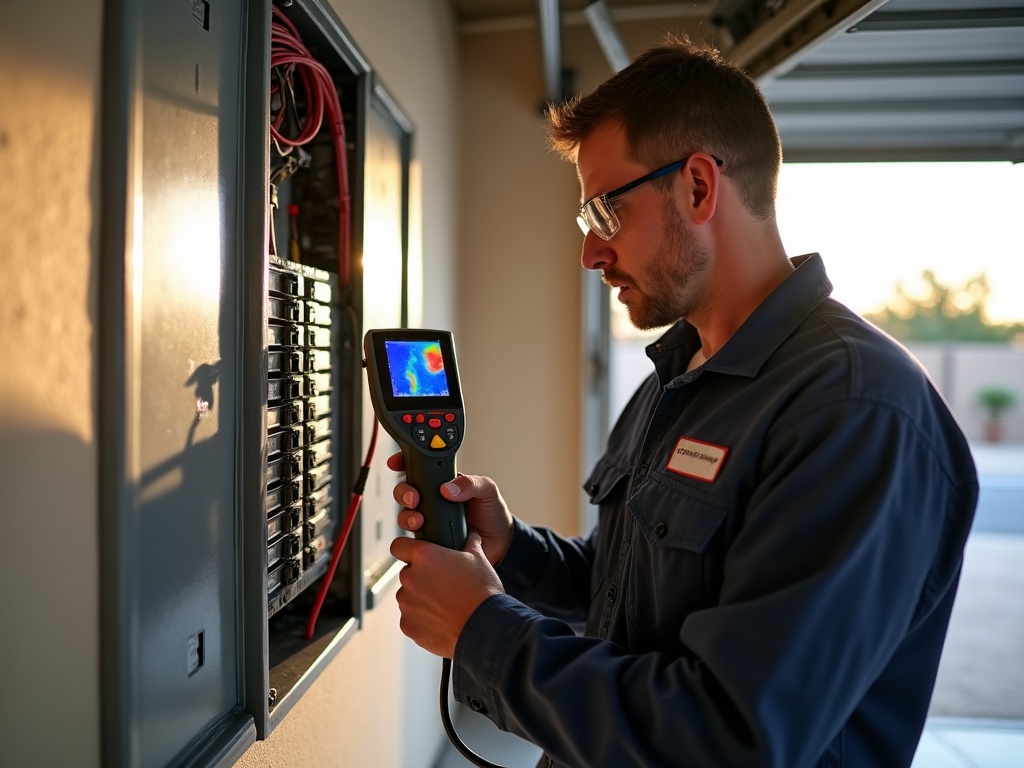
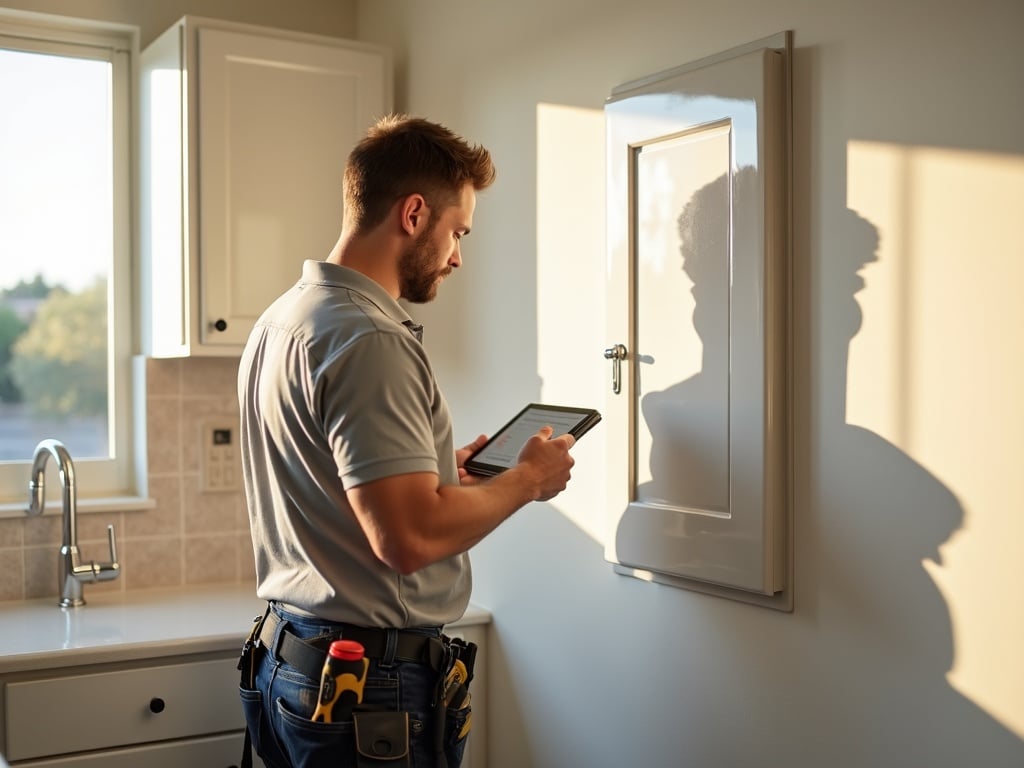
Think of it less like a quick peek and more like a structured diagnostic. A licensed electrician opens the panel, removes the deadfront cover, and works through a real checklist — not a clipboard-and-shrug routine. Here’s what we’re looking for:
- Breaker condition and age — older breakers fail to trip when they should, which is the exact opposite of their one job
- Wire connections and terminal tightness — loose connections arc; arcing starts fires
- Signs of heat damage or corrosion — discoloration, melted insulation, or rust inside a panel are never cosmetic issues
- Double-tapped breakers — two wires on one breaker terminal is a code violation in most configurations and a common DIY shortcut that creates real risk
- Neutral and ground integrity — a compromised neutral is one of the quieter hazards that doesn’t announce itself until it does
- Available capacity — whether your panel can handle what you’re asking of it today, let alone what you’re planning next
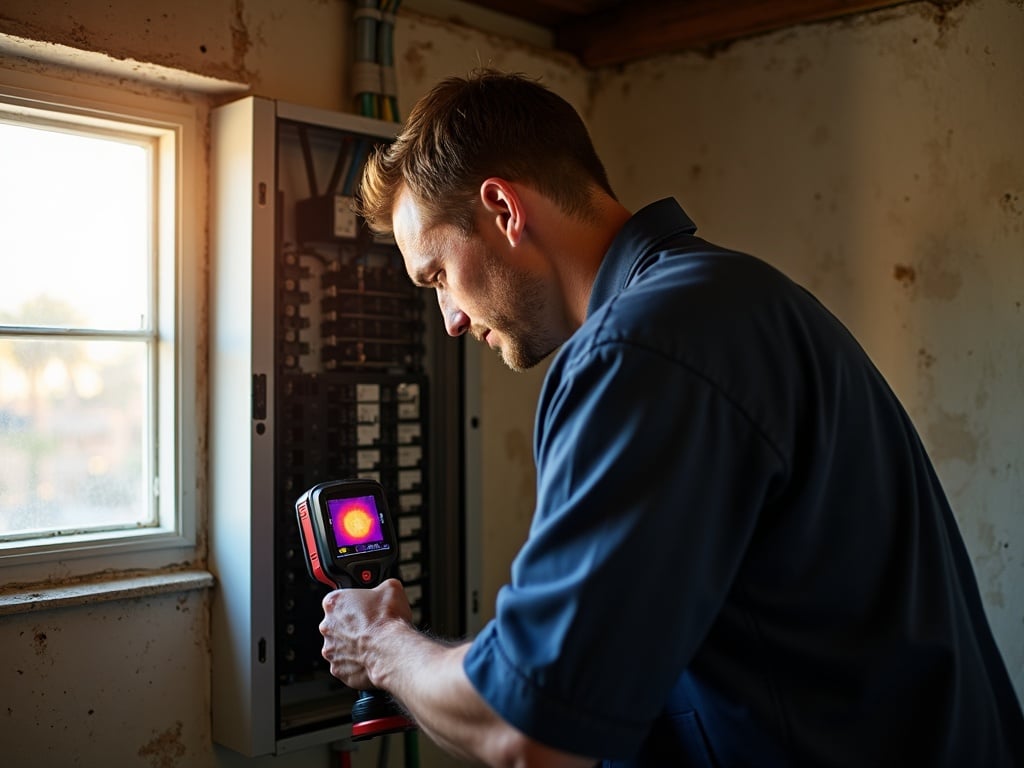
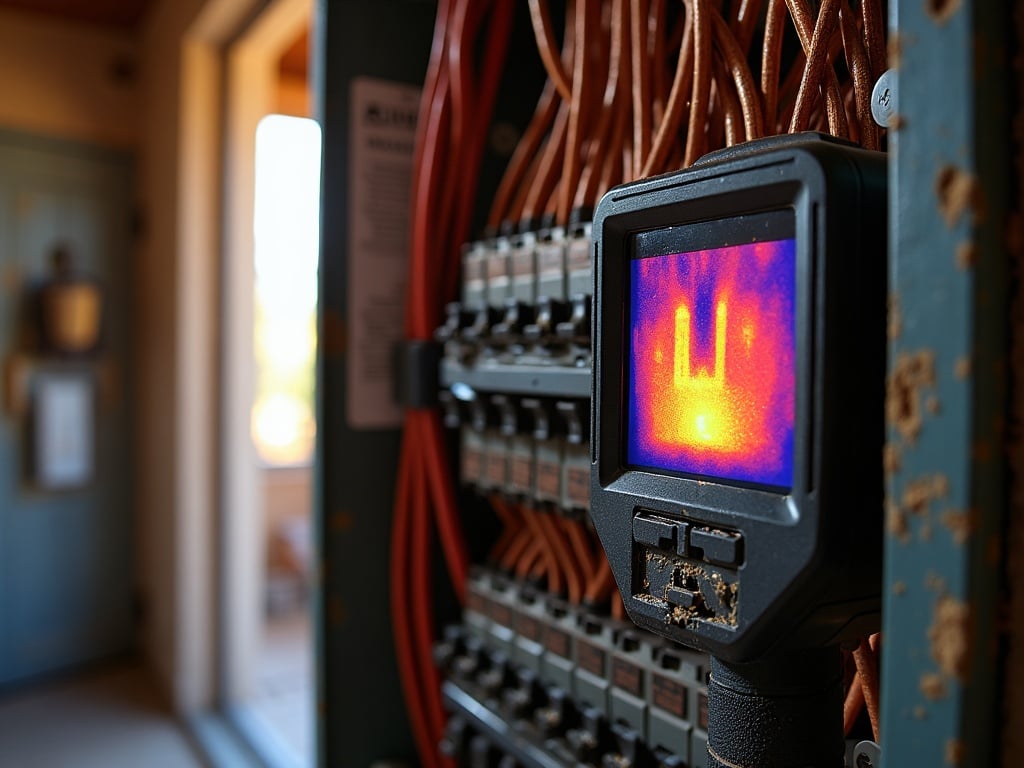
We also run a thermal imaging scan on the panel while it’s under load. This is the part that genuinely separates a proper diagnostic from a visual once-over. Heat signatures invisible to the eye show up clearly on a thermal camera — and more than once we’ve flagged a breaker that looked perfectly fine but was running dangerously hot. If you’ve been wondering how old your electrical panel actually is, the answer often changes how we interpret what we find inside it.
Thermal imaging doesn’t lie. A breaker that looks fine on the surface can be running 40°F hotter than its neighbors — and that gap is what fires are made of.
Why Scottsdale, AZ Homes Face Specific Pressure on Their Panels
Arizona summers are not gentle. The stretch from late May through September pushes HVAC systems — and the panels feeding them — to sustained loads that panels in milder climates rarely see. Add the wave of EV adoptions across North Scottsdale and the DC Fast Charger conversations we’re getting from homeowners near Kierland Commons and the 101, and you’ve got panels that were sized for 1998 trying to power a 2025 lifestyle.
If you’ve just taken delivery of a Tesla and need a dedicated Level 2 circuit, or you’re planning a Tesla charger installation before your HOA deadline, a panel health check should happen first — not after. And if you’ve got a remodel in progress, understanding your panel’s actual capacity before your contractor starts pulling permits is something our post on home electrical load assessments covers in detail.
When a Checkup Becomes a Conversation About Upgrading
Not every panel health check leads to a panel replacement — and we’ll tell you honestly if yours doesn’t need one. But some panels do need more than a tighten-and-go. Federal Pacific Stab-Lok panels and Zinsco panels are the two most commonly flagged for outright replacement, and Scottsdale, AZ has a lot of original-construction homes in the 30-to-40-year range that still carry them. If that’s your situation, you’re not alone, and there’s no reason to feel blindsided — just addressed.
When a breaker keeps tripping and won’t reset, that’s your panel talking. Here’s what it’s actually telling you — and why a reset isn’t the same thing as a fix.
Beyond safety, there’s a practical homeowner reality here: buyers and their inspectors flag panel issues immediately. In the Scottsdale market — from Old Town to Fountain Hills — a clean panel inspection report has real dollar value. It’s not just peace of mind; it’s a line item in your resale story.
What to Expect Working With Us
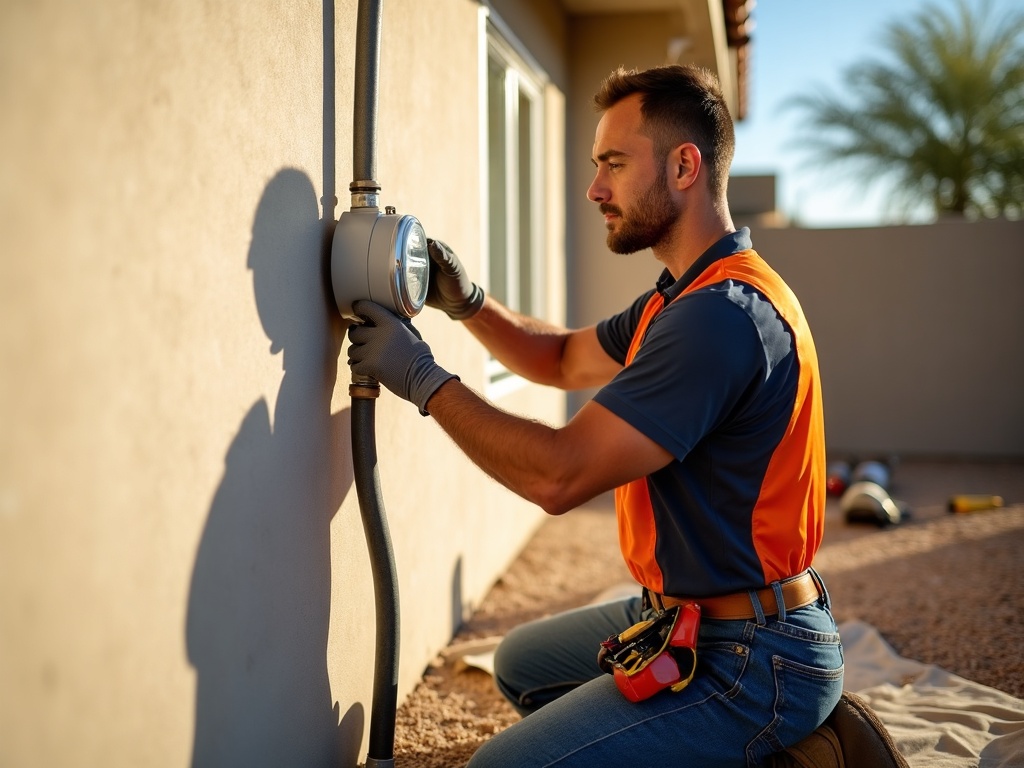
We’re not a one-truck operation that hands you a card and disappears. FHR Electric is the electrical division of FHR Construction — a licensed, insured AZ contractor with over 20 years in the Phoenix metro. That depth matters when a panel diagnostic uncovers something bigger: a needed service upgrade, a dedicated circuit addition, or a full meter base swap. We handle all of it under one roof with permits pulled correctly and inspections passed — because that’s what licensed work looks like. You can verify any Arizona contractor’s license through the Arizona Registrar of Contractors in about 60 seconds, and we genuinely encourage you to check ours.
Panel health checks are priced transparently. We give you the full picture before any work starts — no scope creep, no surprise invoice. For most Scottsdale, AZ homeowners, a diagnostic inspection runs in the range of a few hundred dollars; if it leads to a panel upgrade, we quote that separately and clearly before proceeding.
If there’s a burning smell, a breaker that won’t stay on, or you simply haven’t had eyes inside that panel in years — call FHR Electric at (602) 492-9999. We serve all of Maricopa County, from Chandler and Gilbert to Glendale and Tempe, and we’re the team Scottsdale, AZ homeowners call when they want it done once and done right.