If you’re planning a panel upgrade, adding an EV charger, or gutting your kitchen in Scottsdale, AZ, the first question isn’t which panel size you need — it’s whether your existing system can actually handle what you’re about to put on it. That’s precisely what a Home Electrical Load Assessment answers. And honestly, it’s the step most homeowners skip right up until something goes wrong.
What an Electrical Load Assessment Actually Is
A load assessment is a structured audit of every circuit, appliance, and demand source in your home. It’s not a visual inspection — it’s math backed by measurements. A licensed electrician calculates the total amperage your home draws under realistic operating conditions, then compares that against your panel’s rated capacity and your utility’s supply limit at the meter. The goal is a clear picture of where you stand before you add anything new.
For context: most Scottsdale, AZ homes built before 2000 were wired for 100–150 amps. A Tesla Model 3 charger pulling 48 amps, a new variable-speed HVAC, and an induction range can together demand more than half that budget simultaneously. Add a pool or spa and you may already be over your panel’s safe continuous load rating — even if no breaker has tripped yet.
The Step-by-Step Process We Follow

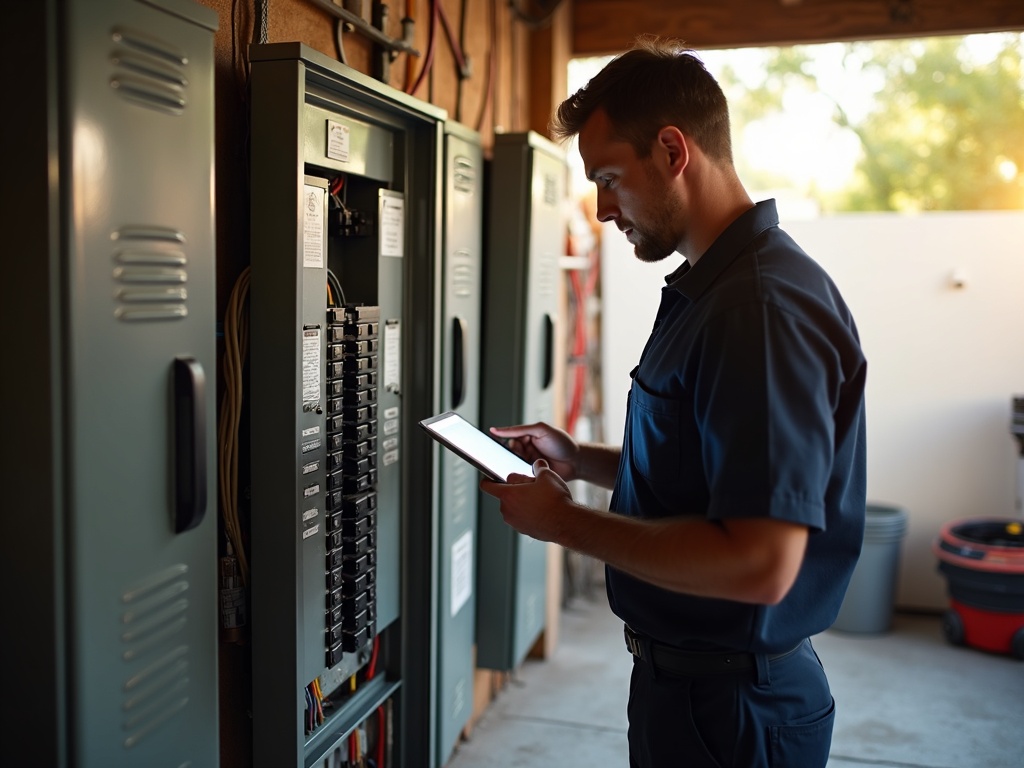
- Panel inventory: We document every breaker — its amperage, what it feeds, and how old the panel is. If you’ve never looked into how old your electrical panel actually is, this step alone can be eye-opening.
- Nameplate load calculation: Every major appliance — HVAC compressor, water heater, dryer, oven, chargers — gets logged by its nameplate amperage draw. This is the NEC-compliant electrical load calculation method, not a guess.
- Demand factor analysis: Not everything runs at full draw simultaneously. We apply NEC demand factors to get a realistic operating load, not a worst-case theoretical number that overstates the problem.
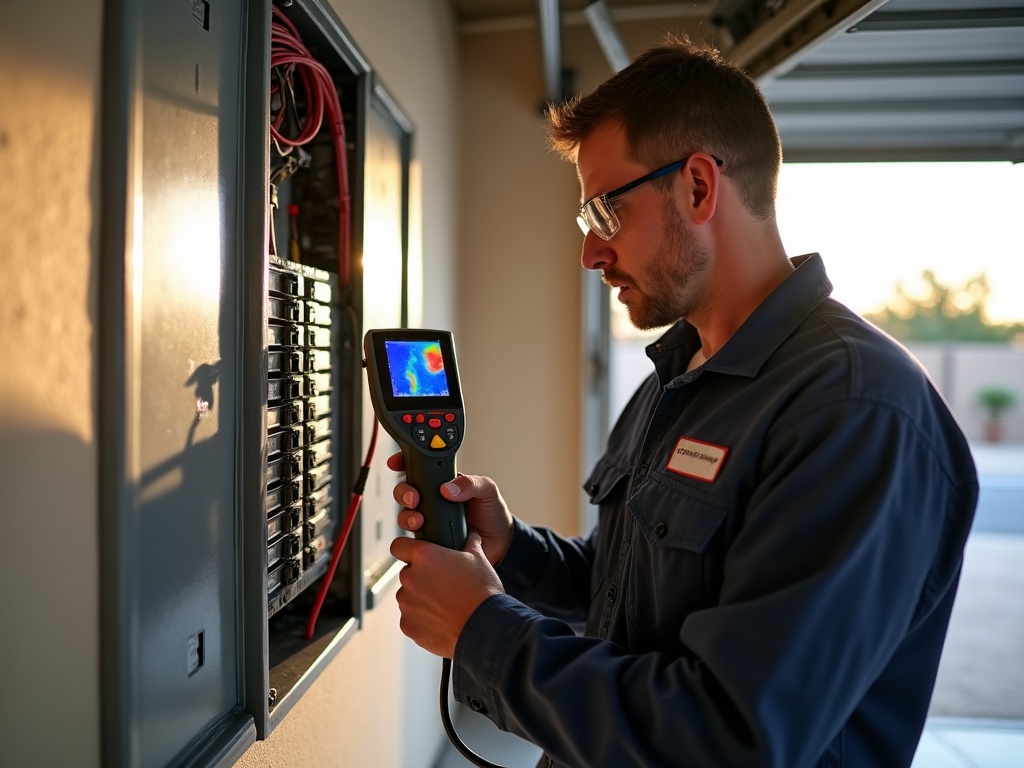
- Thermal imaging scan: We run a thermal camera across the panel and key junction points. Heat signatures reveal overloaded conductors and loose connections that don’t trip breakers but absolutely can start fires. This is the diagnostic step most one-truck shops skip entirely.
- Available capacity report: You get a number — how much usable headroom you actually have — and a recommendation: add circuits, rebalance loads, or upgrade the panel and potentially the meter base.
A load assessment doesn’t just tell you what your panel can handle — it tells you what it’s already handling that it shouldn’t be.
Why Scottsdale, AZ Homeowners Need This Before Any Upgrade

Scottsdale summers hit panels hard. When it’s 115° in Phoenix and every AC in the neighborhood is running full blast, your panel isn’t operating in ideal conditions — it’s running warm inside a hot garage, possibly for the 25th consecutive summer. Homes near McCormick Ranch, DC Ranch, or along Pima Road that haven’t had electrical work done in a decade are carrying modern loads on infrastructure that was never designed for them.
If a breaker keeps tripping in your home, that’s the system doing its job. But a panel running near its limit without tripping is actually the scarier scenario — and it’s more common than people think. Panel load balancing, not just a simple breaker swap, is often what’s needed.
This matters especially if you’re:
- A new Tesla or Rivian owner who just set a charger installation date — see our breakdown of hardwired EV charger vs. plug-in adapter to understand why the panel question comes first
- Mid-kitchen remodel and adding an induction range — read up on induction range circuit requirements before your cooktop arrives
- Running a home office or small medical suite where losing power mid-session is genuinely not an option
- Planning a room addition that requires dedicated circuits for new loads
What It Typically Costs — and What Happens After
A professional load assessment from a licensed contractor in the Scottsdale, AZ area typically runs in the range of a few hundred dollars for a standard residential evaluation — less than the cost of one service call to fix a problem that could have been caught upfront. If the assessment finds you need a panel upgrade, that’s a separate conversation with a clear scope and a straight price before any work starts. No surprise add-ons mid-job.
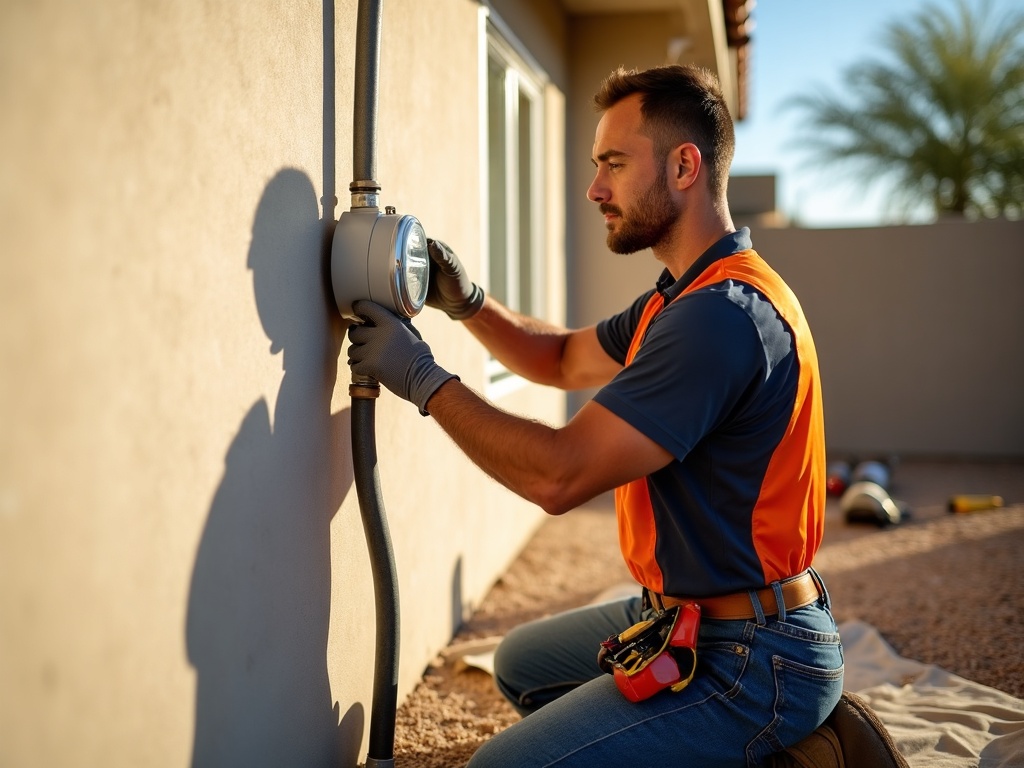
Depending on findings, next steps might include circuit additions and load balancing, a full panel upgrade, or in some cases a new meter base — especially if your utility connection is the limiting factor. We cover what that involves in detail in our post on meter base installation and when your upgrade requires a new one.
We’re licensed, insured, and have been working across Maricopa County — from Old Town Scottsdale to Gilbert to Fountain Hills — for over 20 years as part of FHR Construction. That’s not a talking point; it’s why we can pull the permits, handle the inspections, and back the work when it’s done. If the last electrician left you with a mess, we’ve seen that story before, and we know exactly how to sort it out the right way.
Ready to know exactly where your home stands? Call FHR Electric at (602) 492-9999 and let’s start with the numbers — not assumptions.