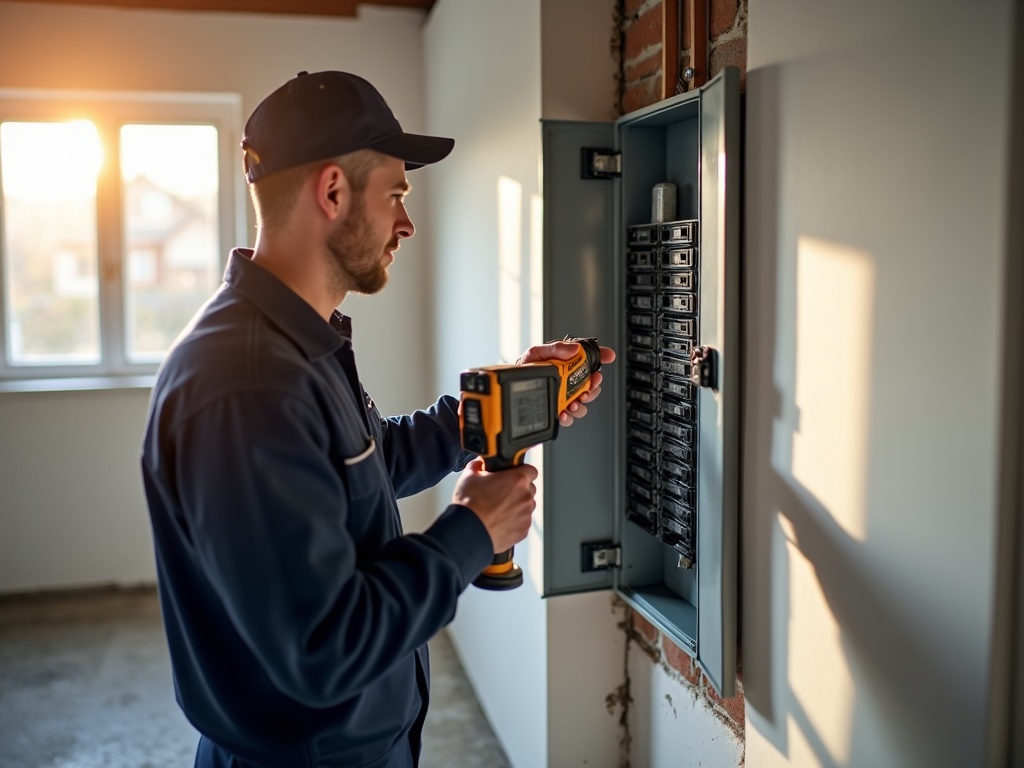
That sound is easy to dismiss — a faint crackle, a low hum you notice when the house goes quiet at night. But if your Electrical Panel Making Crackling Noise, that’s your panel telling you something is wrong. As technicians who’ve opened hundreds of panels across Scottsdale, AZ and the surrounding Maricopa County area, we can tell you that the first five minutes inside a panel reveal things most homeowners never see — and what we find is almost never as simple as a loose wire nut.
The noise isn’t the problem. The noise is the symptom. The problem is what’s generating enough heat or arc energy to make it audible in the first place.
Electricity moves silently when everything is healthy. When you can hear it, current is going somewhere it shouldn’t — or struggling to get where it should. Neither situation improves on its own.
What a Technician Notices Before You Even Mention the Sound
Before we open the dead front cover, we’re already reading the panel. Scorch marks or discoloration around breakers. A cover that’s warm to the touch in a spot where it shouldn’t be. A faint burning-plastic smell you’ve maybe stopped noticing. Breakers that look like they’ve shifted slightly in their bus slots. These aren’t random — each one narrows down the cause before a single screw is turned.
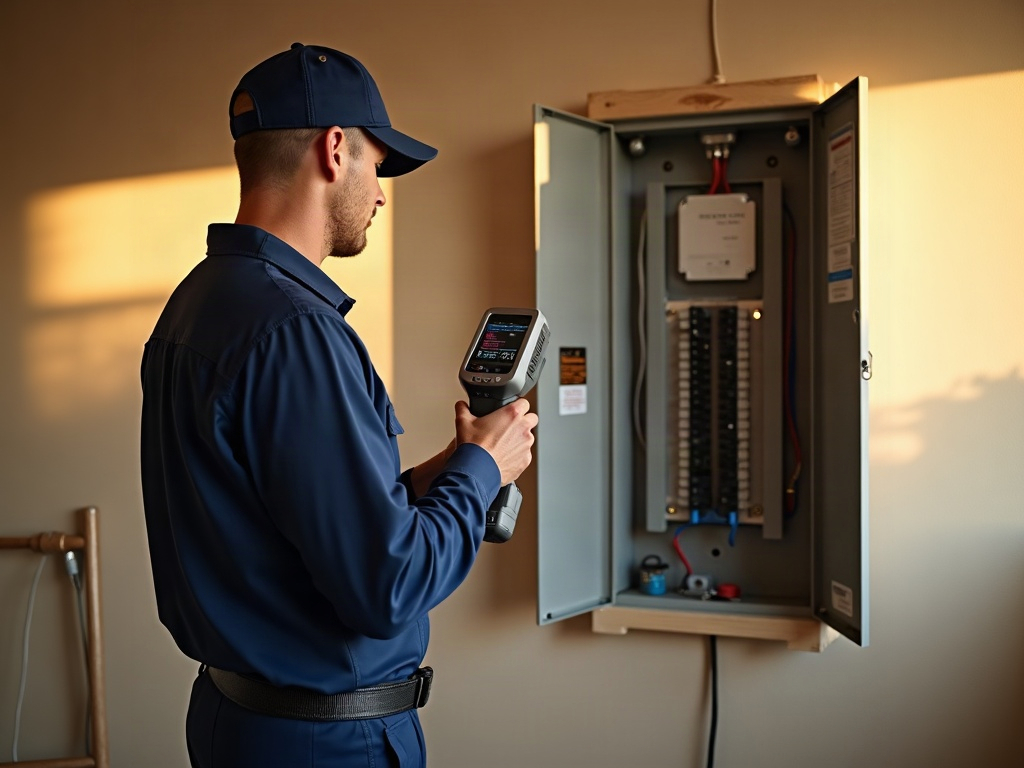
Inside, we use thermal imaging to see temperature differentials that are invisible to the naked eye. A connection that reads 140°F when everything around it is 85°F is a failing connection — even if the breaker hasn’t tripped yet, even if nothing has sparked. That’s the diagnostic edge that separates a thorough inspection from a guy poking around with a flashlight.
Warning Signs That Mean You Call Today — Not Next Week
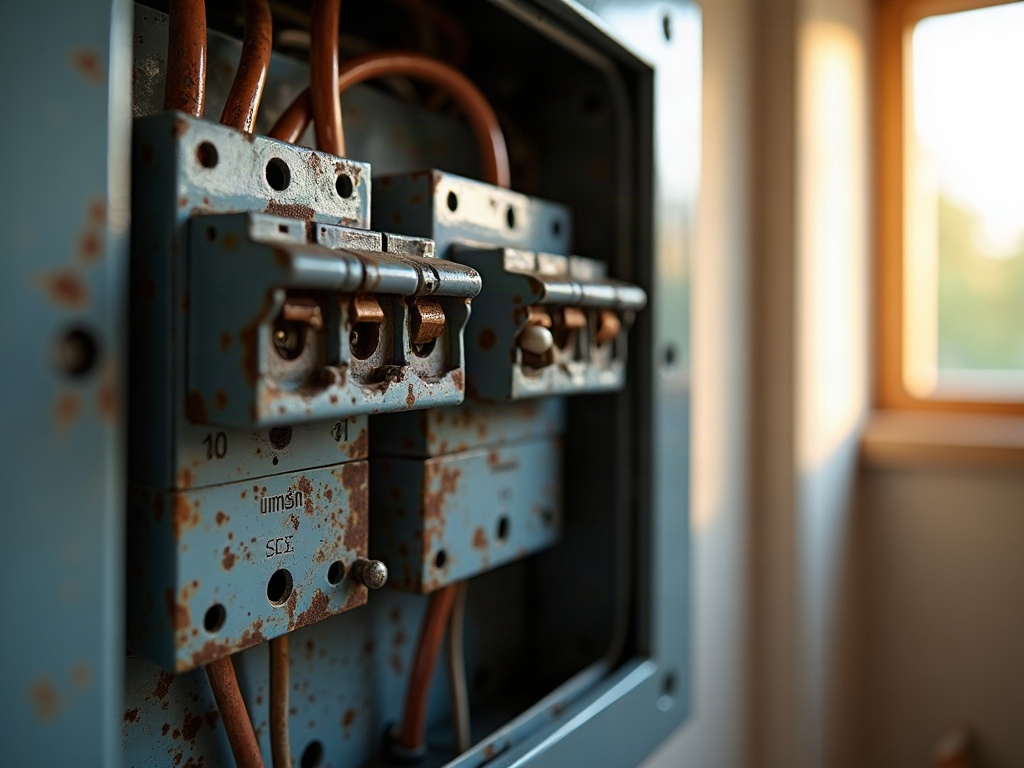
- Crackling or popping that changes pitch when you turn on a major appliance — dishwasher, HVAC, EV charger — points to a bus connection or breaker clip that’s arcing under load.
- A constant low buzz or hum from the panel, especially if it’s louder than usual, often means a breaker is failing to hold its position against the bus bar, creating resistance and heat.
- A breaker that trips the moment you reset it is a completely different problem from one that trips slowly under load — and each one has a different fix. Read more about what it means when a breaker trips the moment you flip it back on.
- Flickering lights paired with panel sounds — this combination almost always indicates a loose neutral or main connection, which is a serious fault.
- A burning smell, even faint or occasional, is a stop-everything moment. Not a schedule-for-later moment.
- A panel that’s 25–35 years old and now powering loads it was never designed for — an EV charger, a new variable-speed HVAC, a kitchen remodel — is working harder than its components were rated to handle.
If you’ve got a Federal Pacific or Stab-Lok panel, the calculus changes further. Those panels have a documented history of breakers that fail to trip under overload — meaning the panel sounds fine right up until it doesn’t. Learn more about why insurers refuse to cover Stab-Lok panels and what your options actually look like.
What Diagnosis and Repair Actually Costs — Honest Ranges
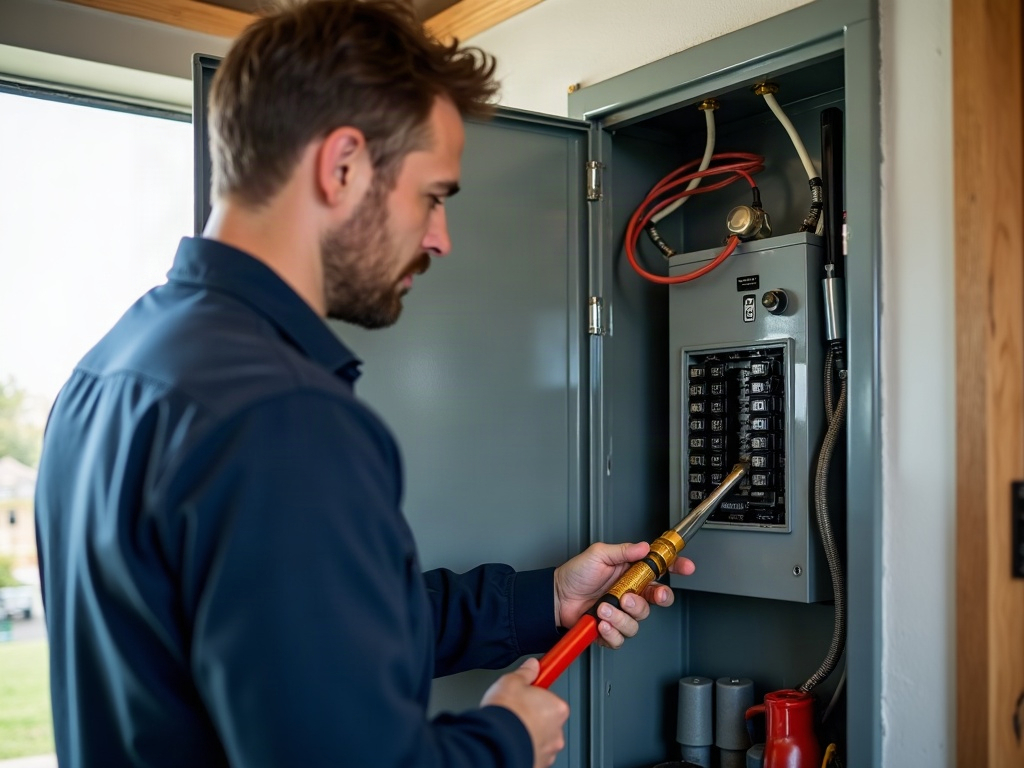
One of the biggest fears we hear from homeowners near Old Town Scottsdale and up into North Scottsdale’s newer communities is the open-ended invoice — calling someone out and not knowing if you’re looking at $150 or $15,000. Here’s how the numbers typically break down in the Phoenix metro:
- Diagnostic inspection with thermal imaging: typically $150–$300. This tells you exactly what’s wrong before any work is authorized — no guessing, no surprises.
- Single breaker replacement: typically $100–$250 depending on breaker type and access. A tandem or AFCI/GFCI breaker runs higher.
- Bus bar cleaning, connection re-torquing, or terminal repair: typically $200–$500, and often resolves buzzing electrical panel sounds that stem from loose hardware rather than failed components.
- Full panel replacement (100A → 200A): typically $2,500–$5,500 installed in Scottsdale, AZ and surrounding areas, depending on the service entrance situation, permit fees, and whether the utility meter base needs to be updated. If you’re weighing repair versus replacement, our guide on whether to repair or replace your electrical panel walks through the honest decision criteria.
For homeowners who’ve added an EV charger, a home office, or are mid-remodel, the panel inspection often uncovers capacity issues that need to be addressed before the new load is safe to run. If you’re in that situation, it’s worth reading about whether your garage panel can actually handle an EV charger before the car arrives.
The U.S. Consumer Product Safety Commission estimates that electrical failures are responsible for tens of thousands of home fires annually — and the majority involve wiring or panel components that showed warning signs well before ignition. That context matters when you’re weighing whether to schedule the inspection now or next month.
Why the Electrical Panel Making Crackling Noise Deserves a Licensed Response — Not a Handyman
We’ve heard this more times than we can count: “The last guy looked at it and said it was fine.” Then the inspection report during a sale, or the insurance renewal, or the next monsoon season revealed that it wasn’t fine at all. Panel diagnosis in AZ requires a licensed electrical contractor — not because it’s a legal technicality, but because getting it wrong has real consequences. Understanding the real risks of hiring an unlicensed electrician in Arizona is worth five minutes of your time before you make that call.
FHR Electric is the electrical division of FHR Construction — a licensed, insured Arizona contractor with over 20 years in the Phoenix metro. We bring thermal imaging to every panel inspection, we pull permits when the work requires it, and we give you a straight price before any work begins. No scope creep, no surprise invoice.
If you’re hearing something you can’t explain from the panel room, don’t let another week go by. Call us, describe what you’re hearing, and we’ll tell you honestly whether it’s urgent or schedulable — and then we’ll show up and prove it either way.