Here’s a question most homeowners in Scottsdale, AZ never think to ask until something goes wrong: How Old Is My Electrical Panel? Maybe a breaker tripped again, maybe you’re adding an EV charger, or maybe you just bought a home near McCormick Ranch and your inspector flagged the panel with a shrug. Either way, the answer matters more than most people realize — and it’s easier to find than you’d think.
Start at the Panel Door: Where the Date Is Hiding
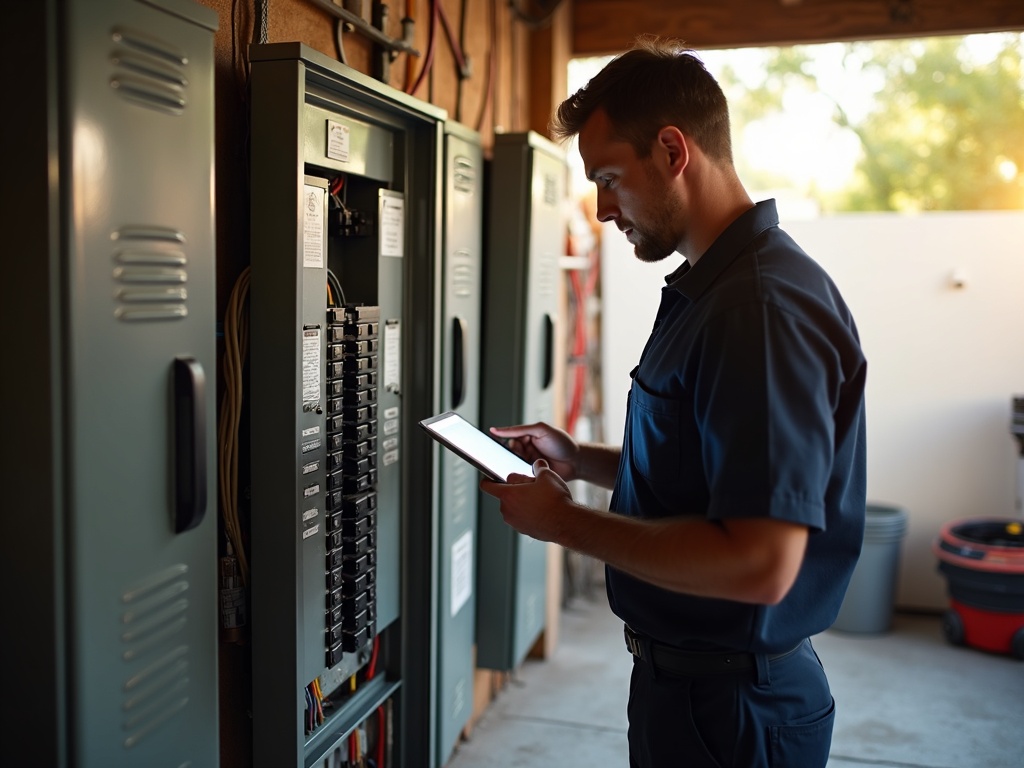
Open the panel door (the outer cover, not the dead front). Look for a label or manufacturer’s sticker — usually on the inside of the door or along the top edge of the enclosure. What you’re hunting for:
- Manufacture date stamp — printed directly on the label, often in small text near a UL listing mark
- Date codes on breakers — many breakers stamp a two- or four-digit year on the side of the breaker body itself; pop the cover off (or have us do it) and look at a few
- Panel model number — Google it along with the manufacturer name and you’ll usually land on a production timeline fast
- Permit records — Maricopa County’s online permit portal can show when electrical work was pulled on your address, which often lines up with the original install
No label? That’s a data point too. Panels installed before the mid-1970s frequently predate consistent labeling standards, which tells you something right there.
What Electrical Panel Age Actually Tells You

Knowing how to read the panel date is one thing. Knowing what to do with that information is another. Here’s a rough framework:
- Under 20 years old — Generally fine, but review capacity if you’ve added loads (EV charger, new HVAC, induction range). If you’re planning a kitchen remodel with an induction cooktop, get a load calculation before assuming you have room.
- 20–30 years old — Worth a licensed inspection. These panels often still perform but may lack AFCI/GFCI protection now required by code and may be undersized for a modern smart home.
- 30–40+ years old — This is where things get serious. Panels in this range frequently coincide with known problem brands, aluminum wiring, and insulation that has simply aged out. If a breaker keeps tripping in a panel this age, that’s not an annoyance — that’s your house asking for help.
“A panel that was properly sized for a 1985 Phoenix-area home was never designed to run two EVs, a 5-ton Trane, a tankless water heater, and a rack of smart-home gear. Age plus load is the real risk equation.”
Red Flags That Go Beyond the Date

Sometimes the electrical panel age is fine on paper but the panel itself is not. Watch for these regardless of the manufacture date:
- Breakers that feel loose, won’t stay reset, or run warm to the touch
- A burning smell or scorch marks anywhere near the enclosure
- Federal Pacific or Zinsco brand panels — these have well-documented failure histories and should be evaluated regardless of age (the U.S. Consumer Product Safety Commission has tracked failure data on both)
- Double-tapped breakers — two wires sharing one breaker terminal — a common DIY shortcut that creates real overload risk
- Any panel in a home with aluminum branch-circuit wiring, which requires specific breaker compatibility to be safe
If your home has aluminum branch-circuit wiring, that’s a separate but related conversation. Our aluminum wiring replacement service addresses exactly this — it’s one of the most common findings we see in Scottsdale, AZ homes built between 1965 and 1973.
When Knowing the Age Should Trigger a Call
Here’s the honest version: if you’re asking how old is my electrical panel because something already feels off — a persistent trip, a flickering light, a funny smell after a summer monsoon — the date is almost secondary. Those symptoms need a licensed electrician, full stop.
If you’re planning ahead — adding a Tesla charger, expanding a commercial kitchen, or doing a major remodel — knowing when the panel was installed lets us spec the right upgrade path from the start and avoid mid-project surprises. That’s exactly how we work at FHR Electric: straight-price quotes, licensed and insured under Arizona ROC, and over 20 years serving the Phoenix metro.
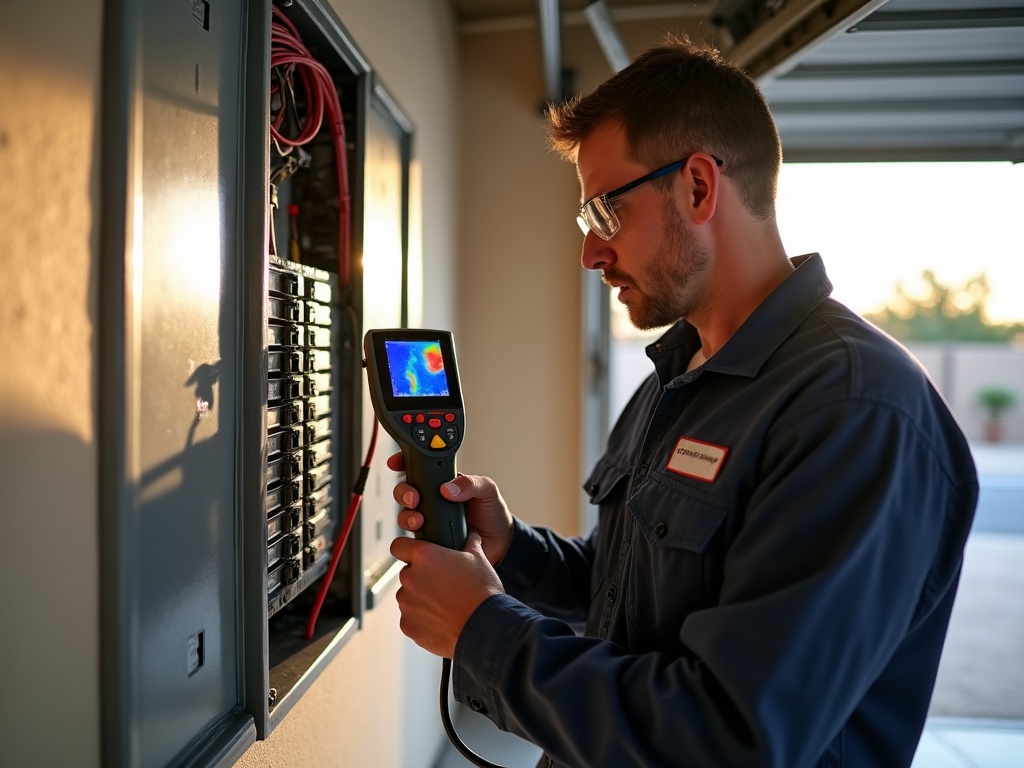
We also use thermal imaging on panel inspections — not a flashlight-and-eyeball approach, but infrared diagnostics that catch hot spots inside a closed enclosure before they become an insurance claim or a 2 a.m. emergency. If you’re a homeowner near Old Town Scottsdale or managing a commercial property in Chandler or Gilbert, that level of documentation matters when you need to demonstrate due diligence to an insurer or a building inspector.
Thinking about what happens when a panel upgrade also means adding dedicated circuits for new equipment? We handle that as part of the same scope — no second trip, no second invoice.
Don’t guess at what’s behind that panel door. Call FHR Electric at (602) 492-9999 and let’s figure out exactly where you stand — before Scottsdale, AZ‘s next heat wave makes the decision for you.