Most homeowners in Scottsdale, AZ never think about their meter base — until a utility inspection flags it, a panel upgrade stalls, or an electrician tells them the job can’t move forward without one. Meter Base Installation sits right at the start of your home’s entire electrical chain, and if that link is weak, everything downstream is compromised. At FHR Electric, we walk through this conversation almost every week, so let’s break it down plainly.
What a Meter Base Actually Does
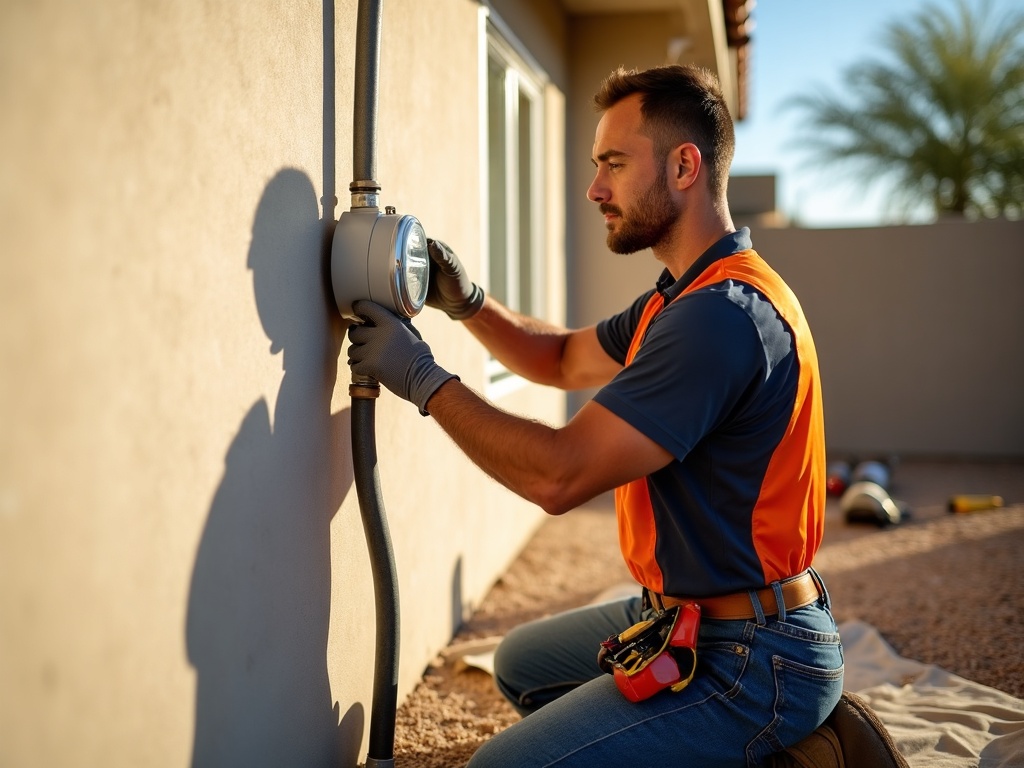
The meter base — also called a meter socket — is the enclosure mounted to the outside of your home where the utility company plugs in the kilowatt-hour meter. Power flows from the utility’s service drop, through the meter socket, and into your service entrance conductors before hitting the main breaker panel. It’s the handoff point between the utility’s side and yours.
Because it lives at that boundary, the meter base has to be rated to handle everything you’re pulling through your system. An older 100-amp socket can’t safely feed a modern 200-amp or 320-amp service — and in the Scottsdale, AZ area, with the heat loads we run here, undersized service entrance electrical work is a genuine hazard, not just a code violation.
When Meter Base Installation Becomes Part of Your Upgrade

Here’s the situation we see most often: a homeowner in North Scottsdale or near the McCormick Ranch area decides to upgrade from a 100-amp panel to a 200-amp service — maybe they just took delivery of a Tesla and read up on Tesla charger installation, or they’re adding a new HVAC system on top of a kitchen remodel. The panel upgrade itself is straightforward, but when we pull the permit and the inspector (or APS/SRP) takes a look at the meter socket, it’s rated for the old service size. That socket has to come out.
A utility meter base replacement is also triggered by:
- Physical damage — corrosion, cracked housing, burn marks, or melted jaws inside the socket
- An outdated socket style that the utility no longer accepts (common in homes built before the mid-1980s)
- A move to underground service or a service entrance relocation during a remodel
- Installing a whole-home generator with an interlock or transfer switch that changes the service configuration — worth reading about whole-home generator backup power if that’s on your radar
- Adding a second meter or sub-meter for an ADU, casita, or detached structure
The meter base is the one component most electricians skip discussing — until it stops the job cold. Getting it right from the start is the difference between a smooth inspection and a two-week delay.
What the Work Actually Involves

Meter socket upgrade work is not a DIY project, and it’s not something to hand off to a general handyman. Here’s why: the utility has to disconnect power at the transformer or pull the meter before any work can begin on the service entrance. In Scottsdale, AZ and across Maricopa County, that coordination goes through APS or SRP depending on your address. Scheduling that disconnect, performing the swap within the utility’s window, and passing the inspection — all of it requires a licensed electrical contractor.
The physical scope typically includes removing the old socket enclosure, installing a new UL-listed meter base rated for the new service amperage, replacing or repositioning the service entrance conductors if needed, and sealing the weatherhead and conduit entry points correctly. In Scottsdale, AZ, we also check the grounding electrode system at this stage — it’s a natural inspection point and the NEC requires it to meet current standards when you open up service entrance electrical work.
If your breaker keeps tripping or you’ve noticed scorch marks near your main panel, there’s a real chance the problem started upstream at the meter base. That’s worth investigating before it escalates.
Cost ranges vary based on service size, conduit configuration, and whether the utility requires a full service relocation. For a straightforward meter socket upgrade paired with a panel replacement in the Phoenix metro, most homeowners budget somewhere between $800 and $2,500 for the meter base portion alone, separate from the panel work itself. Unusual configurations — underground service, older masonry homes in Old Town Scottsdale, or large commercial properties — can push that higher. We quote straight prices before any work starts; no scope creep surprises.
Why Licensed Credentials Matter Here More Than Anywhere
Service entrance electrical work is one of the few residential electrical scopes where an unlicensed contractor can cause the utility to permanently refuse to reconnect your service — leaving you without power and holding a repair bill on top of the original job. We’ve seen it happen to homeowners who went with the lowest bid and later called us to fix it. It’s expensive, it’s stressful, and it’s completely avoidable.
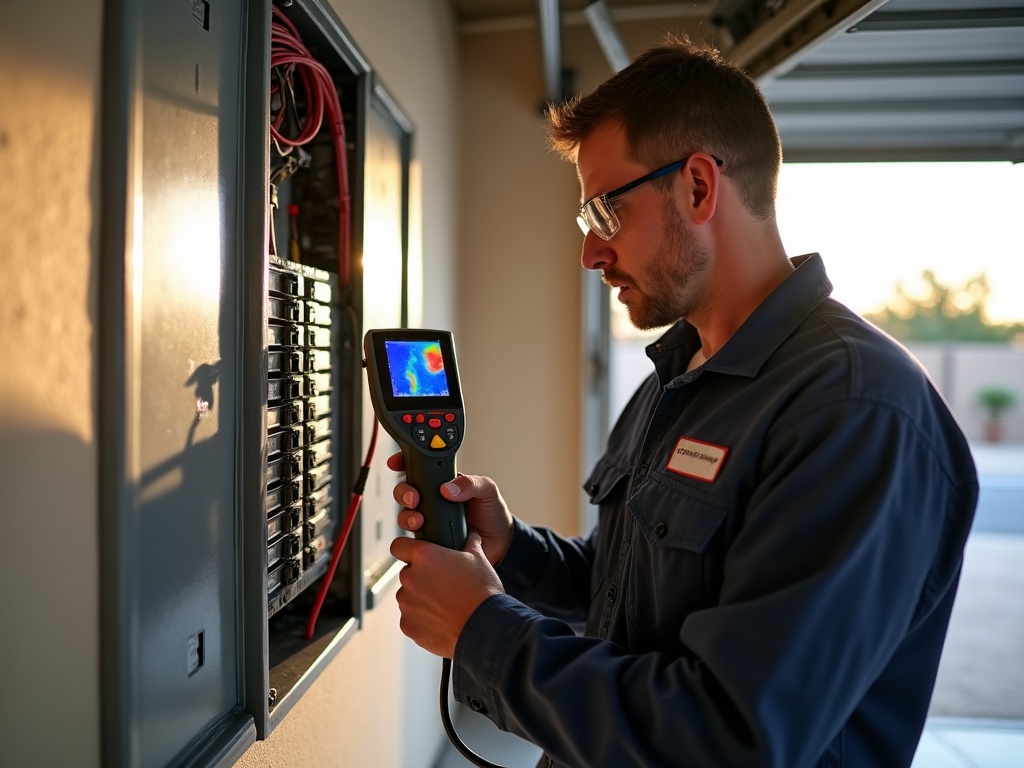
FHR Electric has been licensed and operating in the Phoenix metro for over 20 years. We’re the electrical division of FHR Construction, which means we carry the insurance, the license, and the commercial and residential breadth to handle everything from a single meter socket swap to a full service upgrade across multiple structures. After the work, we run thermal imaging on the connections — because a torque spec on paper doesn’t tell you what a heat signature in the panel will.
If you’re planning an EV charger and want to understand how your panel load factors into the conversation, our breakdown of a hardwired EV charger vs. plug-in adapter is a solid place to start. And if you’re not sure how old your current panel and service equipment actually is, check out how to find out how old your electrical panel is — the answer might surprise you.
If you’re in Scottsdale, AZ or anywhere in Scottsdale, AZ and you’re planning a panel upgrade, adding an EV charger, or your utility flagged your meter base during a recent inspection, let’s talk before the job gets complicated. Call FHR Electric at (602) 492-9999 — we’ll tell you exactly what’s needed, what it’ll cost, and how fast we can get it scheduled.