
Here’s something most homeowners don’t think about until they’re standing on their back deck at dusk, string lights flickering, wondering why half the path fixtures just went dark: Low Voltage Deck Lighting Wiring is more involved than plugging a transformer into an outdoor outlet and calling it done. Get the foundation right and you get a system that runs clean for a decade. Rush it, and you’re chasing ground faults and blown fixtures every monsoon season. We’ve seen both outcomes on jobs across Scottsdale, AZ — and trust us, one of those calls is a lot more fun to make.
What Low-Voltage Deck Lighting Actually Is
Low-voltage outdoor lighting operates at 12 volts DC, stepped down from your home’s standard 120V supply by a dedicated transformer. That lower voltage is what makes it safer to handle, more forgiving in wet conditions, and energy-efficient enough that a full deck and pathway run might cost you just a few dollars a month in electricity. It’s genuinely clever engineering — the kind that rewards a careful install and punishes a sloppy one in equal measure.
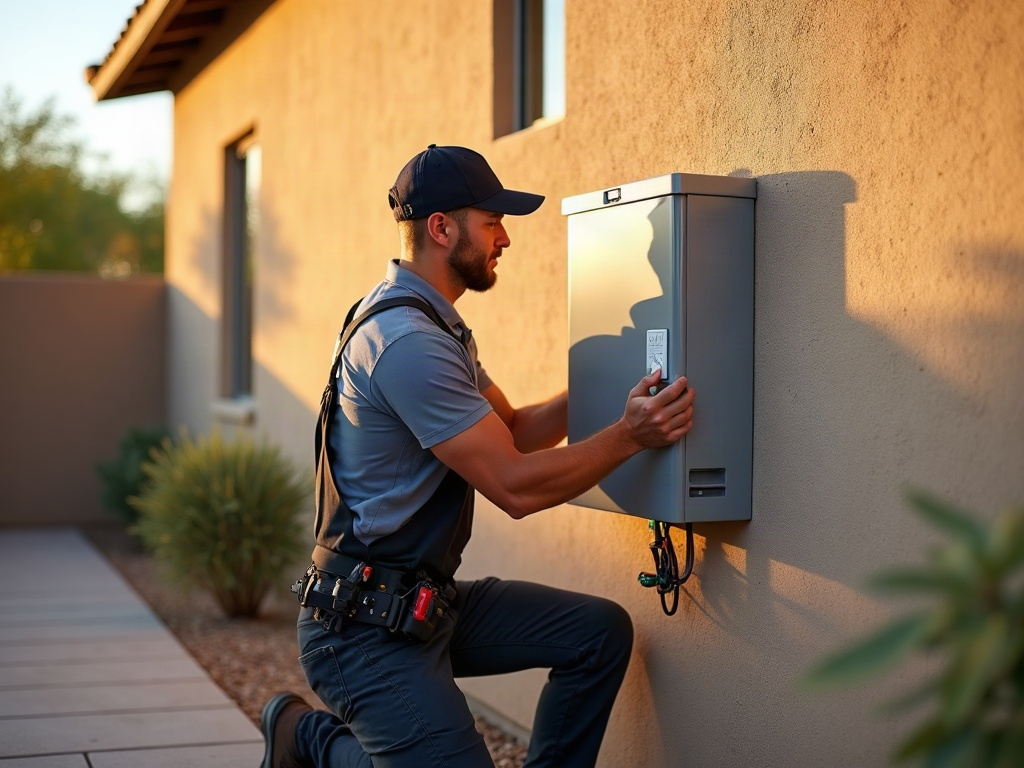
The transformer itself is the heart of the system. It mounts near an outdoor GFCI outlet, converts the voltage, and distributes power across one or more 12V cable runs. Fixture placement, cable gauge, and total wattage load all have to be calculated before a single fixture goes in the ground. Wire too many lights on a single run without accounting for voltage drop, and the fixtures at the far end dim noticeably — a classic amateur mistake we correct regularly in North Scottsdale and out toward Fountain Hills.
The Wiring Steps a Licensed Electrician Actually Handles
The 12V side of a low-voltage system is technically accessible to a careful DIYer. The 120V feed that powers the transformer is not — and that’s where the line gets drawn.
- Dedicated outdoor circuit — if your deck doesn’t already have a weatherproof GFCI outlet in the right location, we run a new circuit from the panel. That means proper wire gauge, a GFCI breaker or outlet, and conduit where code requires it.
- Transformer mounting and sizing — transformers are rated in total wattage. We calculate your fixture load, add a 20–30% headroom buffer for future expansion, and select and mount the right unit.
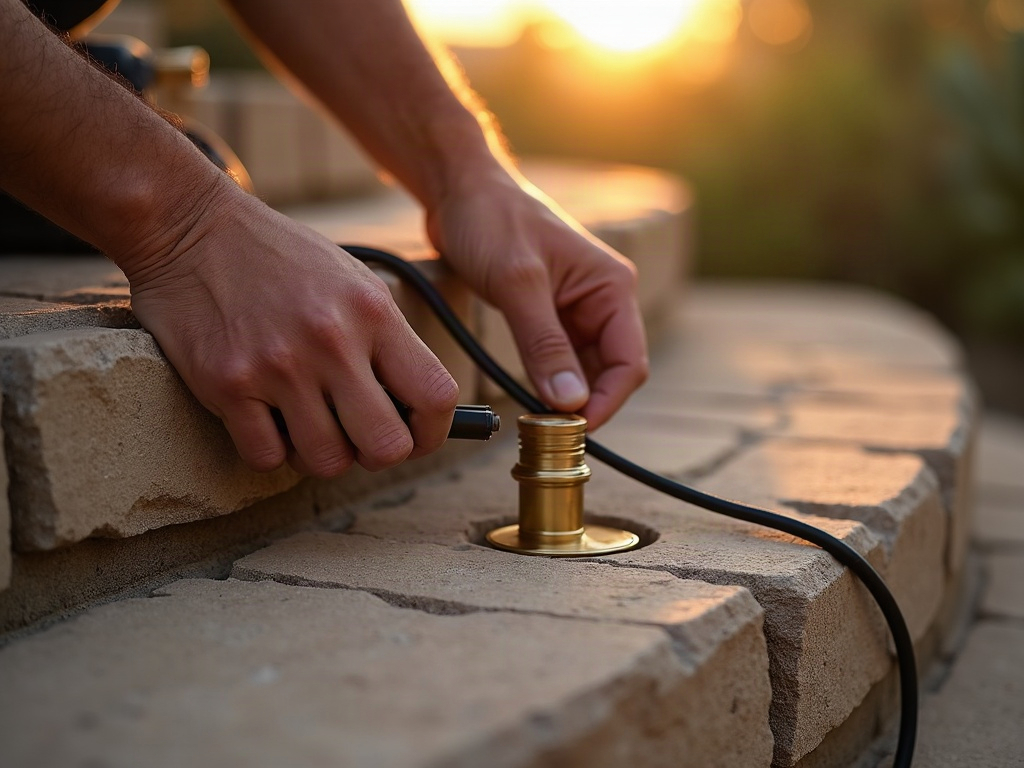
- Cable routing and burial depth — low-voltage cable run along a deck surface is fine; cable buried in soil to reach pathway lights near the pool deck or driveway edge needs to be at the NEC-required depth and protected appropriately.
- Voltage drop calculations — longer runs require heavier gauge wire (10 or 12 AWG instead of 16) to keep voltage at the fixture above the minimum for consistent brightness. We do the math before the first staple goes in.
- Timer and photocell integration — most quality transformers include a programmable timer or dusk-to-dawn sensor. We dial those in so the system works autonomously from day one.
A low-voltage system is only as reliable as the 120V feed behind it. That part isn’t a DIY call — it’s a licensed-electrician call.
Why the Scottsdale, AZ Climate Makes Proper Installation Non-Negotiable
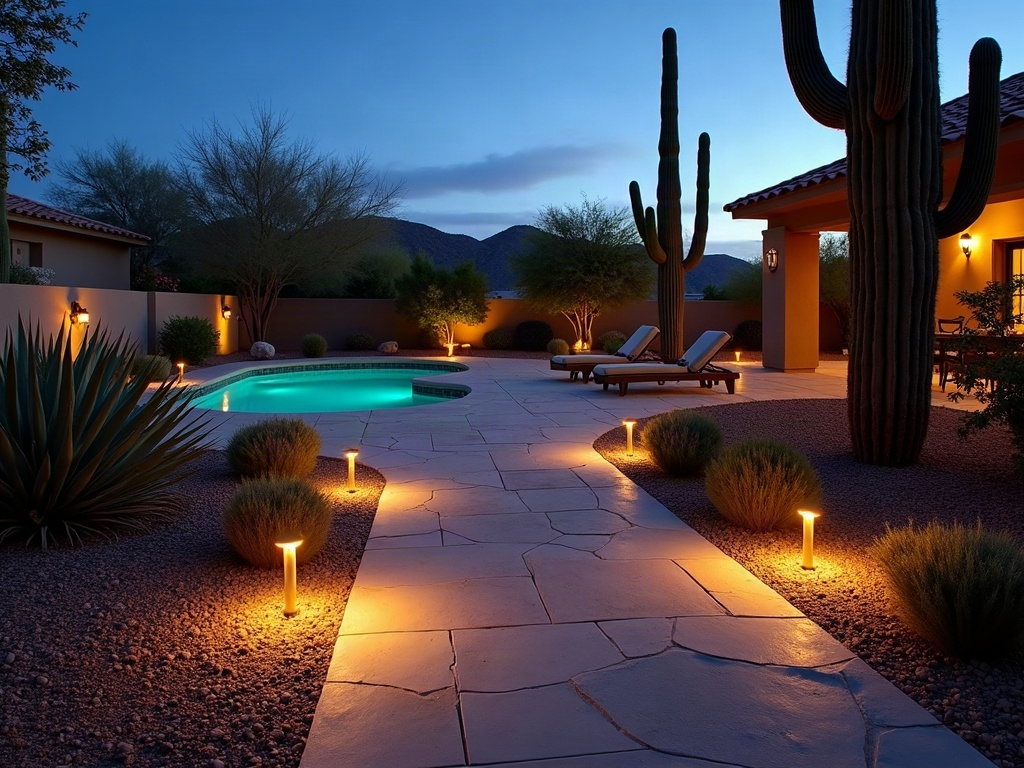
Scottsdale’s summer heat and monsoon moisture aren’t a gentle test for outdoor electrical. UV radiation degrades low-grade cable insulation faster here than almost anywhere in the country. Monsoon rain hits fast and hard — a poorly sealed transformer housing or a shallow-buried cable splice can introduce ground faults that trip your GFCI and take the whole system offline mid-party. We use direct-burial rated cable, weatherproof wire connectors, and transformer housings rated for outdoor exposure as a baseline — not an upgrade. If you’re near one of the canal-adjacent neighborhoods in Old Town Scottsdale or have landscaping that gets heavy drip irrigation, we pay extra attention to splice locations and conduit sealing.
We also keep an eye on the bigger picture. If your outdoor lighting project is prompting you to add a circuit or two, it’s worth knowing whether your panel has the capacity. Older panels in particular deserve a look — our post on whether to repair or replace your electrical panel walks through the honest decision framework. And if you’ve been adding loads — an EV charger, new HVAC, a kitchen remodel — it’s worth checking out whether 200-amp service is still enough for your modern home before we run any new circuits.
What Does a Deck Lighting Install Typically Cost?
Ballpark ranges for homeowners planning ahead: a basic deck lighting install with a new outdoor circuit, a quality transformer, and eight to twelve fixtures typically runs $800–$2,000 installed depending on panel proximity, fixture quality, and how much conduit or trenching is involved. Larger estates near Pinnacle Peak Road or McCormick Ranch with extended pathway runs and multiple transformer zones can run higher. We quote the full scope before work begins — no surprise line items added after the fact.
The Part That Actually Protects Your Investment
Any licensed electrician can pull wire. What separates a quality install from one that causes problems two summers later is what happens after: verification. We use thermal imaging to confirm connections aren’t running hot under load — the same diagnostic tool we apply to panel inspections and commercial work. A loose wire nut on a 120V transformer feed that looks fine visually will show up as a heat anomaly under a thermal camera. You can read more about what thermal imaging finds that a visual inspection misses — it’s one of the reasons our clients stop worrying once the job is done.
We’ve been doing this work across Scottsdale, AZ and all of Maricopa County for over 20 years as part of FHR Construction — a fully licensed and insured Arizona contractor. That background matters when a deck lighting job uncovers a bigger issue: a panel that’s undersized, wiring that doesn’t meet current code, or an outdoor circuit that was clearly installed by someone who wasn’t licensed. We’re not going to patch over it and hand you a pretty invoice. We’re going to tell you what’s there and what it means.
If you’re ready to get your deck looking the way you’ve been picturing it — and wired so it actually stays that way — call FHR Electric at (602) 492-9999 for a straight-price quote. Same-day responses during business hours, no runaround.

