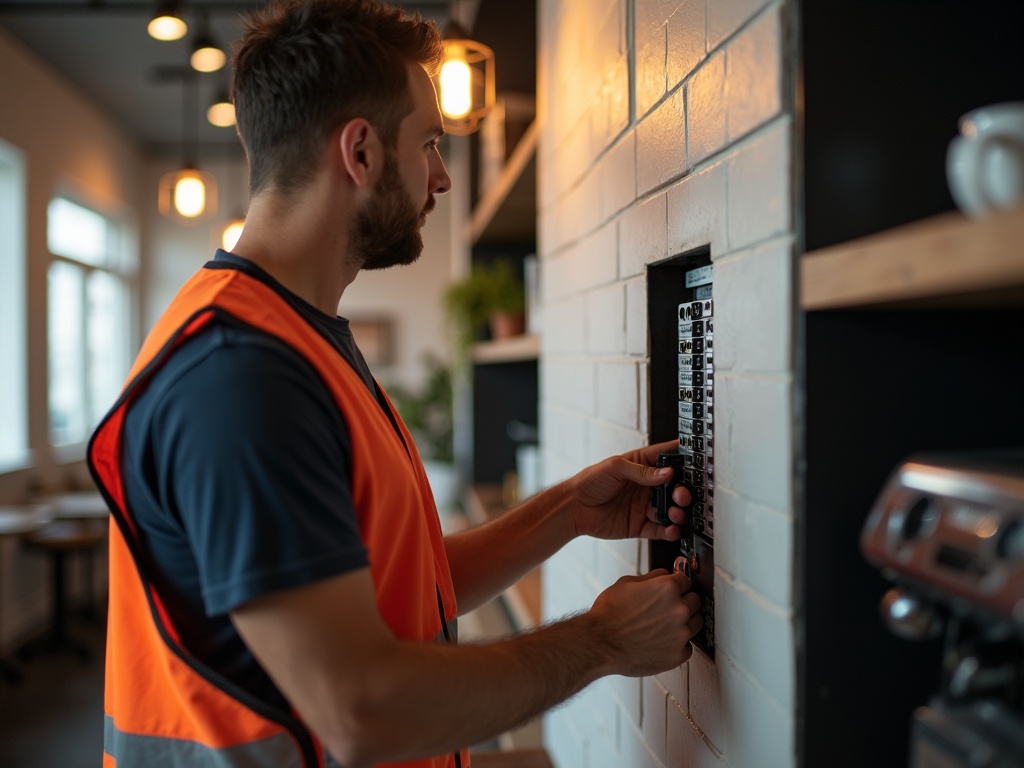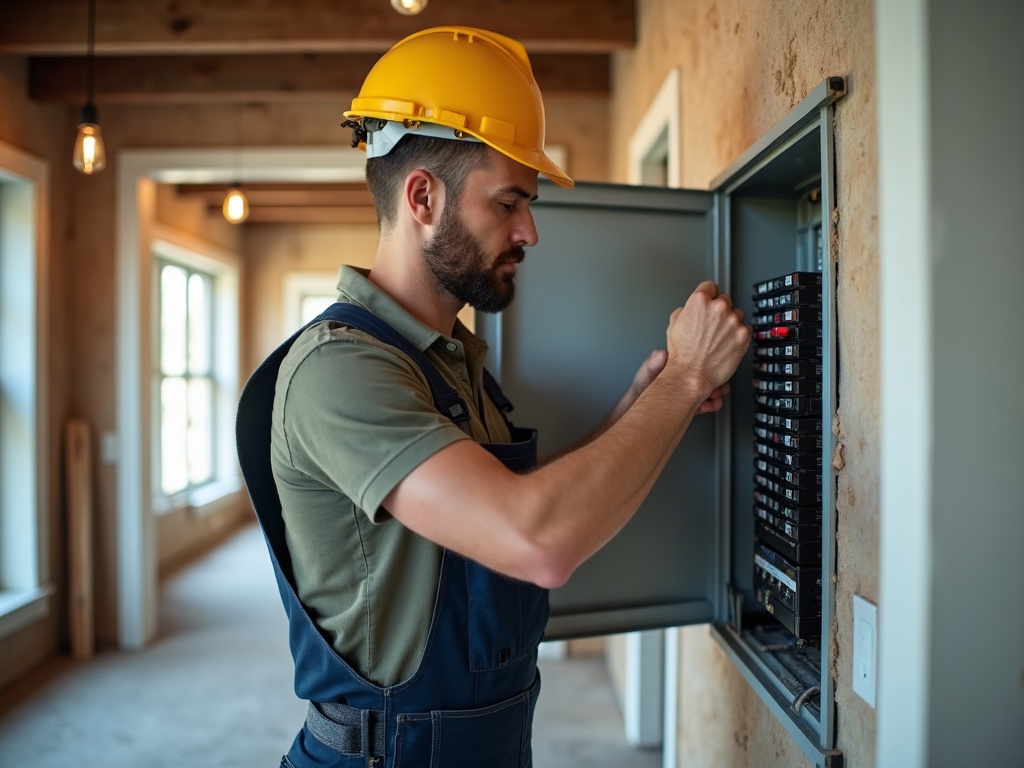
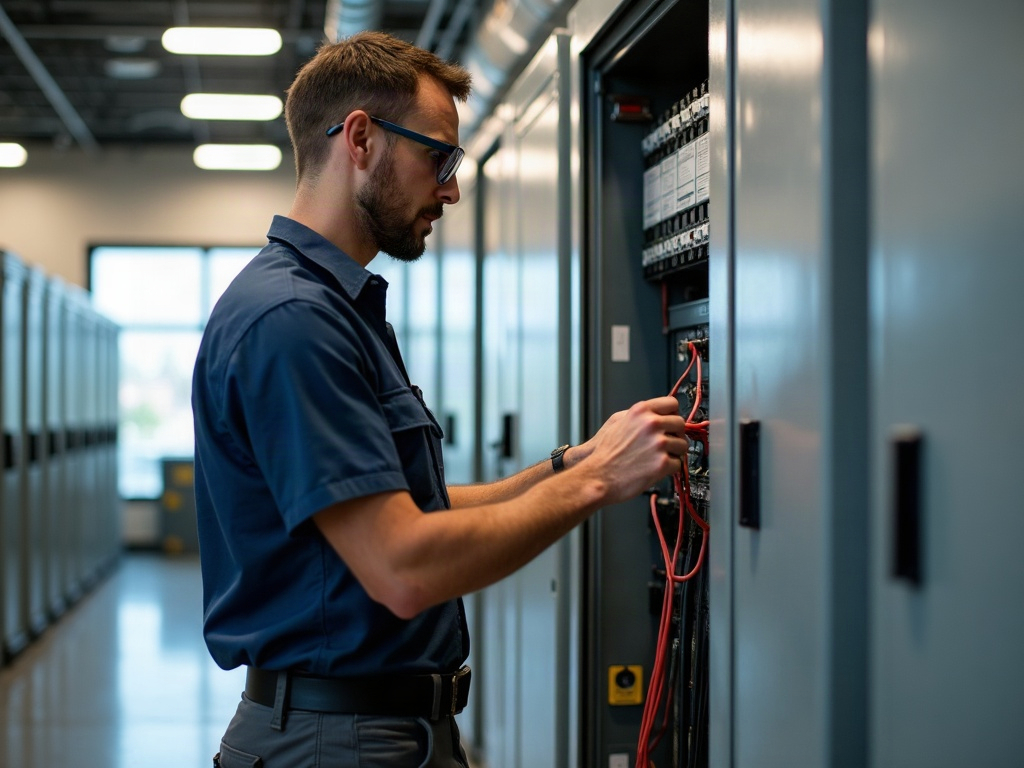
The first thing we notice when we walk into a business without a UPS — before we pull a single panel cover — is what’s not there. No transfer switch. No battery cabinet. Just a bare service entrance and a strip of standard outlets doing work they were never designed to do. If you run a medical office in North Scottsdale, a restaurant near Old Town, or a dental practice anywhere in Scottsdale, AZ, that gap is worth understanding. Commercial UPS System Installation is one of those jobs that sounds optional right up until the moment it isn’t.
“In the first five minutes on-site, we can usually tell whether a business is one monsoon away from a very expensive afternoon.”
What a Commercial UPS System Actually Does
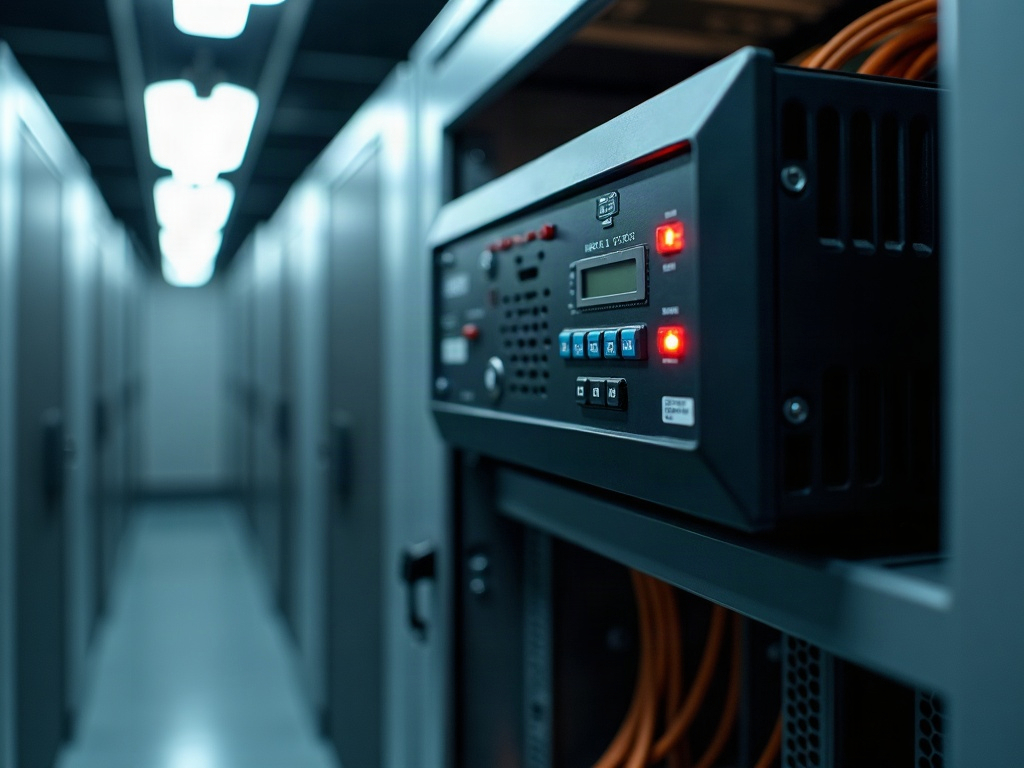
A UPS — uninterruptible power supply — sits between your utility feed and your critical equipment. When utility power drops, sags, or spikes, the UPS bridges the gap instantly, within milliseconds, so your computers, servers, point-of-sale systems, medical devices, or refrigeration units never feel a thing. It’s not a generator; it doesn’t run your whole building indefinitely. Think of it as a very smart battery cushion that buys you time — enough to ride out a brief outage cleanly, or to shut down sensitive equipment gracefully before a longer one does real damage.
Commercial UPS units also condition the power coming in. Voltage fluctuations and harmonics — common on older Arizona commercial feeds — can silently degrade electronics over time. A quality UPS filters those out. That’s a detail a lot of business owners miss until they’ve burned through two or three expensive pieces of equipment.
Warning Signs Your Business Needs One Now
These aren’t hypotheticals. We see them regularly across Scottsdale, AZ and the broader AZ metro:
- Computers restart or freeze during monsoon season — even brief voltage dips mid-storm are enough to corrupt open files or crash a POS transaction.
- You’ve had unexplained equipment failures — power conditioning issues are quiet killers; your IT vendor may have blamed the hardware when the feed was the real culprit.
- Your business handles patient data or medical devices — a dental chair or imaging unit losing power mid-procedure isn’t just an inconvenience; it’s a liability.
- You run a restaurant with a POS and walk-in coolers — losing either mid-service costs you money and potentially food-safety compliance.
- Your panel is older and already struggles under load — if you’ve had a breaker trip that won’t reset or you’re watching flickering lights during peak hours, your electrical infrastructure may already be marginal.
- You’re in a space with a shared commercial feed — neighbors’ loads affect your power quality more than most people realize.
Commercial UPS System Installation: What the Work Actually Involves
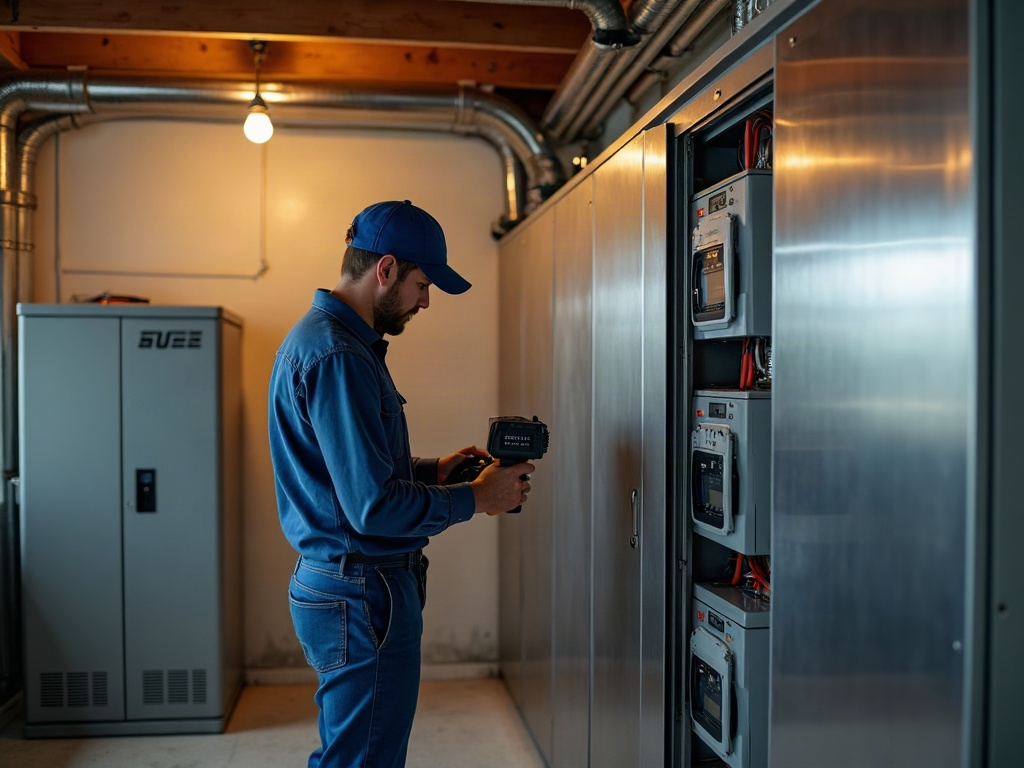
This is not a plug-and-play situation at the commercial level. A properly sized and installed UPS requires a load assessment — we calculate exactly what circuits need protection, then size the battery capacity and inverter rating to match. Undersizing a UPS is one of the most common mistakes we see from generalist contractors; the unit appears to work fine until the first real outage and then runs out of capacity in minutes instead of the promised runtime.
Installation typically involves hardwiring the UPS into a dedicated circuit, coordinating with your existing panel or subpanel layout, and — for larger systems — integrating an automatic transfer switch so the handoff is truly seamless. If your panel is already near capacity, that conversation has to happen before the UPS goes in. We cover what that looks like in our guide to installing a subpanel. For businesses considering a more comprehensive upgrade, our breakdown on smart panel upgrades is worth a read too.
We also run thermal imaging on the panel and connections before and after — not because it’s a nice extra, but because it’s the only way to verify a commercial installation is actually safe under load. A visual inspection won’t catch a connection running hot inside the cabinet.
What Commercial UPS Installation Typically Costs
Ranges vary based on load size, battery type, and whether panel work is needed. Here’s a realistic starting framework:
- Small office or retail UPS (up to 3 kVA): $800 – $2,500 installed, covering a handful of workstations and a router.
- Mid-range commercial UPS (5–20 kVA): $3,000 – $10,000 installed — appropriate for a dental office, a small medical suite, or a restaurant POS and cooler circuit.
- Large or enterprise UPS (20+ kVA): $10,000+ depending on battery bank size, runtime requirements, and any panel or transfer switch upgrades required.
Lead-acid battery units cost less upfront; lithium-iron-phosphate (LFP) units cost more but last longer and perform better in Arizona’s heat — a real factor in Scottsdale, AZ summers. The U.S. Department of Energy’s guidance on backup power systems is a solid reference if you want to dig into the technology before your site assessment.
Why the Contractor Behind the Installation Matters
Commercial backup power is a licensed electrical job in Arizona — full stop. The consequences of an improperly installed UPS range from nuisance tripping all the way to panel damage or fire risk. If you’ve already dealt with a contractor who left you with work that didn’t pass inspection, you know the cost of doing this wrong once. The real risks of going unlicensed aren’t abstract — we’ve written about them directly if you want the specifics on what’s at stake with unlicensed electrical work in Arizona.
FHR Electric is the electrical division of FHR Construction — a licensed, insured Arizona contractor with over 20 years in the Phoenix metro. We’ve done commercial work from Gilbert to Glendale, from Tempe to Fountain Hills, and we treat every installation like it has to pass inspection on the first walk-through, because it does. Our thermal imaging goes in on every commercial job, and our straight pricing means you know the full scope before anyone picks up a tool.
If your business is running without a UPS and you’ve been meaning to look into it — especially before monsoon season hits — call FHR Electric at (602) 492-9999 and let’s do a proper load assessment. Getting it right once beats explaining a data loss or a mid-service shutdown to your clients.