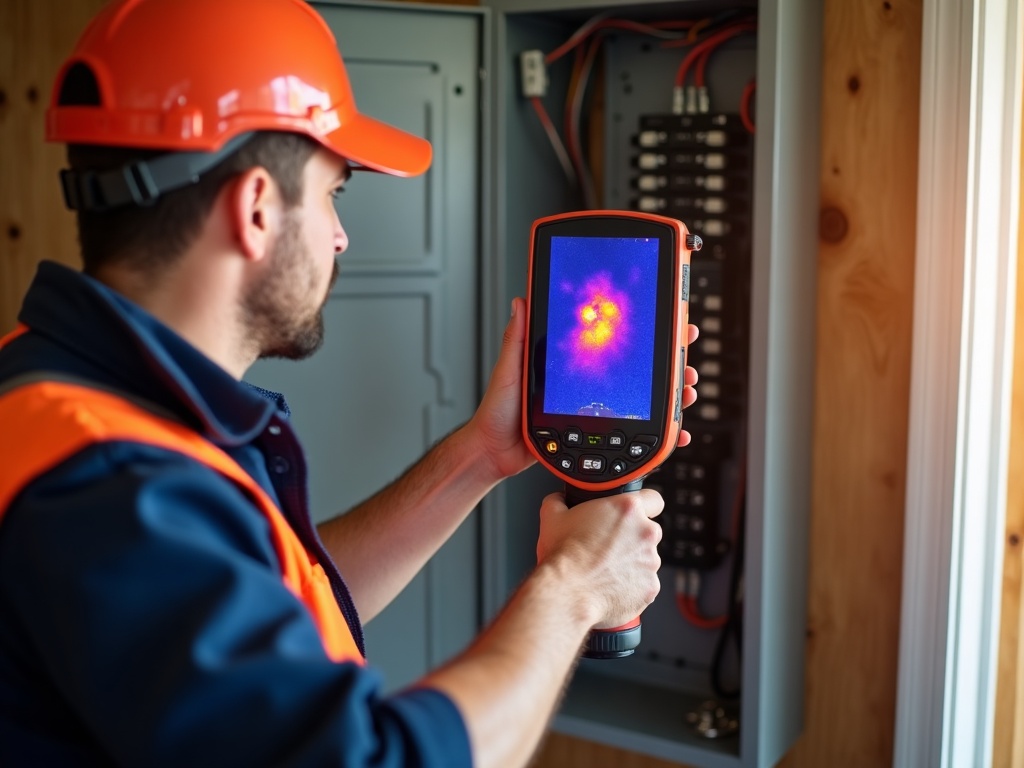
If you’ve ever stood in front of your electrical panel, stared at a breaker that keeps tripping, and thought I really hope that’s nothing — this post is for you. An Thermal Scan for Hot Spots in Electrical Panel is one of the most honest diagnostic tools in our kit, because it shows us heat that you cannot see, touch, or smell until it’s already a problem. And in a Scottsdale, AZ home running a Tesla charger, a new HVAC system, and a full kitchen remodel off a panel that’s pushing 30 years old, invisible heat is exactly what we’re looking for.
Two Paths When You Suspect a Panel Problem
When something feels off — a breaker that won’t stay reset, a faint burnt smell near the panel, flickering lights in one wing of the house — homeowners usually face a fork in the road. You can call an electrician for a standard visual inspection, or you can request a full electrical thermal imaging inspection. They are not the same thing, and the difference is worth understanding before you pick up the phone.
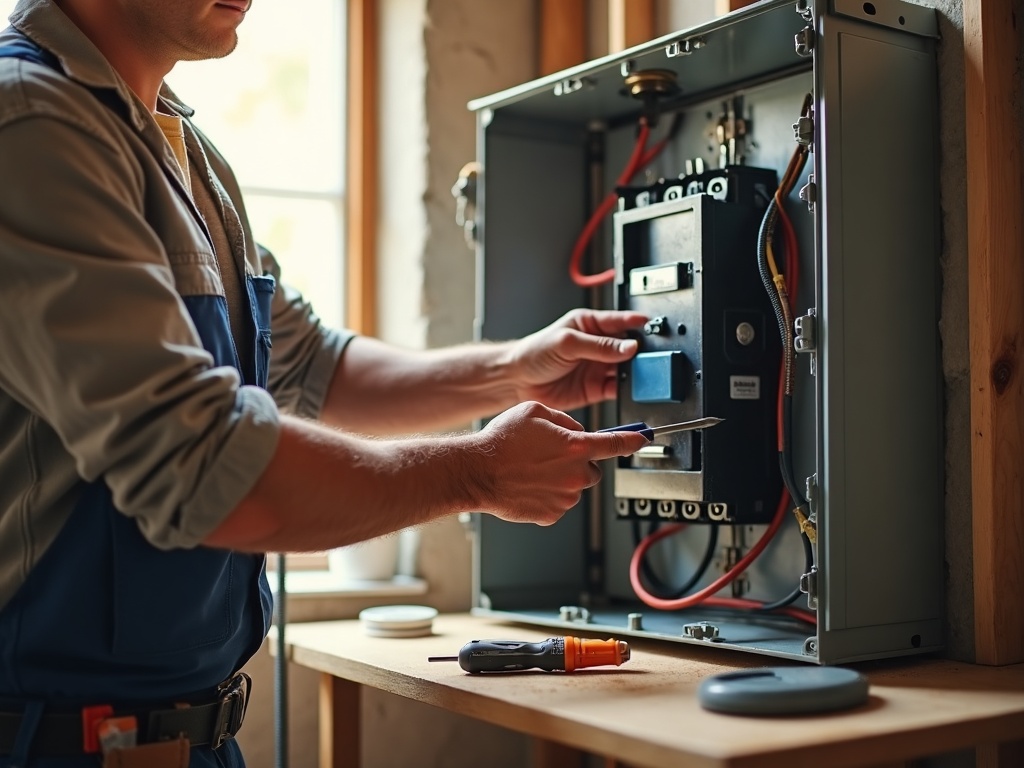
Standard Visual Inspection
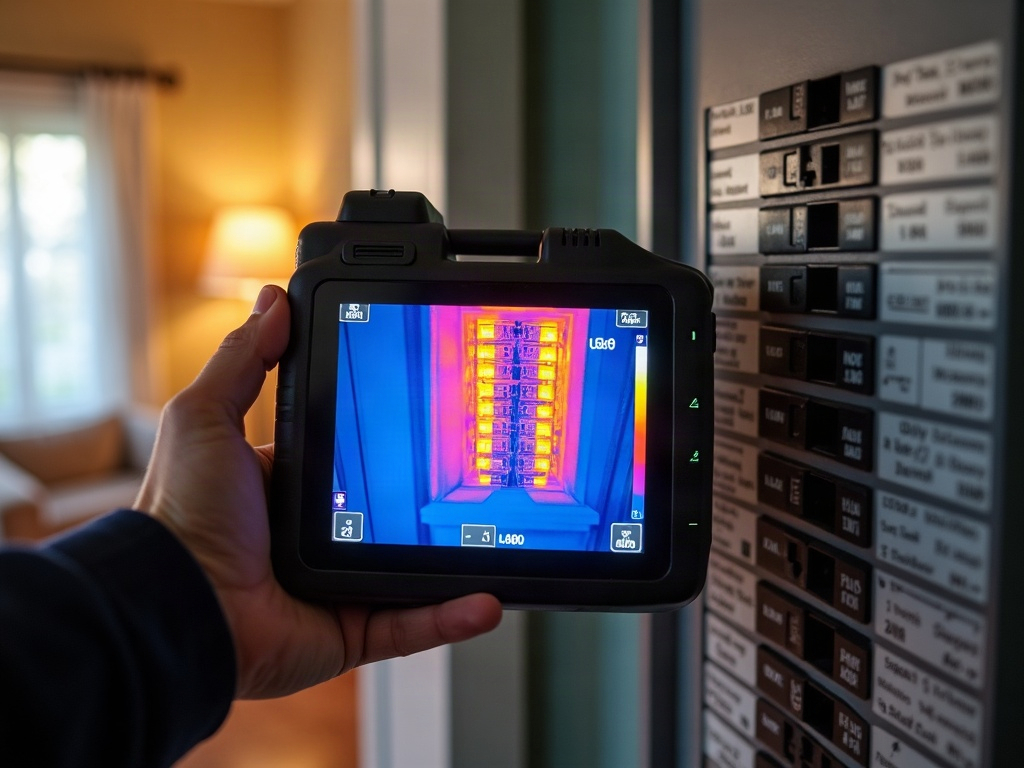
- Electrician opens the panel, checks for obvious damage
- Looks for double-tapped breakers, corrosion, exposed wire
- Identifies problems that are already visible
- Cannot see heat buildup inside a breaker or behind a connection
- Good for code compliance checks and straightforward diagnostics
Infrared Panel Scan
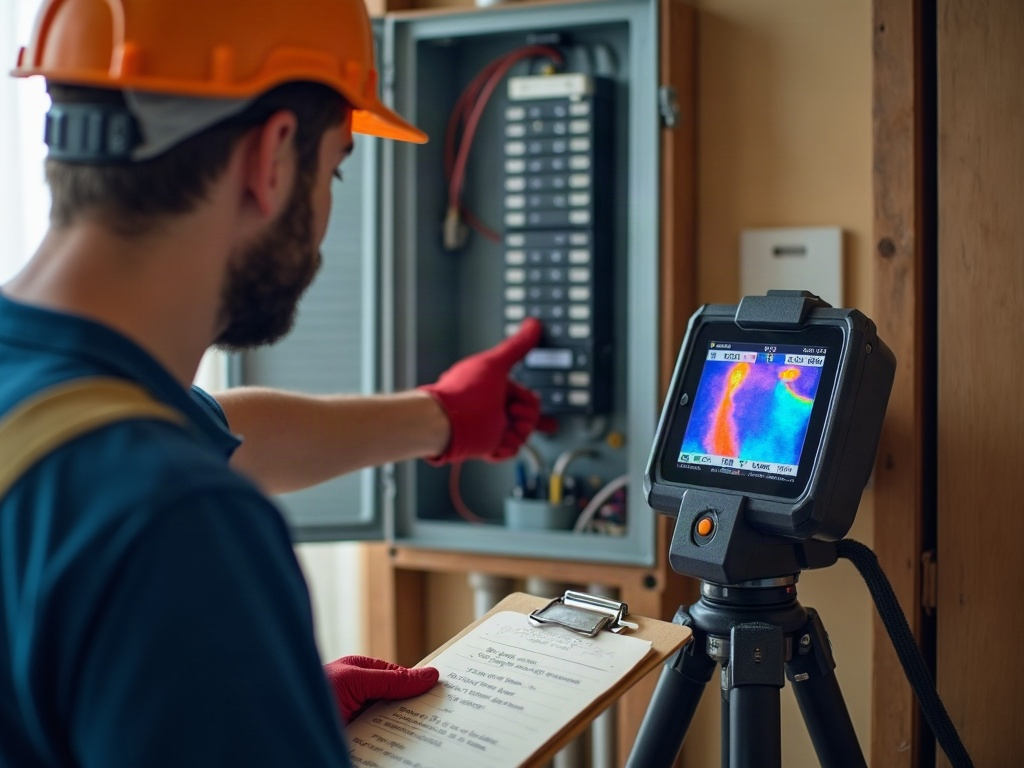
- Thermal camera reads surface temperatures across every breaker and connection point
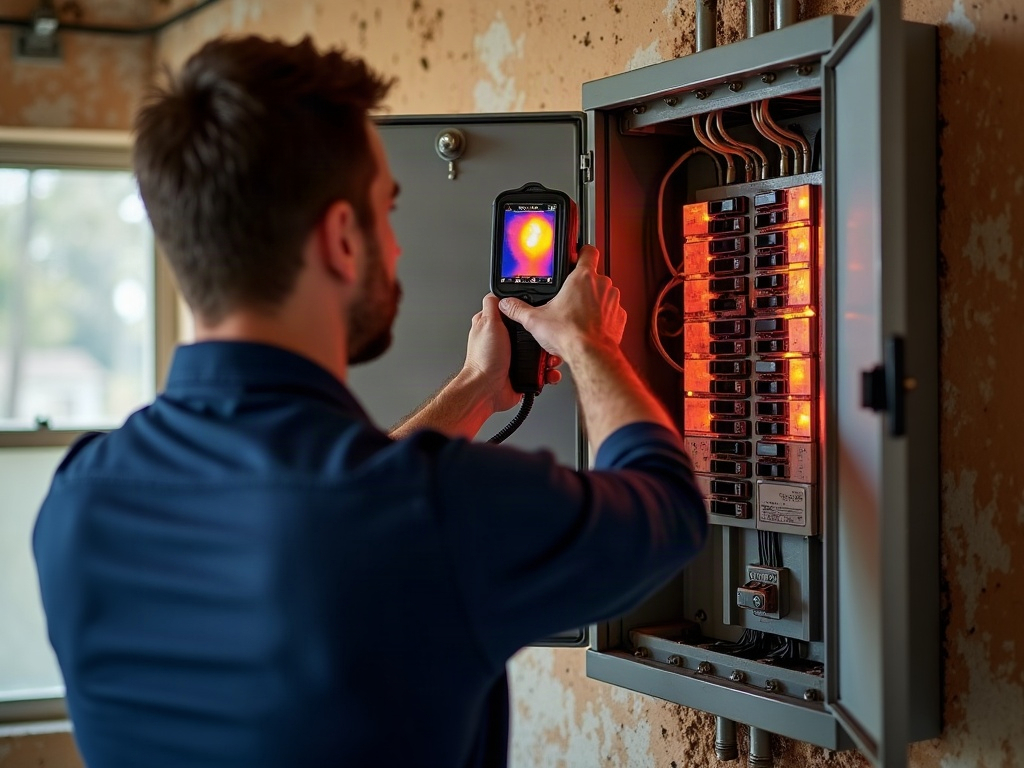
- Catches overloaded circuits glowing orange on screen before a breaker trips
- Flags loose neutral connections that spike to dangerous temps under load
- Finds failing breakers that run hot even at normal amperage
- Produces a documented report — useful for insurance, real estate, and permits
The honest answer is: a visual inspection is fine if you have a specific, obvious fault. But if your panel is aging, your load has grown, or a home inspection flagged concerns without a clear answer, the infrared panel scan is the one that actually proves what’s happening inside.
What Tips the Decision Toward a Thermal Scan
- Your panel is 20–30+ years old and has never been professionally evaluated under real load
- You’ve added significant loads — EV charger, mini-splits, hot tub, home office — to a panel that wasn’t sized for them (our post on whether your garage panel can handle an EV charger walks through the math)
- A breaker trips and won’t stay reset — which often points to heat-related failure, not just an overload
- You’re buying or selling a Scottsdale home and want documentation beyond a standard home inspection
- You operate a medical or dental office in the metro and losing power mid-procedure isn’t an option
- Your insurer is asking questions about panel age or aluminum wiring
- You found a previous unlicensed contractor’s work in the panel and need an honest third-party read on what’s actually there
A thermal camera doesn’t guess. It reads the actual surface temperature of every breaker, lug, and bus bar while the panel is under live load — and anything running hotter than it should shows up in a color no visual inspection can fake.
What We Actually Find With a Thermal Scan for Hot Spots in Electrical Panel
In older neighborhoods north of Shea Boulevard and in some of the original tract homes near Old Town Scottsdale, we see the same handful of issues repeat: breakers that test fine under no load but glow under the afternoon demand of a full household. Loose neutral lugs that create resistance and heat at the connection point. A double-tapped breaker that’s been running two circuits off a single terminal for years. And occasionally, a panel brand with a documented failure history that a previous owner never disclosed.
Common Hot-Spot Findings and What They Mean
- Single breaker running 20–40°F above ambient — the breaker itself is failing; it may still trip correctly, but the heat means the internal mechanism is degraded
- Hot neutral lug or bus bar — loose connection creating resistance; this is the one that quietly builds toward an arc fault
- Multiple adjacent breakers elevated — the panel is overloaded; the fix is a subpanel or service upgrade, not just swapping breakers
- Uniform mild warmth across the panel — usually normal under load; we baseline-compare to confirm
The scan takes roughly 30–45 minutes, performed while circuits are under load — which matters, because a cool panel at 7 a.m. tells you very little about what it does at 4 p.m. in a Scottsdale, AZ summer. We deliver a written report with thermal images, temperature readings, and a clear recommendation: repair, monitor, or replace. No ambiguity, no upsell theater. If you want to dig deeper into what the camera sees beyond the panel itself, our post on what thermal imaging finds inside your walls covers the full picture.
If the scan surfaces something that calls for a panel replacement or service upgrade, we can walk you through whether to repair or replace your panel — with honest cost context, not a sales pitch. Panel work in the Phoenix metro typically runs in a range depending on amperage, permit fees, and utility coordination; we quote the full scope upfront so there are no invoice surprises after the fact. That’s been our approach for over 20 years serving Scottsdale, AZ and Maricopa County, and it’s not something we’re willing to compromise on. The NFPA’s electrical fire data makes the stakes plain enough that we treat every scan seriously.
If you’re in Scottsdale, AZ or anywhere across AZ and you’ve been carrying that quiet worry about what’s actually happening inside your panel, the scan is where the guessing stops. Call FHR Electric at (602) 492-9999 for a same-day consultation — we’ll tell you exactly what we find, in plain language, before recommending a single dollar of work.