Here’s the short answer: if your home in Scottsdale, AZ is over 3,000 square feet, has a pool, two or more HVAC zones, an EV charger, and a kitchen that was built to actually cook in — you are almost certainly pushing the limits of a standard 200-amp service. Some of these homes need 400 amps. Planning Electrical Capacity for Large Home correctly from the start is how you avoid nuisance trips, failed inspections, and the quiet dread of wondering whether your panel is keeping up. Let’s walk through what actually matters.
What’s Actually Drawing Power in a Large Arizona Home
The large home electrical load conversation always starts with HVAC — and in AZ, that’s not a small number. A 5-ton unit draws roughly 20–25 amps at 240V on its own. Layer in a second zone, a pool pump, and a tankless water heater and you’re already past 100 amps before anyone turns on a light. Here’s what tends to tip the scale in homes we see across North Scottsdale and the Kierland Commons corridor:
- Multi-zone HVAC systems — two or three units, each pulling 20–30 amps
- EV chargers — a Level 2 charger on a 50-amp circuit is now standard; dual EV households are increasingly common
- Pool and spa equipment — variable-speed pumps, heaters, and automation add 15–40 amps depending on setup
- Whole-home automation and AV racks — Control4 and similar systems run dedicated circuits
- Kitchen appliances — a double oven, induction cooktop, and wine fridge can claim 50+ amps alone
- Whole-home generator or battery backup — transfer switches and inverters need their own capacity overhead
If you’re planning an EV charger installation right now, our guide on whether your garage panel can actually handle an EV charger is a good place to start before any work begins.
How to Know If Your Service Size Is Actually Enough
A 200-amp service delivers a theoretical maximum of 48,000 watts — but NEC load calculations apply a demand factor, because not everything runs simultaneously. That said, in Scottsdale homes where the AC runs June through September without a break, peak demand is real and sustained. Here’s the framework we use when sizing a service for a high amperage home service upgrade:
- Add up your continuous loads first — HVAC, water heater, pool pump: these run long cycles and cannot be discounted
- Account for future loads — if you’re adding solar, a battery system, or a second EV in the next five years, design for that now
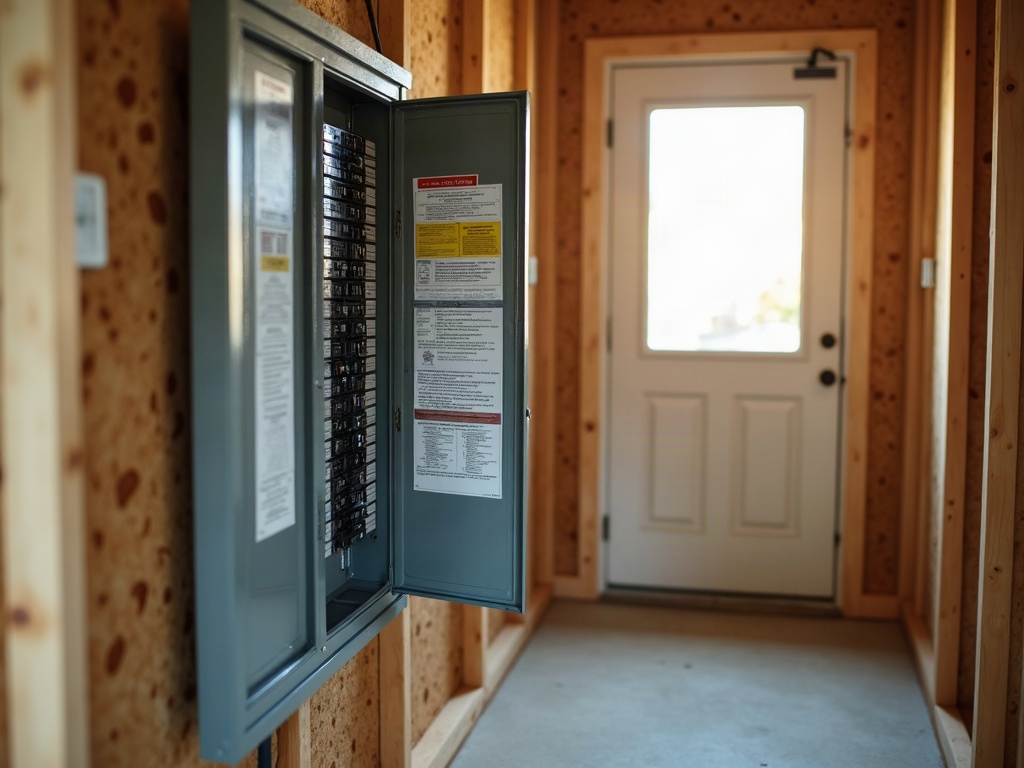
- Check your current panel’s spare capacity — a panel with two open slots and a double-tapped breaker or two is already at the edge (read more about why a double-tapped breaker isn’t a minor issue)
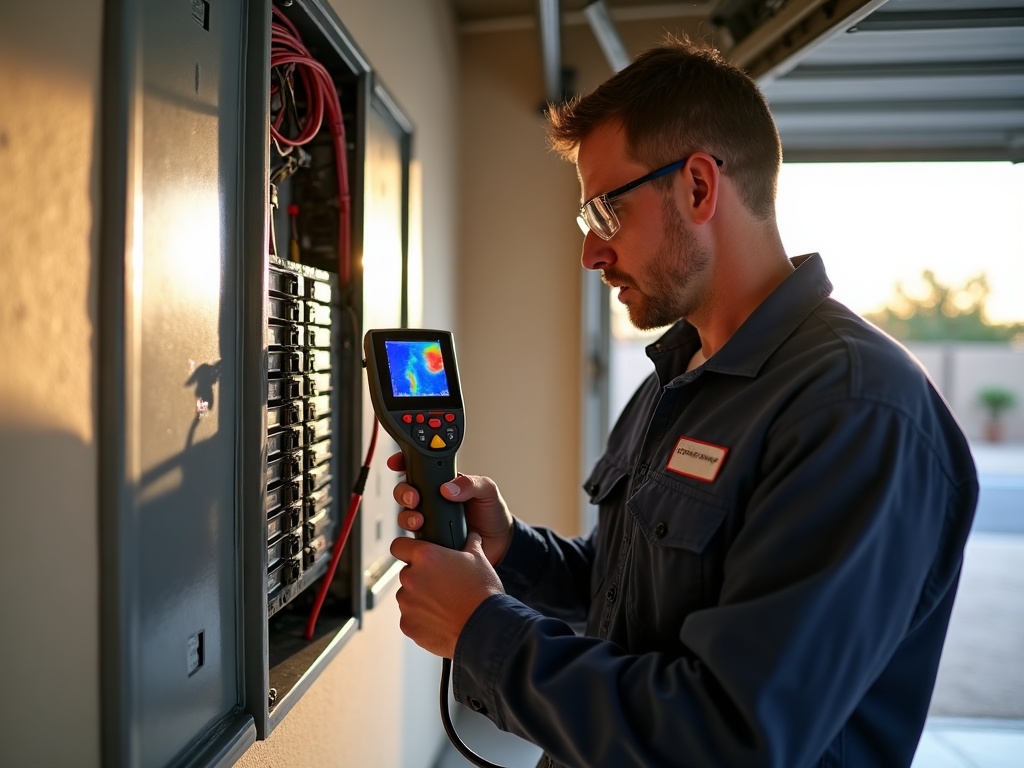
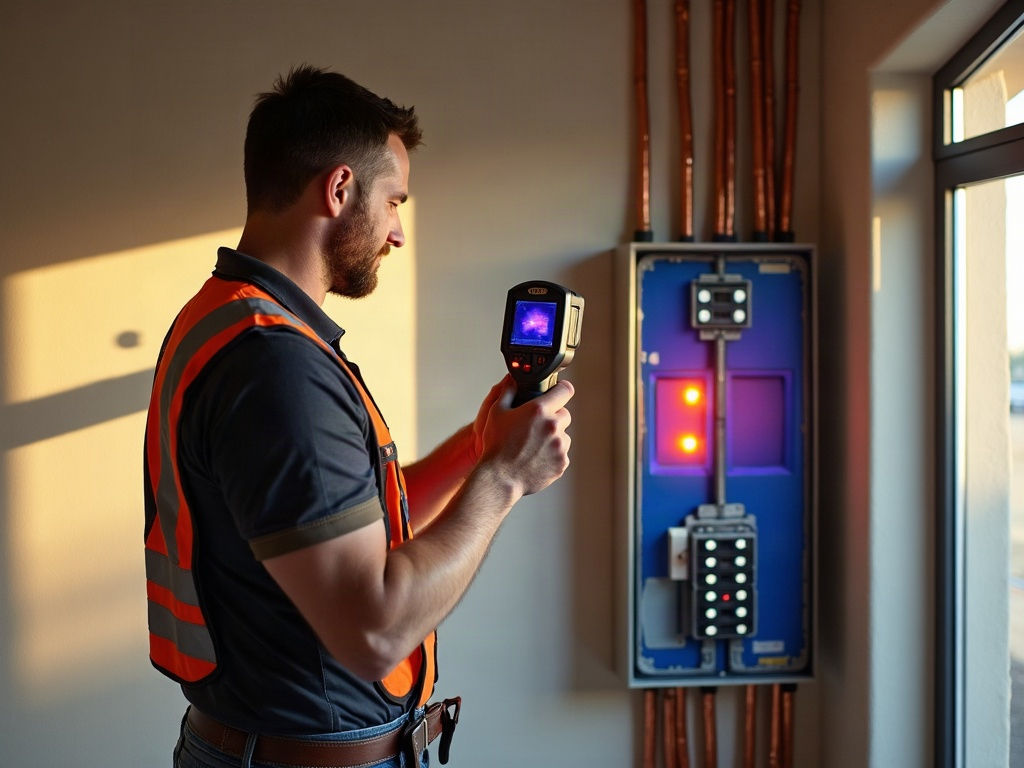
- Get a thermal imaging scan — heat signatures in a loaded panel tell the real story; you can learn what a thermal imaging scan of your panel can reveal before problems become emergencies
The best time to plan for extra capacity is before the remodel permit is pulled — not the week the new HVAC goes in and suddenly nobody has a free breaker slot.
Homes built in Old Town Scottsdale or central Phoenix neighborhoods before the mid-1990s often came in at 100–150 amps. Those panels were fine for the loads of that era. They are not fine for today. The NEC guidelines on residential load calculations give you the national baseline, but local AHJ requirements in Maricopa County can layer on top — another reason to work with a licensed Arizona contractor who knows how this plays out at the inspection table.
When an Electrical Capacity Upgrade in Scottsdale Actually Makes Sense
The upgrade conversation comes down to a few concrete triggers. If you’re a homeowner in Fountain Hills, Gilbert, or anywhere in Maricopa County hitting any of these, the math almost always points toward upgrading rather than patching:
- Breakers trip under normal load — especially during monsoon season when the AC is maxed and the lights are on
- You’re adding an EV charger and the panel has no room or the feeder wire is undersized
- A remodel is adding a significant kitchen, master bath, or home gym — each of which needs dedicated circuits
- You’re installing solar or a battery backup system, which requires a proper interconnection point
- Your panel is 25+ years old with no room to grow and you’re planning to sell in a market — like North Scottsdale — where buyers and their inspectors will notice
What does it cost? A service upgrade from 200 to 400 amps in the Phoenix metro typically runs in the range of $3,500–$7,500 depending on the distance from the utility transformer, trenching requirements, and whether the meter base and panel both need replacement. Those are real ranges — your actual number depends on the specifics of your property, and we’ll tell you exactly what you’re looking at before any work starts. No surprise invoices.
If you’re weighing the full scope — whether a panel replacement, a subpanel, or a full 400-amp upgrade makes more sense for your situation — our breakdown on when a home actually needs 400-amp service walks through the decision clearly.
We’ve been working in Scottsdale and across Maricopa County for over 20 years, and whole-home power planning is one of those jobs where experience genuinely changes the outcome. We run thermal imaging diagnostics, pull the proper permits, and coordinate directly with APS or SRP for service upgrades — so nothing stalls at the meter. Call FHR Electric at (602) 492-9999 for a fast-response assessment and a straight-line quote on what your home actually needs.