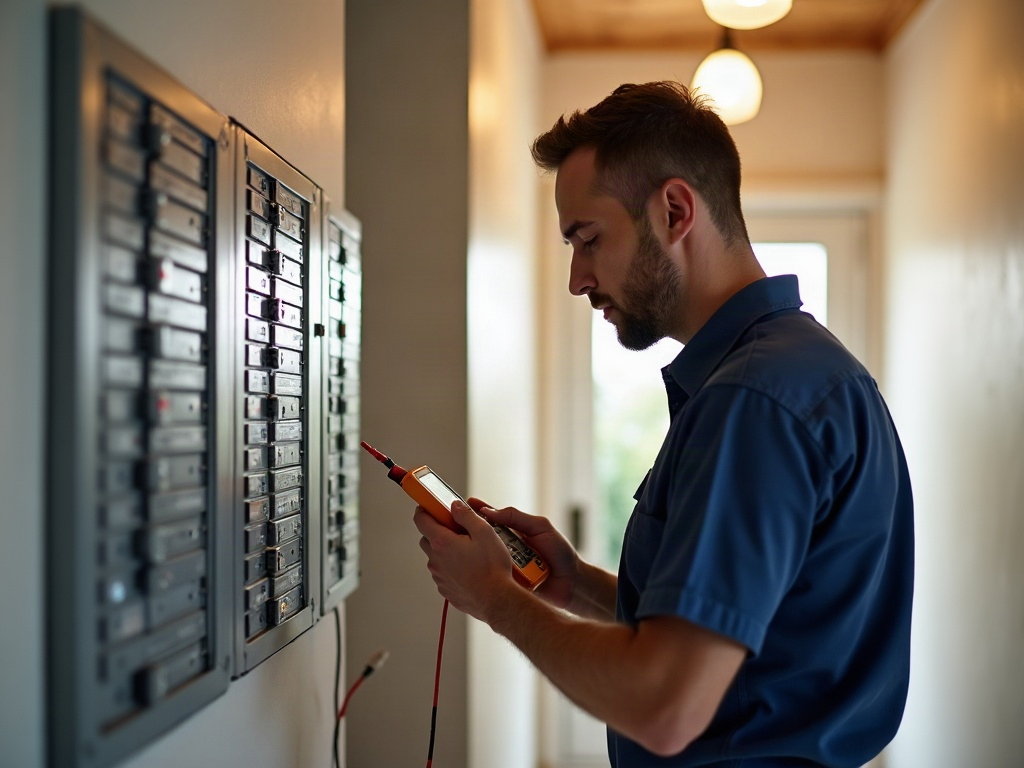
If you’re staring at a breaker box with no open slots and wondering Can You Add Breakers to a Full Panel, the honest answer is: it depends — and the path you choose matters more than most people realize. We’ve walked through panels in homes near McCormick Ranch, in newer builds off Scottsdale Road in Scottsdale, AZ, and in older properties in Old Town Scottsdale, and the situation is almost never identical twice. Let’s talk through the most common mistakes homeowners make when they hit this wall, and what the right move actually looks like.
The Mistakes That Turn a Simple Problem Into an Expensive One
Assuming the panel is full when it might just look full
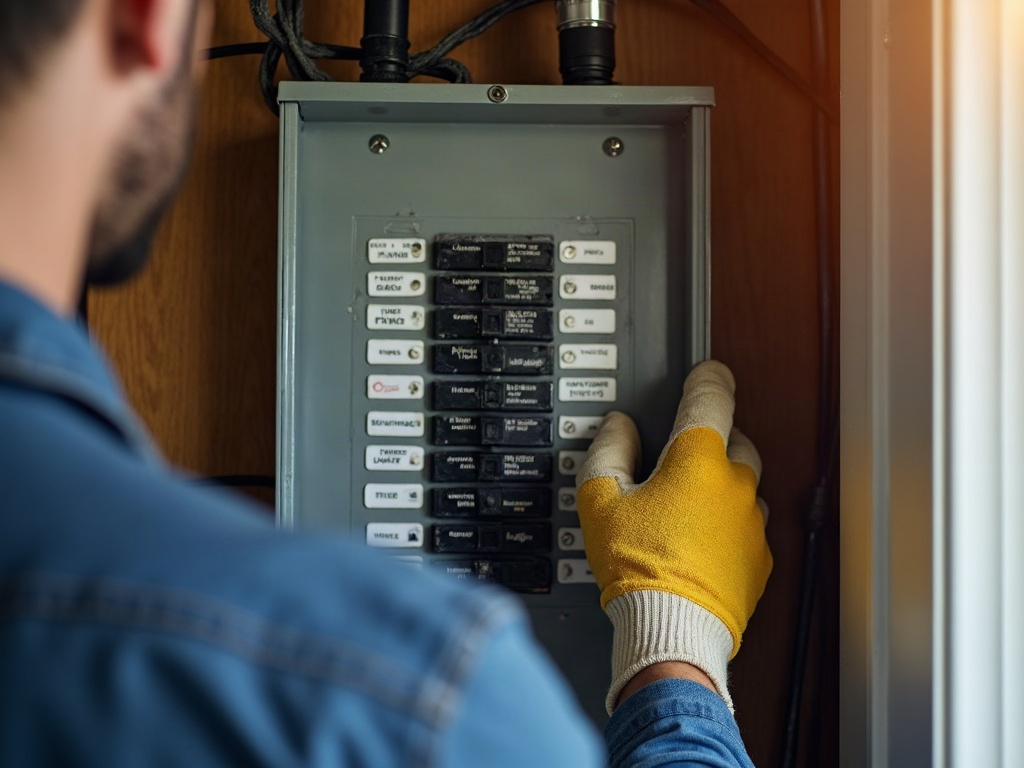
Open slots covered by knockouts or blanks sometimes get mistaken for occupied space. Before anything else, a licensed electrician counts what’s actually there versus what’s actually used. This sounds obvious, but it’s step one — and skipping it sends homeowners down an expensive road they didn’t need to take.
Installing tandem breakers without checking the panel’s listing
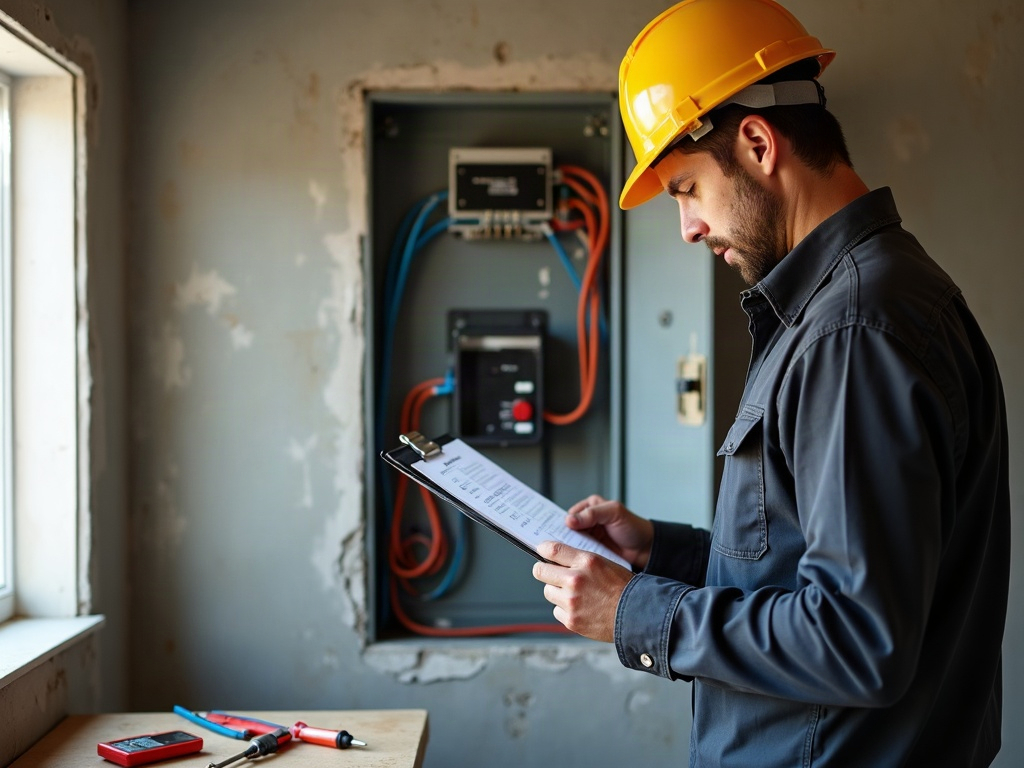
Tandem breakers — two breakers in one slot — are a real option for certain panels, but the panel’s label specifies exactly which slots accept them and how many are allowed. Jamming tandems into unapproved positions is a code violation and a fire risk. If the panel is already at its listed tandem limit, this option simply isn’t on the table regardless of what a handyman tells you.
Ignoring a double-tapped breaker someone left behind
A surprising number of panels we open have double-tapped breakers — two wires sharing a terminal that was only rated for one. It’s a common “fix” by unlicensed subs trying to squeeze one more circuit in. If you recognize your situation in that sentence, stop adding circuits until that gets corrected.
Adding a subpanel without assessing the main service size first
A subpanel is often the cleanest full electrical panel solution — run a feeder from the main panel, add a secondary enclosure with fresh slots, done. But if your main service is already a 100-amp feed trying to power a modern home with an EV charger, a new HVAC, and a kitchen remodel, a subpanel solves nothing. You need to know what the service can actually sustain before adding load. Our guide on when a subpanel actually makes sense walks through the math in plain terms.
⚡ The Costliest Mistake: Upgrading the panel when you actually needed a service upgrade
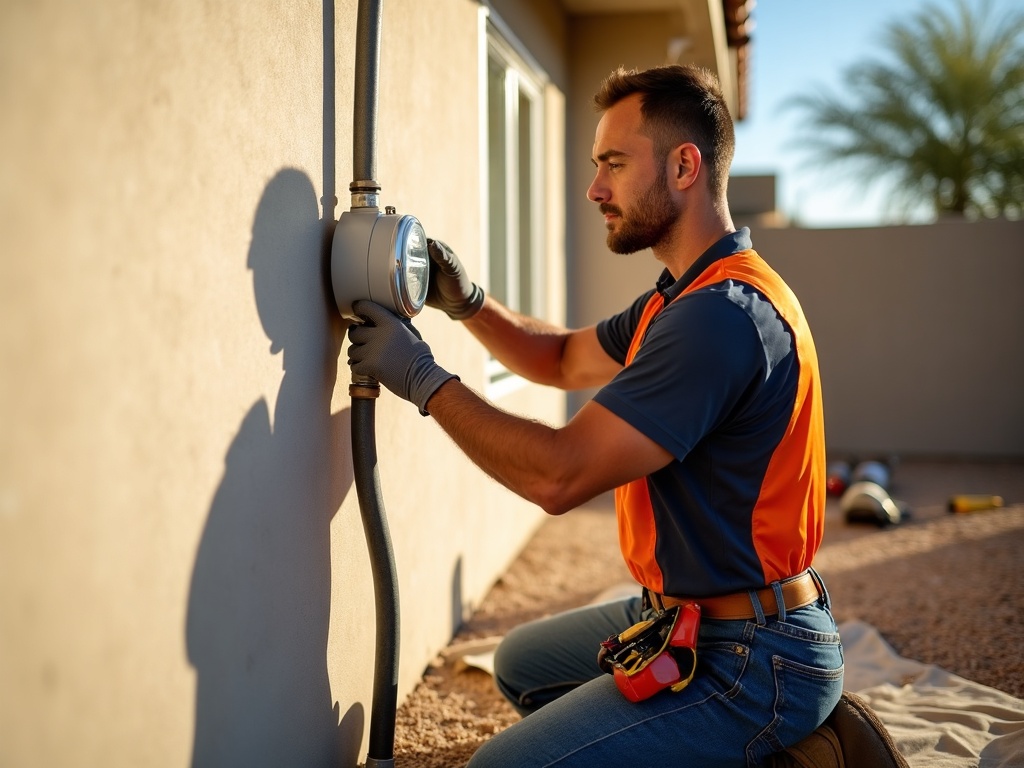
This one stings. A homeowner gets a new 200-amp panel installed — legitimate work, real cost — only to find out later that APS is still delivering 100-amp service from the street. The panel upgrade was real, but the capacity wasn’t. The meter base, the service entrance conductors, and APS’s side of the equation all have to match. When they don’t, you’ve paid for a panel that can’t do what you thought you bought. A proper load calculation and a conversation with the utility before the job starts prevents this entirely. If your home was built in the 1970s or early 1980s, upgrading from 100 to 200 amps is likely the real fix, not just swapping the box.
So What Are Your Actual Full Electrical Panel Options?
In most cases, the decision tree looks like this:
- Tandems where the panel listing allows — lowest cost, works when the panel is newer and has approved tandem slots open. Typical cost: a few hundred dollars per circuit added.
- Subpanel in the garage or a remote location — great for an EV charger, workshop, or addition. Cost generally runs $800–$2,000+ depending on feeder distance and amperage.
- Full panel replacement — necessary when the existing panel is outdated, a Federal Pacific or Zinsco unit, or simply undersized for modern loads. Budget $1,500–$4,000+ depending on amperage and whether the service entrance needs work.
- Service upgrade from APS — required when the utility feed itself is the bottleneck. This involves APS coordination, a permit, and inspection — not a same-day fix, but the right foundation for everything above.
A panel that can’t safely add circuit space isn’t a minor inconvenience — it’s the ceiling on everything your home can do.
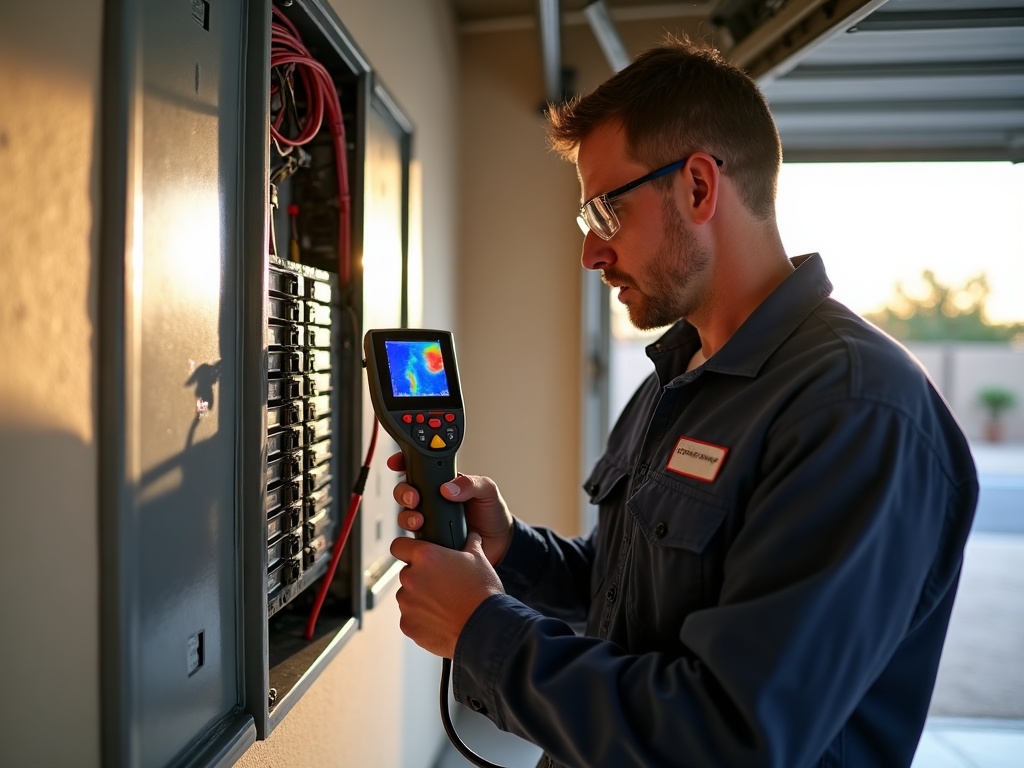
If your panel is crackling, warm to the touch, or tripping repeatedly, the problem has already moved past capacity planning. A thermal imaging scan of your panel can show overloaded connections and hot spots that a visual inspection misses — it’s one of the tools we bring to every panel assessment. And if you’ve ever heard anything unusual coming from the box, read our breakdown of what crackling or buzzing from a panel actually signals.
We also pull the permits. Every time. That matters when the city inspector shows up and when you sell. If you’ve had a contractor suggest skipping that step, understand why that almost always backfires in Arizona before agreeing to it.
One Straight Answer, Then a Phone Call
Whether you’re in Scottsdale, AZ, Fountain Hills, or Gilbert, the answer to whether you can add breakers to your panel depends on three things: what the panel’s label actually allows, what the service can sustain, and what load you’re planning to add. That’s a fifteen-minute conversation with someone who knows what they’re looking at — and it saves you from paying for the wrong fix twice.
FHR Electric has been doing this work across Scottsdale and Maricopa County for over 20 years. We’re licensed, insured, and we use thermal imaging to prove the work is done right — not just done. Call us at (602) 492-9999 and let’s figure out what your panel actually needs.