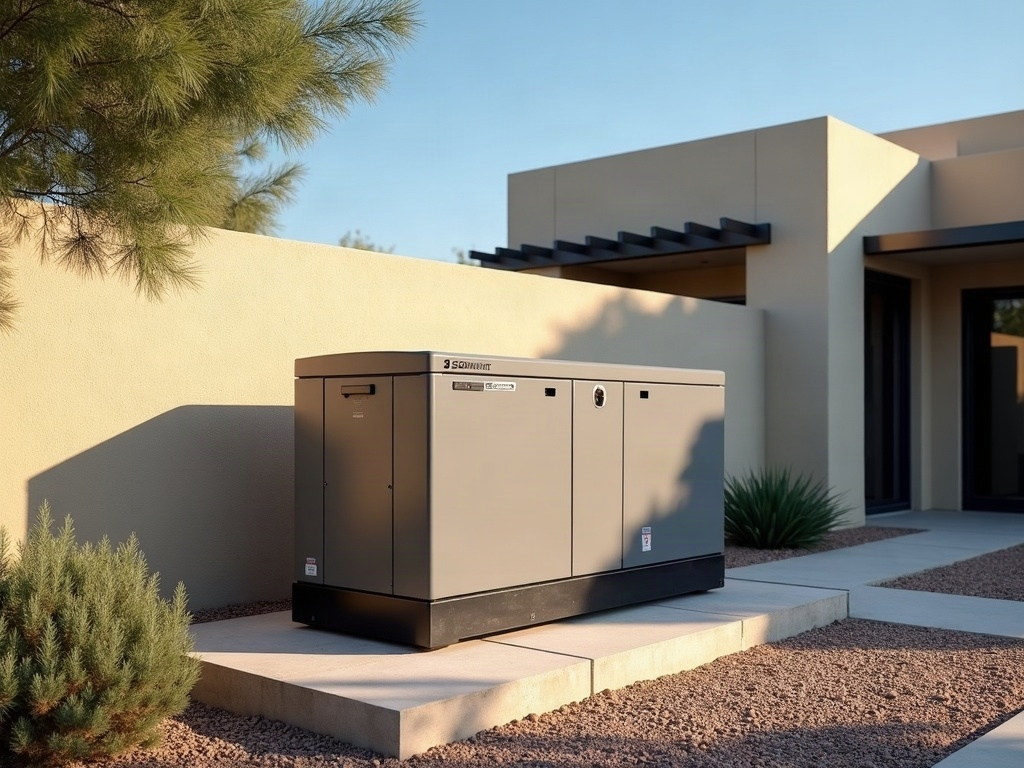
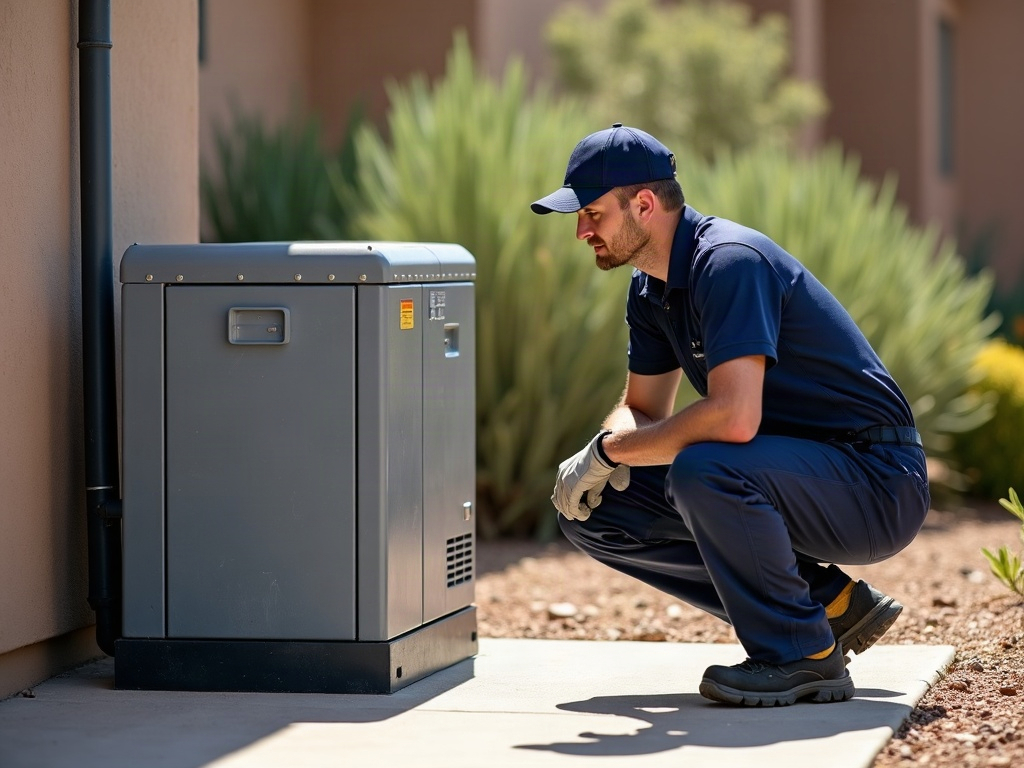
If you’ve ever sat through a monsoon blackout watching your fridge warm up and your HVAC go silent in 110-degree heat, you already know: backup power isn’t a luxury in Scottsdale, AZ. The real question — and the one that trips up even savvy homeowners — is What Size Generator for Whole House. Get it wrong in either direction and you’ve either wasted five figures on capacity you’ll never use, or you’ve got a unit that trips under load the first time it actually matters. Let’s work through it the right way.
The What Size Generator for Whole House Checklist Every Arizona Homeowner Needs
Sizing isn’t about square footage alone — it’s about load, what your home actually draws at peak demand. Work through each item before you call anyone.
- Start with your HVAC — it dominates everything. A central air system serving a 2,500 sq ft home in Scottsdale, AZ typically pulls 4–6 kW running and surges to 10–15 kW on startup. Two zones? Double those numbers. HVAC alone often decides whether you need a 20 kW or a 26 kW unit.
- List every hardwired appliance on a dedicated circuit. Electric range, pool pump, dryer, water heater, EV charger — each carries meaningful wattage. A 48-amp Level 2 EV charger adds roughly 11 kW to your demand profile. Our guide on dedicated circuits for big appliances explains which loads need their own breaker and why.
- Add lighting, outlets, and general loads. A typical Scottsdale, AZ home adds 3–5 kW here. Smart devices, routers, home-office gear, and medical equipment are modest individually but add up fast. If you rely on home medical devices, our breakdown of backup power for medical equipment at home covers exactly what you need before the grid goes down.
- Confirm your panel can handle the load. A 200-amp panel can theoretically support about 48 kW, but a tired or undersized panel bottlenecks even a properly sized generator. If there’s any doubt, read our honest guide on whether to repair or replace your electrical panel before you invest in a generator.
- Apply the formula, then add 20% headroom. Total your running watts, identify your largest single-start surge load (usually the AC compressor), and confirm the generator’s surge rating covers it. Then build in 20% overhead for future loads and safe runtime. For most 2,000–4,000 sq ft homes in Maricopa County — Gilbert, Chandler, North Scottsdale — that math lands between 22 kW and 26 kW, consistent with what the Generac generator sizing guide recommends for whole-home coverage in this climate.
- Essential circuits only, or full-house coverage? A 10–14 kW unit can protect your refrigerator, a few lights, one AC zone, and key outlets — lower upfront cost, but you’ll manage what runs. A 22 kW+ unit runs everything automatically. For a Scottsdale, AZ home with a pool, EV, and a modern kitchen, full-house coverage is almost always the better investment, especially when outages can stretch 12–48 hours after a serious storm.
- Factor in transfer switch type and installation cost. An automatic transfer switch (ATS) detects an outage and switches in seconds — no fumbling in the dark. Manual switches cost less but require someone home and alert. ATS wiring, gas line work, and panel connections are where installation labor lives: typically $3,000–$6,000+ depending on panel complexity, gas source distance, and permit requirements in AZ.
The biggest sizing mistake we see in Scottsdale, AZ is homeowners choosing a unit by square footage alone — without accounting for the AC surge load. In Arizona, that omission is the difference between a generator that holds and one that shuts down the moment the compressor kicks on.
When to Stop Calculating and Call a Licensed Pro
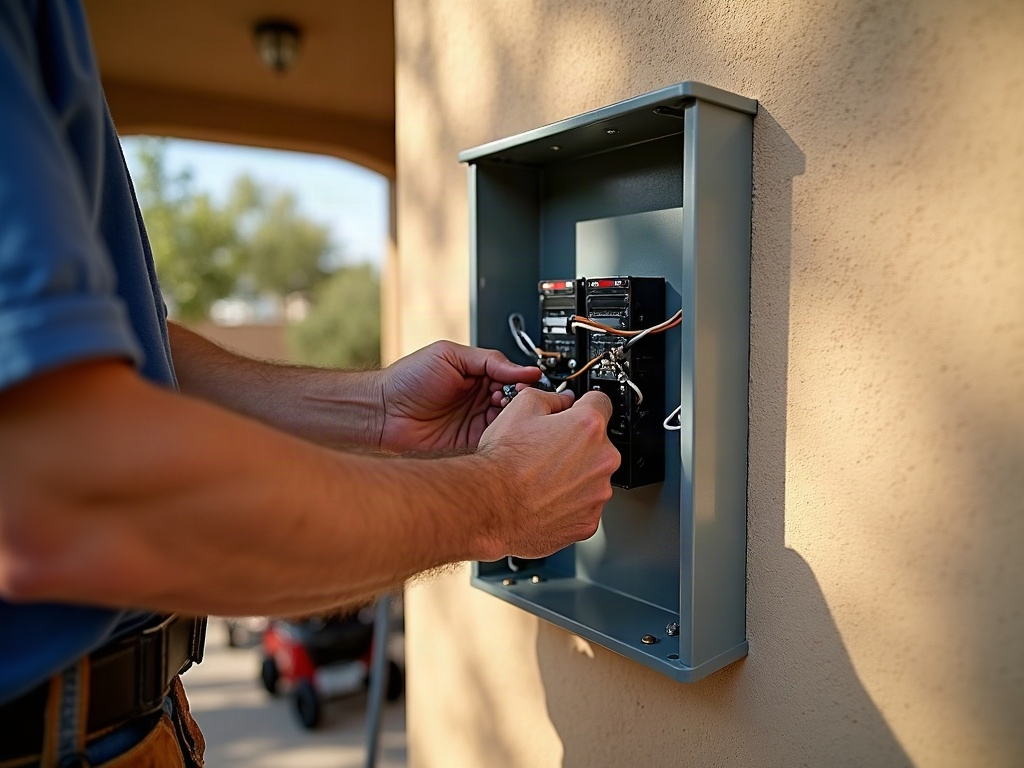
Sizing math sets solid expectations, but certain situations call for a licensed electrician running actual load calculations — not just a worksheet. Get a pro involved if your panel is older than 20 years, you’re adding an EV charger or pool equipment, you run medical equipment that can’t lose power, or you’ve had unexplained breaker trips. A generator won’t fix an underlying wiring problem.
A proper site assessment covers a full load calculation per NEC Article 220, panel inspection, gas source evaluation, transfer switch recommendation, and permit coordination with your local AHJ. Whether you’re in a new build near DC Ranch in Scottsdale, a mature home in Chandler, or running a small office that cannot afford downtime, we size and install backup generator systems the right way — load calculations, licensed permits, inspected installs. No guesswork, no invoice surprises.