Here’s something we notice within the first five minutes at almost every panel inspection: the homeowner has no idea anything is wrong. No tripped breakers, no obvious sparks — just a box on the wall that’s been quietly doing its job. Or so it seems. The real Signs of Outdated Electrical Panel often have nothing to do with a breaker that flips. They live in the details a trained eye catches before you’d ever think to look.
“A breaker that never trips isn’t always a good sign. Sometimes it means the breaker itself has failed to trip — and that’s far more dangerous than one that does.”
What We See Before We Even Open the Door
In Scottsdale, AZ, homes built in the 1980s and 1990s are everywhere — beautiful neighborhoods, mature landscaping, and electrical panels that were designed for a fraction of today’s load. Before we touch a single screw, we’re already looking for these:
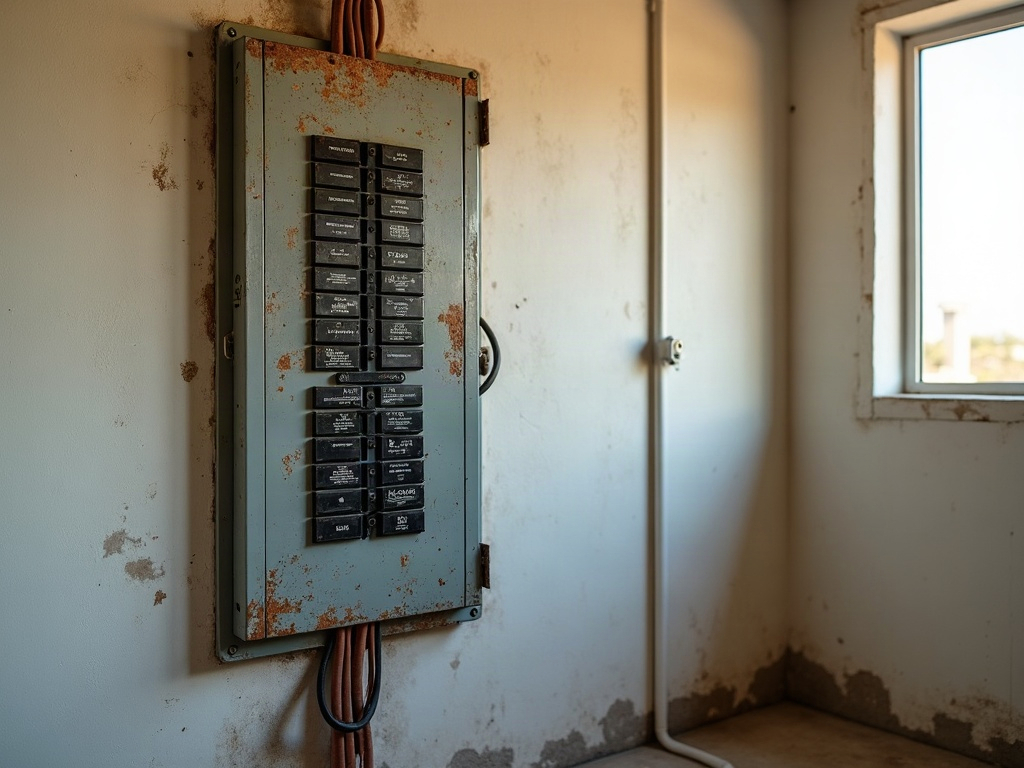
- Rust or discoloration on the panel face. Even mild oxidation in an Arizona garage can signal moisture intrusion — a serious problem inside a live panel.
- A panel brand on the recall list. Federal Pacific Stab-Lok and Zinsco panels are still in thousands of Valley homes. If you’re not sure what you have, our guide on what a Stab-Lok panel is and why insurers refuse to cover it explains exactly why this matters.
- A 100-amp main breaker on a modern house. Between the EV charger, the new HVAC, the remodeled kitchen — 100 amps wasn’t enough ten years ago, let alone now.
- Handwritten labels that don’t match reality. When the label says “master bedroom” but the circuit actually feeds a garage sub and half the guest bath, someone guessed — and nobody verified.
- Wires that look crowded or improvised. Double-tapped breakers, mismatched wire gauges, or a junction inside the panel box itself are immediate red flags. We’ve written about what a double-tapped breaker is and why it’s not a minor issue if you want to understand the risk clearly.
Old Electrical Panel Warning Signs You Might Be Living With Right Now
Some of these are quiet. You’ve probably normalized them without realizing it.
- Lights that dim when the refrigerator compressor kicks on
- Outlets that feel warm to the touch or deliver power intermittently — a deeper look at why outlet power comes and goes explains what’s usually happening behind the wall
- A faint burning smell near the panel — especially after the AC runs hard on a July afternoon near McCormick Ranch or DC Ranch
- Breakers that feel loose or won’t stay reset
- Any buzzing or crackling from the panel itself — that sound is never normal, and a crackling panel is worth acting on fast
If you’re running a medical or dental office in Scottsdale, that list should feel especially urgent. A failing panel doesn’t give you a warning appointment — it just stops working. We’ve worked with practices across the Valley on exactly this scenario, and the conversation is always easier before the failure than after.
When to Replace Your Electrical Panel: A Practical Threshold
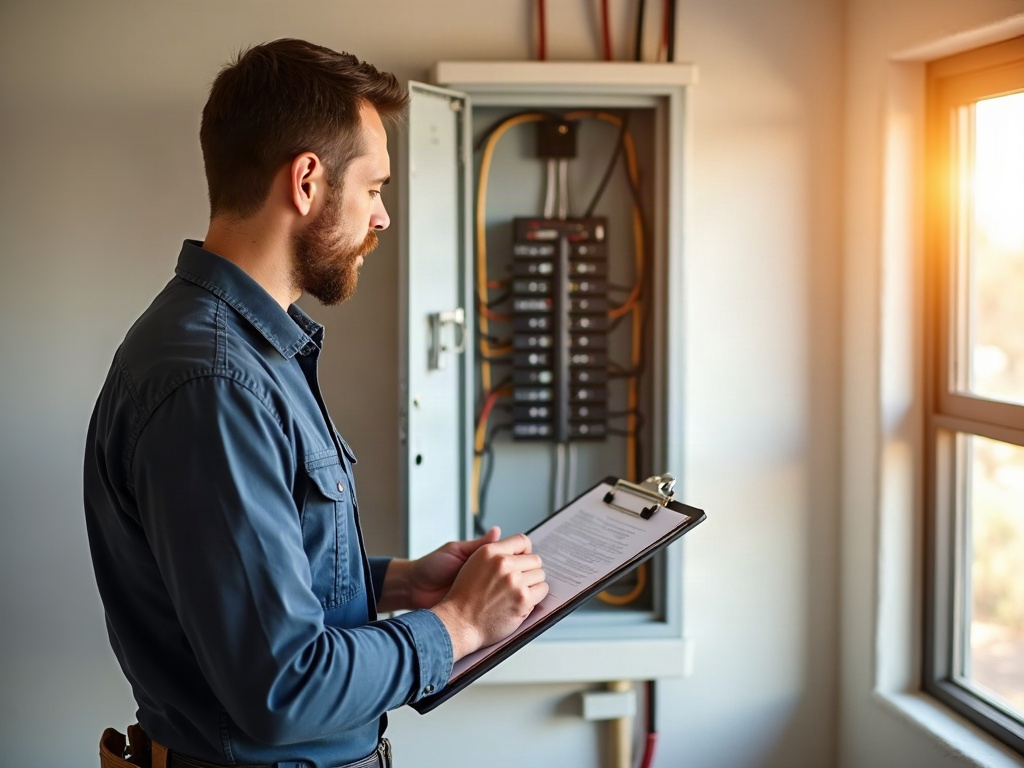
If your panel is 25 years or older, is a recalled brand, is rated under 200 amps, or shows any of the symptoms above — replacement isn’t a maybe. It’s a timeline conversation. Our honest breakdown of whether to repair or replace your electrical panel can help you frame that decision before you call anyone.
What a Panel Upgrade Actually Costs in the Phoenix Metro
We get this question constantly, and we’d rather give you a real answer than a bait-and-switch number. Broadly speaking:
- 100-to-200-amp upgrade: typically $1,800–$3,500 depending on the existing service entrance, permit requirements, and whether the utility needs to be involved. Our deeper look at upgrading from 100 to 200 amps in Arizona walks through what drives that range.
- Full panel replacement (same amperage, new hardware): often $1,500–$2,800 for a standard residential job in AZ.
- 400-amp service or smart panel upgrade: higher scope, higher cost — best discussed after a site evaluation. If you’re curious whether your home genuinely needs 400-amp service, we’ve covered that question too.
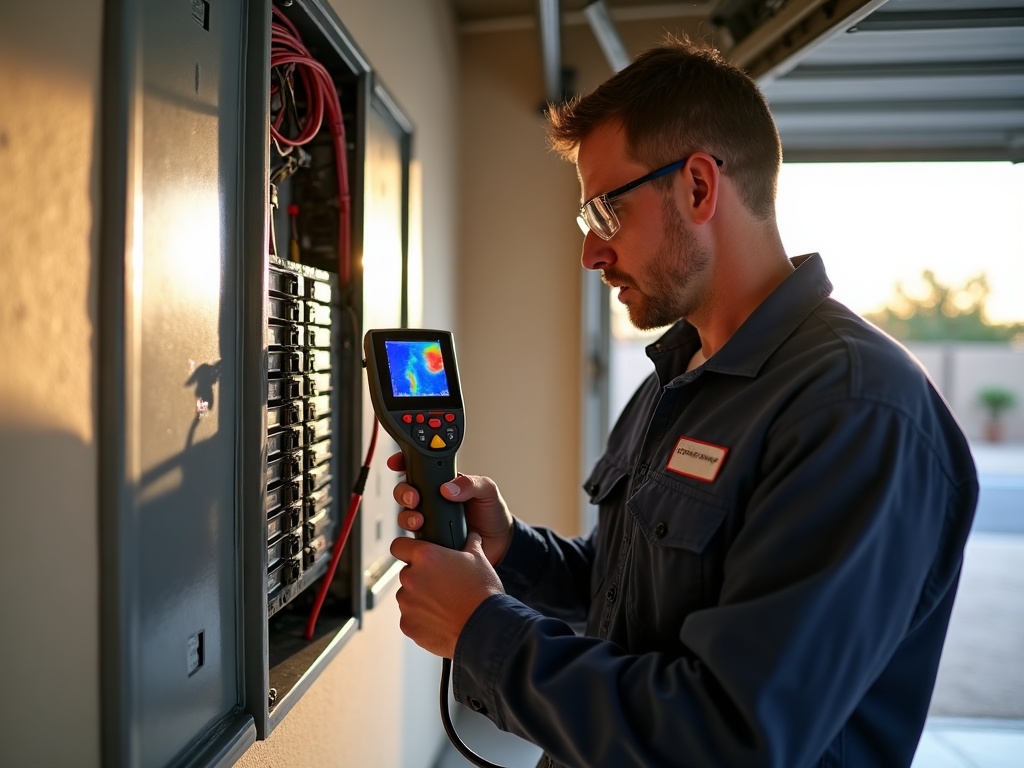
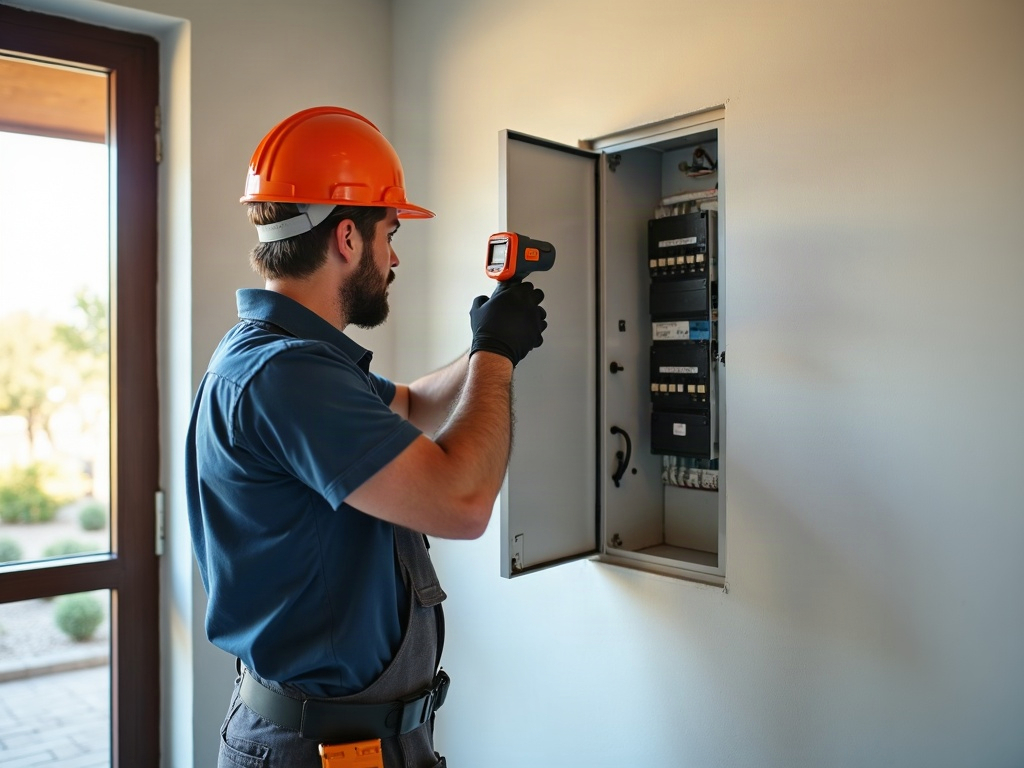
One thing that consistently affects the number: whether a thermal imaging scan reveals hidden problems before we quote. A panel that looks fine visually can show hotspots on infrared that change the scope of the job. Understanding what a thermal imaging scan reveals is genuinely worth your time if you’re comparing bids.
Every job we price includes a straight, itemized quote — no scope creep surprises, no unlicensed subs. We’ve been working across Scottsdale, Phoenix, Chandler, Gilbert, Mesa, and Tempe for over 20 years, and our reputation is built on exactly that consistency.
If any of this sounds familiar — the dimming lights, the aging box, the uneasy feeling you’ve been quietly ignoring — don’t wait for the panel to make the decision for you. Call FHR Electric at (602) 492-9999 for a fast-response evaluation. We’ll tell you exactly what you have, what it means, and what it will cost to fix it right the first time.